 English
 Best Solar Animal Repellers for Farms in Kenya
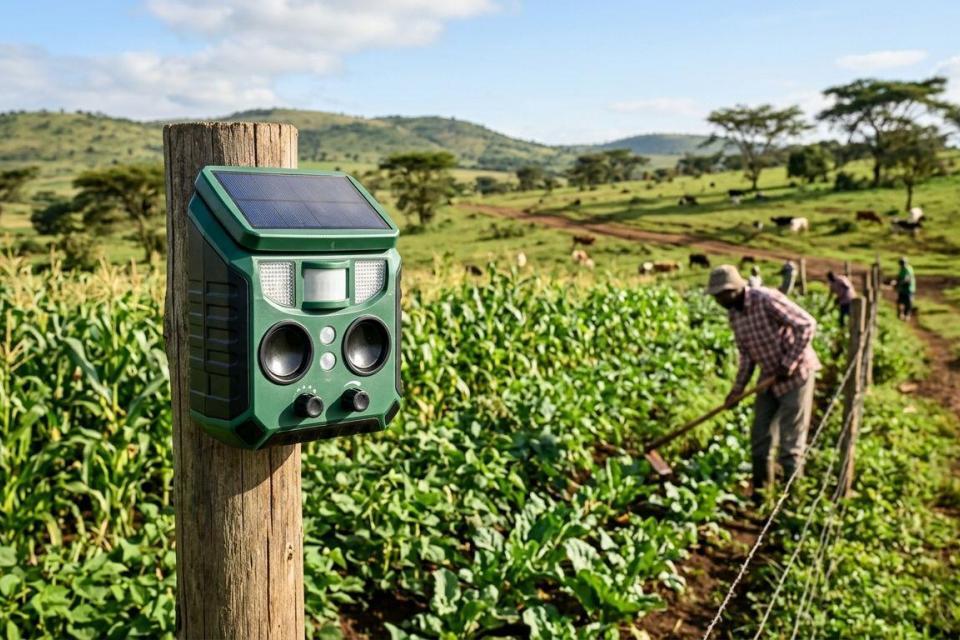
Solar animal repellers cover a range of devices, from ultrasonic units to strobe lights, but on Kenyan farms the fencing-based approach still does the heavy lifting for full-perimeter protection. This guide ranks the solar deterrent categories by what they actually do well, so you buy the right layer of protection instead of a gadget that only works in the demo video.
- A solar-powered electric fence energizer is the best solar animal repeller for farm perimeters because it stops crossings, not just startles animals.
- Solar strobe light repellers work as a secondary layer against nocturnal predators near livestock pens.
- Solar ultrasonic repellers suit small kitchen gardens but lose effect with wind, foliage and distance.
- Pair any repeller with proper fence wire, a lightning arrestor and a fault finder for year-round reliability.
Why this matters
Farms in Kenya lose crops and livestock to baboons, wild pigs, hyenas and stray dogs, and the wrong deterrent wastes a whole season before you find that out. A solar-powered electric fence energizer delivers a physical and psychological barrier that works day and night without grid power, which is why it sits at the top of this list.
Standalone repellers — ultrasonic boxes, strobe lights, motion floodlights — have a place, but they deter rather than exclude. Match the device to the animal and the area size, not the claim on the box.
What makes the best solar animal repeller for a farm
- Coverage — does it protect a full fence line, a single pen, or one garden bed
- Power autonomy — panel and battery sizing relative to available sun hours
- Weather resilience — dust, rain and heat tolerance for permanent outdoor mounting
- Species match — predators, crop raiders, rodents and birds respond to different stimuli
- Maintenance load — how often it needs testing, cleaning or battery checks
- Safety compliance — electric fencing must be earthed and signed correctly to protect people and stock
Solar animal repellers at a glance
| Category | Best for | Standout feature | Key limitation |
|---|---|---|---|
| Solar-powered electric fence energizer | Full livestock perimeter protection | Physical barrier plus pulse, runs off-grid | Needs correct tensioning, earthing and testing |
| Solar predator strobe light | Nocturnal predator deterrence at pens | Dusk-triggered flashing disrupts night vision | Predators habituate if used alone |
| Solar ultrasonic repeller | Small gardens and crop plots | No wiring, quick to place | Range drops with wind and foliage |
| Solar motion floodlight | Occasional, low-budget deterrence | Doubles as a yard security light | Startle only, no physical barrier |
1. Solar-powered electric fence energizer: best solar animal repeller for full-perimeter protection
This is a fence energizer charged by a solar panel and battery, delivering a pulsed charge along the fence line so animals stop crossing rather than simply reacting. It is the standard perimeter solution on Kenyan livestock farms because it runs continuously without mains power, which matters where grid supply is unreliable.
Solar energizer pros:
- Physical barrier, not a startle effect — animals learn the line and avoid it
- Runs off-grid, useful for remote farms without stable electricity
- Scales from one paddock to a full farm boundary with extra wire runs
- Works 24 hours a day, unlike motion-triggered light or sound devices
Solar energizer cons:
- Requires correctly tensioned electric fence wire and proper earthing to deliver a reliable pulse
- Installation needs technical know-how; a poorly earthed system underperforms badly
- Needs periodic checks to confirm the line is live and not shorted by vegetation
Best for: livestock farms and full property perimeters. Verdict: Buy.
2. Solar predator strobe light: best solar animal repeller for nocturnal predators
A solar strobe repeller uses a dusk-to-dawn sensor and a flashing LED pattern that disrupts a predator's night vision as it approaches a pen. It mounts at animal eye height on posts or shed walls and needs no wiring beyond its own solar cell.
Solar strobe pros:
- Simple to mount, no trenching or cabling
- Aimed squarely at nocturnal predators such as hyenas, jackals and stray dogs
- Low maintenance once the panel faces the sun and the LED faces the approach path
Solar strobe cons:
- Predators habituate to a static flash pattern over repeated nights
- Covers one enclosure, not a boundary — a layer, never a fence replacement
- Line of sight matters; scrub and structures cut the deterrent effect
Best for: livestock pens near forest edges or grazing corridors. Verdict: Buy as a second layer.
3. Solar ultrasonic repeller: best solar animal repeller for small crop plots
This device emits ultrasonic frequencies intended to irritate rodents, some birds and smaller mammals within a limited radius. It runs on a small panel and battery and sits inside the growing area rather than on a boundary.
Solar ultrasonic pros:
- No wiring or fencing required — place it and it works
- Compact enough for a kitchen garden, seedbed or nursery
- Silent to people, so it does not disturb the homestead
Solar ultrasonic cons:
- Range and effect fall away sharply with wind, tall crops or dense hedging
- Does nothing against wild pigs, baboons or livestock predators
- Small panels on budget units limit run time through cloudy weeks
Best for: small crop plots and home gardens. Verdict: Hold — a light-duty addition only.
4. Solar motion floodlight: best solar animal repeller on a tight budget
A motion-triggered LED floodlight on a small solar panel, designed to startle animals with sudden bright light when they enter the sensor zone. It is the cheapest category here and the quickest to bolt onto an existing setup.
Solar floodlight pros:
- Lowest-cost entry point into solar deterrence
- Doubles as a security light for the yard, store or gate area
- Installs in minutes with no trenching
Solar floodlight cons:
- Startle only; animals used to light push straight through
- Short sensor range compared with a fenced perimeter
- No substitute for a physical barrier around livestock
Best for: stores, yards and gate areas. Verdict: Skip as a standalone farm solution; fine as an add-on.
How we ranked these
The ranking weighs coverage against the animal pressure a Kenyan farm actually faces: crop raiders by day, predators by night, and stray livestock year-round. The solar-powered electric fence energizer ranks first because it is the only category that physically excludes animals, and it pairs with supporting gear such as razor wire on high-risk boundary sections. Strobes and ultrasonic units rank lower on range and habituation risk, not on build quality.
Get a farm perimeter assessment
Match the right solar energizer, wire and earthing setup to your boundary.
Which solar animal repeller should you choose?
If you run livestock or need a full boundary protected, the solar-powered electric fence energizer is the correct default — it stops the crossing instead of reacting to it. Add a solar strobe near pens where predators are a recurring night problem, and keep ultrasonic units for small garden beds. Test the line with a fence fault finder and fit a lightning arrestor before the long rains — surges kill more energizers than wear does.
Prices for energizers, wire and accessories vary by specification; confirm current figures in KSh before you budget the full run.
FAQ
What is the best solar animal repeller for a farm in Kenya?
A solar-powered electric fence energizer is the best solar animal repeller for a farm because it physically stops animals crossing rather than only startling them. Strobe lights and ultrasonic units work as secondary layers, not primary protection.
Do solar ultrasonic repellers actually work against farm predators?
Solar ultrasonic repellers have limited range and lose effect in wind or dense vegetation, so they are unreliable against larger predators. They are better suited to rodents and some birds in small garden areas.
Is a solar electric fence better than a repeller device for livestock?
Yes. A solar electric fence energizer creates a physical barrier with a shock pulse, while standalone repellers only try to scare animals away. For livestock, the fence is the primary layer and repellers are add-ons.
Can I combine a solar strobe light with an electric fence?
Yes, a solar strobe mounted near a pen adds a nighttime layer on top of an electric fence perimeter. The combination covers both physical crossing and nocturnal predator behaviour.
How do I maintain a solar-powered electric fence energizer?
Test the fence line regularly with a fault finder to catch shorts caused by vegetation or damaged wire. Check the solar panel surface and battery connections seasonally, especially before the rains.
Do solar animal repellers need a lightning arrestor?
Any energized fence system should have a lightning arrestor fitted, because storm surges are a common cause of energizer failure. A standalone repeller with no fence wiring does not need one.
What animals do solar strobe lights deter on a farm?
Solar strobe lights target nocturnal predators such as hyenas, jackals and stray dogs that approach livestock pens after dark. They rely on disrupting night vision and lose effect if the pattern becomes familiar.
Are solar repellers enough on their own for a large farm?
No. Standalone strobes and ultrasonic units cover a limited area and do not exclude animals physically. A large perimeter needs a solar-powered electric fence energizer as the base layer.
One last thing
The common mistake is buying a repeller to solve a fencing problem. A strobe will not stop a determined wild pig; a correctly tensioned, properly earthed fence line will. Budget for wire and earthing first — the repeller layer is the upgrade, not the foundation.
Related guides
- Solar-powered electric fence energizers in Kenya
- Electric fence wire for perimeter security
- Electric fence fault finders compared
- Lightning arrestors for electric fences
- Razor wire for perimeter fencing