English
Best Electric Fence Fault Finder in Kenya 2026
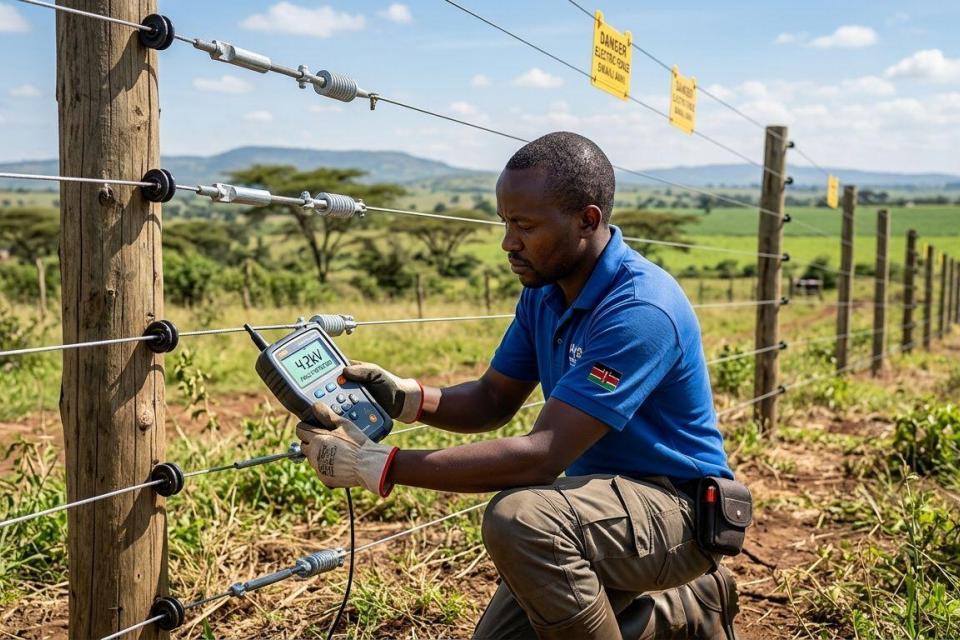
Electric fence fault finders fall into three real categories in the Kenyan market: digital directional finders, analog neon-bulb testers, and combined voltmeter/fault-finder meters. Best overall: a digital directional fault finder for anyone managing a farm or commercial perimeter longer than 200 metres. Best budget option: an analog neon-bulb tester for homeowners who just need to confirm the fence is live. Best for multi-zone commercial sites: an app-connected energizer monitor that flags a fault before a guard ever walks the line.
- A digital directional fault finder is the best electric fence fault finder for locating breaks on long perimeters in 2026.
- Analog neon-bulb testers cost less but only confirm voltage, not fault location.
- Combined voltmeter/fault-finder meters suit routine maintenance checks on home fences.
- App-connected energizer monitors suit compounds with multiple fence zones.
Why this matters
A fence that trips out or loses voltage is only a deterrent when someone finds the break fast. Walking a 500-metre perimeter fence line by hand to find a single grounded strand can take an hour; a fault finder that points you toward the fault cuts that to minutes. In Kenya, where perimeter fences run through farmland, plant growth, and shared boundary walls, faults from vegetation contact and rusted joints are common in the rainy months of 2026, and a fault finder is the difference between a five-minute fix and a half-day search.
The right choice depends on fence length, how often you check it, and whether one person or a security team manages it. A homeowner with 80 metres of fence around a compound has different needs than a farm managing several kilometres of boundary. Start with the electric fence energizers for homes that power the system, since a fault finder is only useful once the energizer itself is confirmed working.
What makes the best electric fence fault finder
- Fault direction indication — points you toward the break instead of just confirming voltage is present
- Range for the fence length — a handheld unit needs enough sensitivity to read a signal at the far end of a long perimeter
- Digital readout vs analog needle — digital displays are faster to read in daylight and at night
- Battery life and ruggedness — units used outdoors in Kenya's rains need a sealed, weatherproof body
- Ease of use for non-technical staff — a guard or gardener should be able to operate it without training
- Compatibility with the energizer voltage class — fault finders rated for low-impedance energizers won't always read high-voltage systems correctly
At a glance
| Type | Best for | Standout feature | Key limitation |
|---|---|---|---|
| Digital directional fault finder | Long perimeters, farms | Shows fault direction and relative distance | Higher unit cost than analog testers |
| Analog neon-bulb tester | Small home fences, quick checks | Simple, no batteries to fail | Confirms voltage only, no fault location |
| Combined voltmeter/fault finder | Routine maintenance on 1-2 zone fences | One tool does voltage reading and fault check | Slower to read than a dedicated digital unit |
| App-connected energizer monitor | Multi-zone commercial sites | Alerts before a manual check is needed | Needs a compatible smart energizer to work |
1. Digital directional fault finder: best for long perimeter and farm fences
A digital directional fault finder reads the current flowing through the fence wire and shows an arrow or needle pointing toward the fault, with many models estimating distance. On a farm boundary or a commercial perimeter running several hundred metres, this cuts search time from an hour of walking to a five-minute walk in the right direction. It reads the fence from any point along the line, so you do not need to start at the energizer.
Digital directional fault finder pros:
- Points toward the fault instead of just confirming voltage
- Works from any point on the fence line, not only at the energizer
- Digital display is legible in bright daylight and at dusk
- Suited to fences over 200 metres where manual walking is impractical
Digital directional fault finder cons:
- Costs more than a basic neon tester
- Requires a basic understanding of current direction to interpret correctly
- Battery-powered, so it needs charging or spare batteries on hand
Best for: farms, large compounds, and any perimeter over 200 metres. Verdict: Buy if your fence is long enough that walking it to find a fault wastes real time.
2. Analog neon-bulb tester: best budget option for small home fences
An analog neon-bulb tester is the simplest fault-finding tool on this list. Touch the probe to the wire and the bulb lights if voltage is present; no light means a break or a dead energizer somewhere between the probe and the power source. It has no digital components to fail and no battery to replace, which makes it reliable for occasional checks.
Analog neon-bulb tester pros:
- Lowest cost entry point for testing an electric fence
- No batteries, nothing to charge
- Simple enough for a homeowner or gardener to use without training
Analog neon-bulb tester cons:
- Confirms voltage only; it will not tell you which direction the fault is
- You still have to walk the fence to isolate the break
- Less useful once a compound has more than one fence zone
Best for: homeowners with a single-zone fence under 150 metres who check it occasionally. Verdict: Buy if budget is the priority and the fence is short enough to walk in a few minutes.
3. Combined voltmeter/fault-finder meter: best for routine maintenance checks
This type combines a standard fence voltmeter with basic fault-finding capability in one handheld unit. It reads the voltage at any point on the line and gives a rough indication of whether the fault sits before or after that point, which suits a maintenance routine where someone checks the fence on a set schedule rather than reacting to an alarm.
Combined voltmeter/fault-finder pros:
- Doubles as a routine voltage checker, not just a fault tool
- Mid-range cost between a neon tester and a full directional finder
- Useful for scheduled maintenance walks on 1-2 zone fences
Combined voltmeter/fault-finder cons:
- Slower to interpret than a dedicated digital directional finder
- Less precise fault location on fences longer than a few hundred metres
- Some models need the energizer voltage class confirmed before purchase
Best for: properties with a maintenance schedule and one or two fence zones. Verdict: Buy if you already do periodic voltage checks and want one tool for both jobs.
4. App-connected energizer monitor: best for multi-zone commercial sites
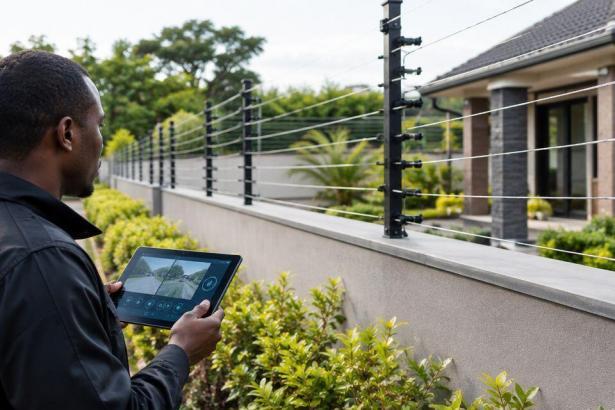
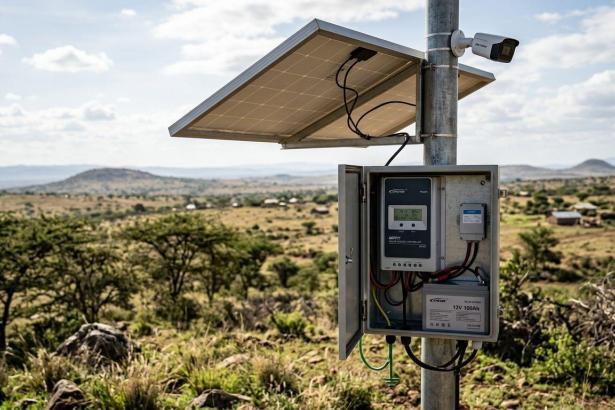
Some newer energizers pair with a monitoring unit or app that flags a voltage drop or fault as it happens, rather than waiting for a guard to notice the fence has tripped. On a commercial site with several fence zones, this shifts fault detection from a manual walk-round to an alert on a phone or control panel, which matters when solar-powered energizers run zones that are inconvenient to check daily.
App-connected energizer monitor pros:
- Flags a fault before a manual check would catch it
- Suited to sites with multiple fence zones and shift-based guarding
- Reduces reliance on someone remembering to walk the perimeter
App-connected energizer monitor cons:
- Only works with a compatible smart energizer, not a retrofit on any fence
- Higher setup complexity than a handheld tester
- Needs a data or network connection to send alerts reliably
Best for: commercial and industrial compounds with several fence zones and a dedicated guard force. Verdict: Buy if the site already runs a compatible smart energizer; Wait if the current energizer doesn't support monitoring.
How we ranked
The ranking weighs fault-location accuracy, fence-length suitability, ease of use for non-technical staff, and how well each type fits Kenyan compound sizes from a small residential perimeter to a multi-hectare farm boundary. Cost is weighed against how much time a tool saves searching a fence line, not against a fixed price point.
Which electric fence fault finder should you choose?
If your fence is under 150 metres and you check it occasionally, the analog neon-bulb tester covers the job at the lowest cost. If you manage a farm boundary, a commercial perimeter, or any fence over 200 metres, the digital directional fault finder is the best electric fence fault finder for 2026 because it points you toward the break instead of leaving you to walk the line. Sites with several fence zones and a smart energizer already installed get more value from an app-connected monitor than from any handheld tool.
Whichever tool you choose, pair it with the right electric fence wire gauge for your fence length and terrain, since undersized wire causes more voltage-drop faults than any tool can fix on its own.
Get help choosing fence equipment
Patsec Security Store supplies and installs electric fencing across Kenya.
FAQ
What is the best electric fence fault finder for a farm in Kenya?
A digital directional fault finder is the best electric fence fault finder for farm boundaries in 2026 because it points toward the break instead of requiring a full walk of the perimeter. It suits fences over 200 metres where manual searching wastes time.
Is a neon-bulb tester good enough for a home fence?
Yes, for a single-zone fence under 150 metres that you check occasionally. It confirms voltage is present but won’t tell you the fault’s location, so you still walk the line to find the break.
Can a fault finder work on a solar-powered energizer?
Most digital and analog fault finders work with solar-powered energizers, since they read the fence wire’s current and voltage rather than the power source. Check the fault finder’s voltage class matches the energizer before buying.
How do I know if my electric fence has a fault?
A drop in voltage at the fence line, a tripped or clicking energizer, or reduced pulse strength usually signals a fault such as a grounded wire, vegetation contact, or a break in the line. A voltmeter or fault finder confirms this at any point along the fence.
Do app-connected energizer monitors replace a handheld fault finder?
Not entirely. They flag that a fault exists on a given zone, but a handheld directional fault finder is still the fastest way to walk to the exact break point on a long perimeter.
How often should an electric fence be checked for faults?
A weekly voltage check catches most faults before they become a security gap, with more frequent checks during Kenya’s rainy months when vegetation growth and ground moisture cause more grounding faults.
What causes most electric fence faults in Kenya?
Vegetation touching the wire, rusted or loose joints, and grounding from waterlogged soil during the rains account for most faults reported on perimeter fences in 2026.
One last thing
Most fault searches take longer than they should because the fence hasn't been checked with a voltmeter first. Confirm the energizer itself is putting out full voltage before you assume the fault is on the line — a weak or failing energizer looks identical to a distant grounding fault until you rule it out, and it's a five-minute check either way.
Related guides
- Best electric fence energizers for homes in Kenya
- Best solar-powered electric fence energizers in Kenya
- Best electric fence wire for perimeter security in Kenya
- Best razor wire for perimeter fencing in Kenya