 English
 Best Smoke Detector for Fire Safety in Kenya 2026
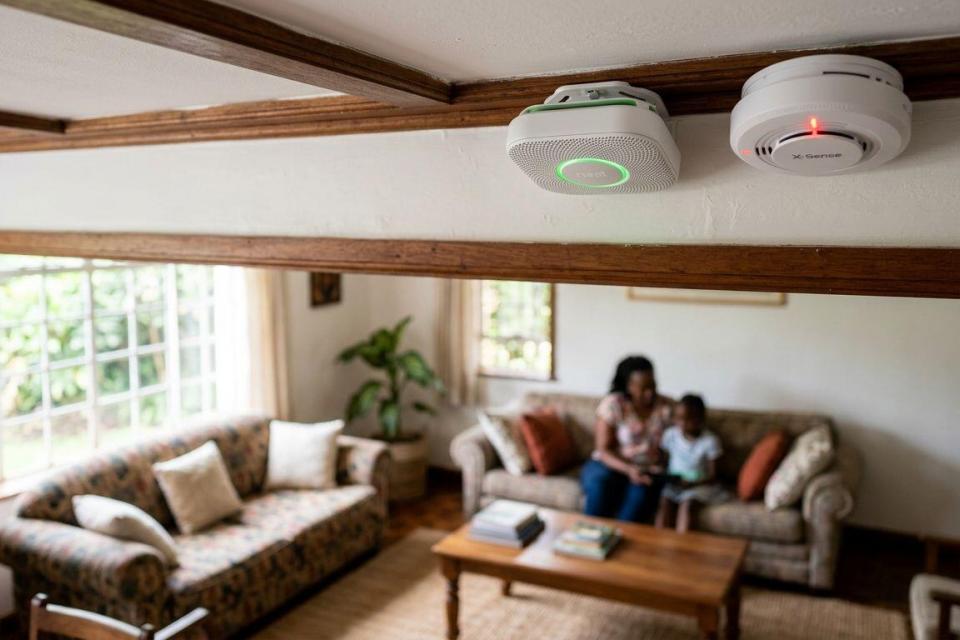
Not every smoke detector suits every room, and picking the wrong type is why alarms get pulled off ceilings after false trips in Nairobi kitchens. This guide ranks the smoke detector types that matter for fire safety in Kenya in 2026, matched to the room or building where each one actually works.
Best overall: dual-sensor (photoelectric + ionization) smoke detector. Best for kitchens and garages: heat detector. Best budget option: standalone photoelectric smoke detector. Best for commercial buildings in Kenya: addressable smoke detector wired to a fire alarm control panel.
- The best smoke detector for fire safety in most Kenyan homes in 2026 is a dual-sensor photoelectric plus ionization unit.
- Heat detectors, not smoke detectors, belong in kitchens and garages to stop false alarms from cooking smoke or dust.
- Commercial buildings need addressable smoke detectors wired into a fire alarm control panel, not standalone battery units.
- Standalone photoelectric detectors are the budget entry point for bedrooms and living rooms without wiring.
Why this matters
A fire can move from a smouldering ember to a life-threatening blaze in as little as 2 minutes, and by then a working smoke detector is the only thing that buys occupants time to get out. Kenya's Occupational Safety and Health Act, 2007 requires workplaces to maintain fire detection and firefighting equipment, which is why offices and apartment blocks increasingly wire smoke detectors into a monitored fire alarm control panel rather than relying on standalone units.
Homes face a different problem: frequent power interruptions mean any smoke detector without battery backup is a gap in coverage exactly when generators or candles are in use. Patsec Security Store stocks and installs fire detection equipment across Nairobi and supplies the fire alarm control panels that tie multiple detectors into one monitored system.
What makes the best smoke detector for fire safety
- Sensor type matched to fire behaviour — photoelectric responds faster to smouldering fires, ionization to fast flames
- False-alarm resistance — critical near kitchens, garages, and dusty workshops
- Battery backup — keeps the unit live through Kenya's power interruptions
- Interconnection capability — one alarm should trigger every unit in the building
- Compatibility with a fire alarm control panel — required for commercial and multi-unit buildings
- Ease of testing and maintenance — monthly test button access and simple battery replacement
Smoke detector types at a glance
| Type | Best for | Standout feature | Key limitation |
|---|---|---|---|
| Dual-sensor (photoelectric + ionization) | Whole-home coverage | Detects both smouldering and flaming fires | Costs more than single-sensor units |
| Standalone photoelectric | Budget bedrooms/living rooms | Fast response to smouldering smoke | No network or panel integration |
| Ionization | Workshops, generator rooms | Quick response to fast-flame fires | More prone to nuisance alarms near cooking |
| Heat detector | Kitchens, garages | Ignores smoke and dust, so no false trips | Does not detect smoke at all |
| Addressable smoke detector | Commercial buildings | Reports the exact zone to a fire alarm control panel | Needs a compatible panel and wiring |
| Wireless interconnected | Retrofit buildings | No rewiring needed to link units | Battery management across more units |
1. Dual-sensor smoke detector: best overall for whole-home coverage
A dual-sensor smoke detector combines a photoelectric sensor with an ionization sensor in one housing, covering both smouldering and fast-flame fire types. It is the standard recommendation for hallways, living rooms, and near bedrooms where you cannot predict which fire type will start.
Dual-sensor pros:
- Covers both smouldering and flaming fire scenarios
- One unit instead of mixing two detector types
- Suits most residential rooms without a fire alarm panel
Dual-sensor cons:
- Higher unit cost than single-sensor detectors
- Still needs to be kept away from kitchens and garages
Best for: homeowners who want one detector type across an entire house. Verdict: Buy.
2. Standalone photoelectric smoke detector: best budget option
A photoelectric smoke detector uses a light beam that scatters when smoke particles enter the chamber, giving it a fast response to smouldering fires — the type most common in upholstery and electrical faults. It is a battery-only unit with no wiring or panel required, which keeps installation simple.
Photoelectric pros:
- Lower cost entry point for basic coverage
- Fast to smouldering, slow-burning fires
- Simple battery installation, no electrician needed
Photoelectric cons:
- Slower to react to fast-flame fires than ionization types
- No network link to other alarms unless bought as an interconnected version
Best for: bedrooms and living rooms on a tight budget. Verdict: Buy.
3. Ionization smoke detector: best for fast-flame risk areas
An ionization smoke detector uses a small radioactive source to detect ions disrupted by smoke, reacting quickly to fast-flaming fires such as paper or flammable liquids catching alight. It fits workshops, generator rooms, and storage areas away from cooking.
Ionization pros:
- Rapid response to fast, flaming fires
- Inexpensive compared to dual-sensor units
- Compact and simple to mount
Ionization cons:
- Prone to nuisance alarms near cooking fumes and steam
- Slower than photoelectric on smouldering fires
Best for: workshops and generator rooms. Verdict: Buy for non-kitchen utility spaces.
4. Heat detector: best for kitchens and garages
A heat detector triggers on a fixed temperature rise rather than smoke, which is why it replaces a smoke detector in kitchens, garages, and dusty storage rooms where cooking steam or fumes would otherwise set off constant false alarms.
Heat detector pros:
- Immune to cooking smoke and dust false triggers
- Reliable in garages with vehicle exhaust
- Low maintenance once installed
Heat detector cons:
- Detects heat only, not smoke — no early warning from a smouldering fire
- Must be paired with smoke detectors elsewhere in the building
Best for: kitchens and garages only, never as a whole-building solution. Verdict: Buy for these rooms specifically.
5. Addressable smoke detector: best for commercial buildings
An addressable smoke detector reports its exact location back to a fire alarm control panel, so a facilities manager sees which zone triggered instead of just a building-wide alarm. This is the standard for offices, apartment blocks, and warehouses under Kenya's workplace fire safety requirements in 2026.
Addressable pros:
- Pinpoints the exact zone during an incident
- Scales across large buildings on one panel
- Supports compliance checks for commercial occupiers
Addressable cons:
- Requires a compatible fire alarm control panel and professional wiring
- Higher upfront installation effort than standalone units
Best for: offices, apartment blocks, and warehouses. Verdict: Buy with a panel install.
6. Wireless interconnected smoke detector: best for retrofit buildings
A wireless interconnected smoke detector links to other units over radio signal, so one triggered alarm sounds every detector in the property without running cable through existing walls or ceilings.
Wireless pros:
- No rewiring needed in finished buildings
- Whole-property alert from a single triggered unit
- Faster installation than wired interconnection
Wireless cons:
- Battery management across every unit in the network
- Signal range can be an issue in larger properties
Best for: older buildings being retrofitted for fire safety. Verdict: Buy for retrofit projects.
How we ranked these
Each type was placed against the six criteria above — sensor response, false-alarm resistance, battery backup, interconnection, panel compatibility, and ease of maintenance — then matched to the room or building type where it performs best rather than ranked as one universal winner.
Get a fire alarm system quote
Match smoke detectors to a fire alarm control panel for your building.
Which smoke detector should you choose?
For a typical Nairobi home in 2026, install dual-sensor detectors in hallways and bedrooms, a heat detector in the kitchen and garage, and skip smoke detectors entirely in those two rooms. For a commercial building, go straight to addressable smoke detectors wired to a fire alarm control panel — it is the only option that satisfies zone-level monitoring and workplace fire safety obligations.
FAQ
What is the best smoke detector for fire safety in 2026?
A dual-sensor photoelectric plus ionization smoke detector is the best overall choice for 2026 because it responds to both smouldering and fast-flame fires. Commercial buildings should pair addressable detectors with a fire alarm control panel instead.
Is a smoke detector or heat detector better for a kitchen?
A heat detector is better for a kitchen because it ignores cooking smoke and steam that trigger false alarms on a standard smoke detector. Smoke detectors belong in bedrooms, hallways, and living rooms instead.
How often should a smoke detector be replaced?
A smoke detector should be replaced every 10 years even if the battery is still working, since the sensor itself degrades over time. Test the unit monthly using the built-in test button.
Do smoke detectors need to connect to a fire alarm panel?
Homes can run standalone or interconnected smoke detectors without a panel, but commercial and multi-unit buildings need addressable detectors wired to a fire alarm control panel. This gives zone-level reporting required for workplace fire safety compliance in Kenya.
What is the difference between photoelectric and ionization smoke detectors?
Photoelectric detectors respond faster to smouldering, slow-burning fires, while ionization detectors respond faster to fast, flaming fires. A dual-sensor unit combines both technologies in one housing.
Can a smoke detector work during a power cut?
A smoke detector with battery backup keeps working through a power interruption, which matters given how often Kenyan homes and offices lose grid power. Units without battery backup go dark exactly when candles or generators raise fire risk.
Are wireless smoke detectors reliable for large properties?
Wireless interconnected smoke detectors work well for retrofits but signal range can weaken across large properties with multiple floors. Wired addressable systems on a fire alarm control panel are more reliable for large commercial buildings.
One last thing
The single most overlooked fire safety mistake in 2026 is a smoke detector installed directly inside a kitchen or above a stove — replace it with a heat detector and the false-alarm complaints stop overnight.
Related guides
- Fire alarm control panels for buildings in Kenya
- Home security system cost in Kenya
- CCTV cameras for home security in Kenya
- Access control systems for small businesses in Kenya