 English
 Best Solar Energizer for Electric Fence in Kenya 2026
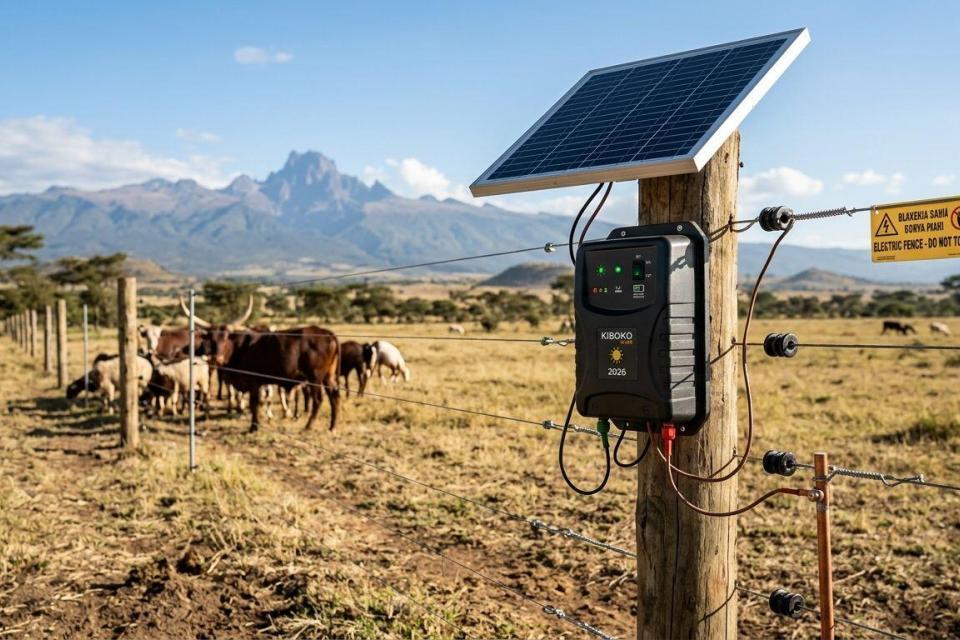
Choosing between Gallagher solar units, hybrid solar/mains kits and portable solar energizers comes down to fence length, grid reliability and how the perimeter gets used, and this guide ranks the categories so you buy the right one the first time in 2026.
- Gallagher solar energizers are the best solar energizer for electric fence on farms and large estates with no grid connection.
- Hybrid solar/mains units suit Nairobi homes that lose Kenya Power supply but still want mains as the default source.
- Portable solar kits fit construction sites and temporary perimeters, not permanent long fence runs.
- Compact low-power solar units are correctly sized for a single residential boundary, not an expanding compound.
- High-output solar systems are built for commercial and industrial perimeters running into hundreds of metres.
Why this matters
An undersized solar energizer drains its battery on cloudy days and leaves the fence dead by morning; an oversized one wastes money on panel capacity the fence line never needs. Electric fence energizers in Kenya are rated by joule output, and manufacturers typically publish ranges from around 0.1J for small residential units up to 10J or more for long farm and commercial perimeters, per international standards such as IEC 60335-2-76 that govern energizer safety. Matching that output to actual fence length and terrain is the single decision that determines whether a solar energizer performs in 2026 or gets replaced within a year.
Patsec Security Store stocks electric fencing equipment for both categories, and picking the right one starts with knowing what each type is actually built for.
What makes the best solar energizer for electric fence
- Joule output matched to fence length — undersized output means weak shocks on long runs.
- Solar panel wattage vs battery capacity — the panel must recharge faster than the battery drains overnight.
- Battery backup on cloudy days — energizers commonly carry a few days of reserve charge for overcast spells common in Kenya's rainy seasons.
- Weatherproof, outdoor-rated housing — the unit sits exposed to sun, rain and dust year-round.
- Low-voltage safety compliance — pulsed output should meet recognised electric fence safety standards, not raw mains-style current.
- Ease of installation and maintenance — panel angle, earthing and wire tensioning all affect real-world performance.
Solar electric fence energizers at a glance
| Category | Best for | Standout feature | Key limitation |
|---|---|---|---|
| Gallagher solar energizers | Farms and large estates | Built for long, unshaded perimeter runs | Needs unobstructed sun exposure |
| Hybrid solar/mains energizers | Homes with grid outages | Automatic switch to backup on blackout | Still needs a mains connection as primary source |
| Portable solar energizer kits | Construction and temporary sites | Self-contained, moves between sites | Lower output limits fence length |
| Compact low-power solar units | Single residential boundaries | Sized correctly for short runs | Undersized once the perimeter grows |
| High-output solar systems | Commercial and industrial perimeters | Highest joule output in the solar range | Needs professional sizing and a bigger panel array |
1. Gallagher solar energizers: best solar energizer for electric fence on farms
Gallagher is one of the recognised international electric fencing brands carried through Patsec Security Store, and its solar units are built for livestock enclosures and rural perimeter security where there is no grid connection to draw from. A solar panel charges an onboard battery that keeps the fence pulsing day and night without any mains wiring.
Gallagher solar energizer pros:
- Established brand widely used across Kenyan farms and estates.
- Runs fully independent of grid electricity, ideal for remote gates and rural boundaries.
- Built for continuous outdoor duty across long fence lines.
Gallagher solar energizer cons:
- Higher joule-output solar models cost more upfront than a basic mains unit.
- Performance drops if the panel sits under tree shade for part of the day.
Best for: farms, large estates and rural perimeter fencing.
Verdict: Buy for long, unshaded perimeter fencing with no grid access.
2. Hybrid solar/mains energizers: best for homes with unreliable grid power
Hybrid units treat mains supply as the primary source and switch to a solar/battery backup automatically the moment Kenya Power cuts out, so the fence never goes dead during an outage. That makes them a practical fit for Nairobi and peri-urban compounds already wired for electricity.
Hybrid solar/mains energizer pros:
- Continuous fence protection through blackouts without oversizing a full-time solar system.
- Familiar mains installation for compounds already connected to the grid.
- Lower solar panel requirement than an off-grid solar-only unit.
Hybrid solar/mains energizer cons:
- Still depends on a mains connection as the default source, so it's not a fit for sites with no wiring.
- Extra switching electronics add another component that can fail.
Best for: urban and peri-urban homes on the grid that experience regular outages.
Verdict: Buy for grid-connected homes that want backup, not full independence.
3. Portable solar energizer kits: best for temporary and construction-site fencing
These kits pack a small solar panel, battery and energizer into one self-contained housing designed to be relocated as a site perimeter changes shape. No wiring into a building's electrical system is required.
Portable solar energizer kit pros:
- Relocates quickly as construction site or event boundaries shift.
- No electrical wiring into an existing building needed.
- Useful for securing a compound before a permanent fence goes up.
Portable solar energizer kit cons:
- Lower joule output limits how much fence length it can drive.
- Smaller battery gives shorter backup on consecutive overcast days.
Best for: construction sites, temporary compounds and event perimeters.
Verdict: Buy for short-term or moving perimeters. Skip it for a permanent long-run fence.
4. Compact low-power solar energizers: best for small residential boundary fencing
Built with a smaller panel and lower joule output, these units suit a single-family plot boundary or a gate run rather than a sprawling perimeter. Sizing matches typical residential fence lengths, so there's no wasted capacity.
Compact solar energizer pros:
- Lower entry cost into solar electric fencing for a small property.
- Panel and battery sized correctly for short residential runs.
- Straightforward installation on a single-family compound.
Compact solar energizer cons:
- Undersized for anything beyond a typical residential boundary.
- Needs a joule-output upgrade if the property or perimeter later expands.
Best for: single-family homes and small compounds in Nairobi and other urban centres.
Verdict: Buy for a small boundary fence. Wait and size up first if you plan to extend the perimeter.
5. High-output solar energizer systems: best for commercial and industrial perimeters
These systems carry the highest joule output in the solar range and are built for perimeters running into hundreds of metres around warehouses, factories or institutional compounds. Voltage needs to stay consistent across the full wire run, which is where output rating matters most.
High-output solar system pros:
- Highest joule output available in a solar-powered configuration.
- Keeps voltage consistent across long perimeter wire runs.
- Pairs with alarm and monitoring systems for layered perimeter security.
High-output solar system cons:
- Needs a larger panel array and battery bank, meaning more roof or ground space.
- Professional installation is essential to size the system correctly.
Best for: commercial, industrial and institutional perimeter fencing.
Verdict: Buy for large commercial perimeters, but get a site survey done before ordering.
How this ranking works
Each category is scored against the six criteria above: joule output matched to fence length, panel-to-battery balance, cloudy-day reserve, weatherproof housing, low-voltage safety compliance, and installation ease. No single unit wins every category, which is why the list separates farms from homes from temporary sites instead of naming one universal winner.
Get the right energizer sized for your fence
Browse the full electric fencing range at Patsec Security Store.
Which solar energizer for electric fence should you choose?
For a farm or rural estate with no grid connection, a Gallagher solar energizer is the best overall pick for 2026 because it's built for exactly that job. Nairobi homeowners on the grid who mainly need blackout backup should choose a hybrid solar/mains unit instead. Construction sites and short-term perimeters do better with a portable kit, small residential plots with a compact low-power unit, and commercial sites with a properly surveyed high-output system.
FAQ
What’s the best solar energizer for electric fence in Kenya in 2026?
For farms and large estates with no grid connection, a Gallagher solar energizer is the best solar energizer for electric fence because it’s built for long, continuous perimeter runs. Homes on the grid that mainly need blackout backup are better served by a hybrid solar/mains unit.
Is a solar energizer better than a mains-powered energizer?
A solar energizer is better where there’s no reliable grid connection, since it runs independent of Kenya Power supply. Where grid power is stable, a mains or hybrid unit is often simpler and cheaper to run.
How much fence can a solar energizer cover?
Coverage depends on the unit’s joule output relative to fence length and wire type, with higher-output solar systems built specifically for long commercial and farm perimeters. Compact low-power units are sized for short residential boundaries only.
Do solar electric fence energizers work during Kenya’s cloudy rainy seasons?
Yes, as long as the battery has enough reserve capacity to bridge several consecutive overcast days, which is standard practice in energizer design. Panel placement in direct, unobstructed sun matters more than total panel size during extended cloud cover.
Can I use a solar energizer for a home perimeter fence?
Yes, compact low-power solar energizers are built specifically for single residential boundaries and gate runs. A larger property or expanding perimeter needs a higher joule-output unit instead of a compact one.
How do I maintain a solar electric fence energizer?
Keep the solar panel clear of shade and dust, check the battery connections periodically, and confirm fence wire tension stays consistent since slack wire reduces voltage delivery. These checks matter more in solar systems since there’s no mains backup to mask a weak battery.
What size solar panel do I need for an electric fence energizer?
Panel size should match the energizer’s joule output and the battery’s charging needs, which is why farm-grade Gallagher units carry larger panels than compact residential models. A site survey is the reliable way to size a panel correctly rather than guessing from fence length alone.
Are hybrid solar/mains energizers worth it over solar-only units?
Hybrid units are worth it for grid-connected homes that want continuous protection through outages without oversizing a full solar system. They’re not the right choice for rural sites with no mains wiring at all.
One last thing
The most common failure with solar electric fence energizers isn't a weak unit, it's a shaded panel: partial shade for even a few hours a day cuts charging enough that the battery never fully recovers before the next overcast spell, and by 2026 that's still the top reason solar fence installations underperform in Kenya. Check panel placement before blaming the energizer.