 English
 Fire Alarm System for Hotels: 2026 Setup Guide
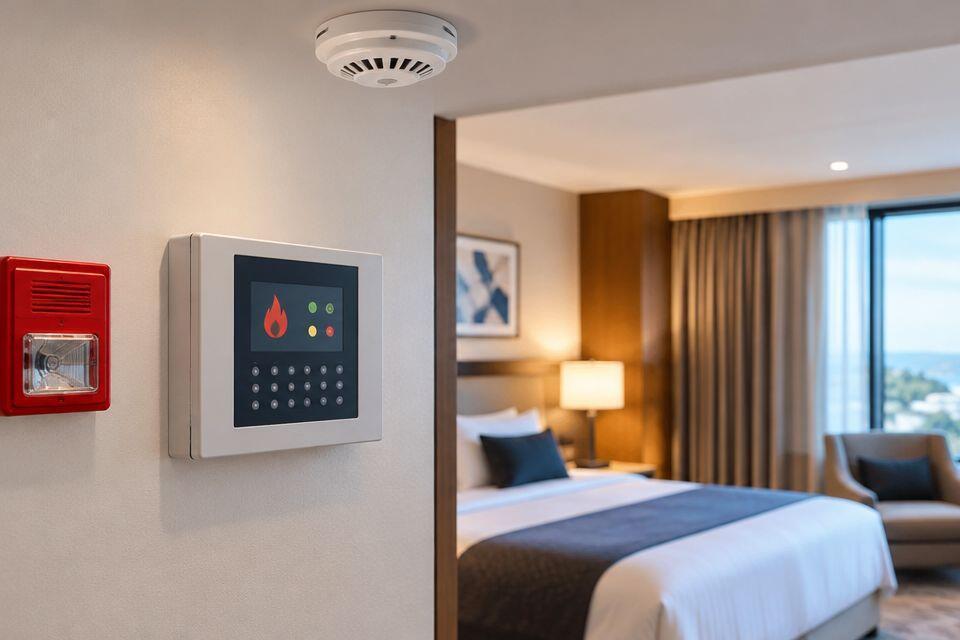
A fire alarm system for hotels and guesthouses is a networked detection and alarm setup — smoke detectors, heat detectors, manual call points and a control panel — built to spot a fire fast and get sleeping guests moving before smoke fills a corridor. Hotels need faster detection-to-alarm response and louder, clearer signalling than a home or office because guests don't know the exits, many are asleep, and a single sounder rarely carries through a closed hotel room door.
- An addressable fire alarm panel suits multi-storey hotels; a conventional panel works for guesthouses under 20 rooms.
- Heat detectors, not smoke detectors, belong in kitchens and laundries to cut false alarms.
- BS 5839 calls for 24 hours of standby power plus 30 minutes of full alarm capacity after a mains failure.
- Kenya’s Occupational Safety and Health Act, 2007 requires fire risk assessments and drills at hotel premises.
- Fire doors should release automatically on alarm — wire the fire alarm system for hotels into access control, not around it.
Why fire alarm systems matter for hotels and guesthouses
A guest room fire behaves differently from an office fire: the occupant is often asleep, disoriented in an unfamiliar layout, and may not smell smoke until it's under the door. That's the reason hotel-grade detection and sounder placement is stricter than domestic guidance.
Kenya's Occupational Safety and Health Act, 2007 requires employers, including hotel and guesthouse operators, to carry out fire risk assessments and hold periodic evacuation drills. County fire safety audits — tied to the occupancy certificate a hotel needs to keep operating — check that the panel, detectors and call points are tested and logged, not just installed. Heading into 2026, more counties are enforcing this at licence renewal, so a fire alarm system for hotels that's undocumented is functionally the same as one that doesn't exist on audit day.
Set up a fire alarm system for hotels and guesthouses
Assess your hotel's fire risk zones
Walk the property before buying anything. A panel sized off guesswork either under-covers real risk areas or drowns you in false alarms from the wrong detector type.
- Walk every floor and mark kitchens, laundries, generator rooms and boiler rooms as high-risk zones
- Check corridor width and exit count per floor against guest room numbers
- Note areas with steam or cooking smoke that trip standard smoke detectors
- List rooms with electric heaters, gas cylinders or a standby generator
- Record storey count and staircase layout for evacuation planning
Choose a fire alarm control panel sized for your property
The panel is the decision that shapes everything after it — get the category right before you spec detectors.
- Conventional panels group detectors into zones, adequate for guesthouses under 20 rooms
- Addressable panels identify the exact triggering device, worth it once you're past 50 rooms or several floors
- Confirm the panel handles your total detector and call point count with room to expand
- Check the panel's standby battery rating meets the 24-hour standby, 30-minute alarm benchmark set by BS 5839
- Compare current fire alarm control panels before committing to a brand and zone count
Install smoke and heat detectors by area type
The wrong detector in the wrong room is the single biggest cause of nuisance alarms in hotels.
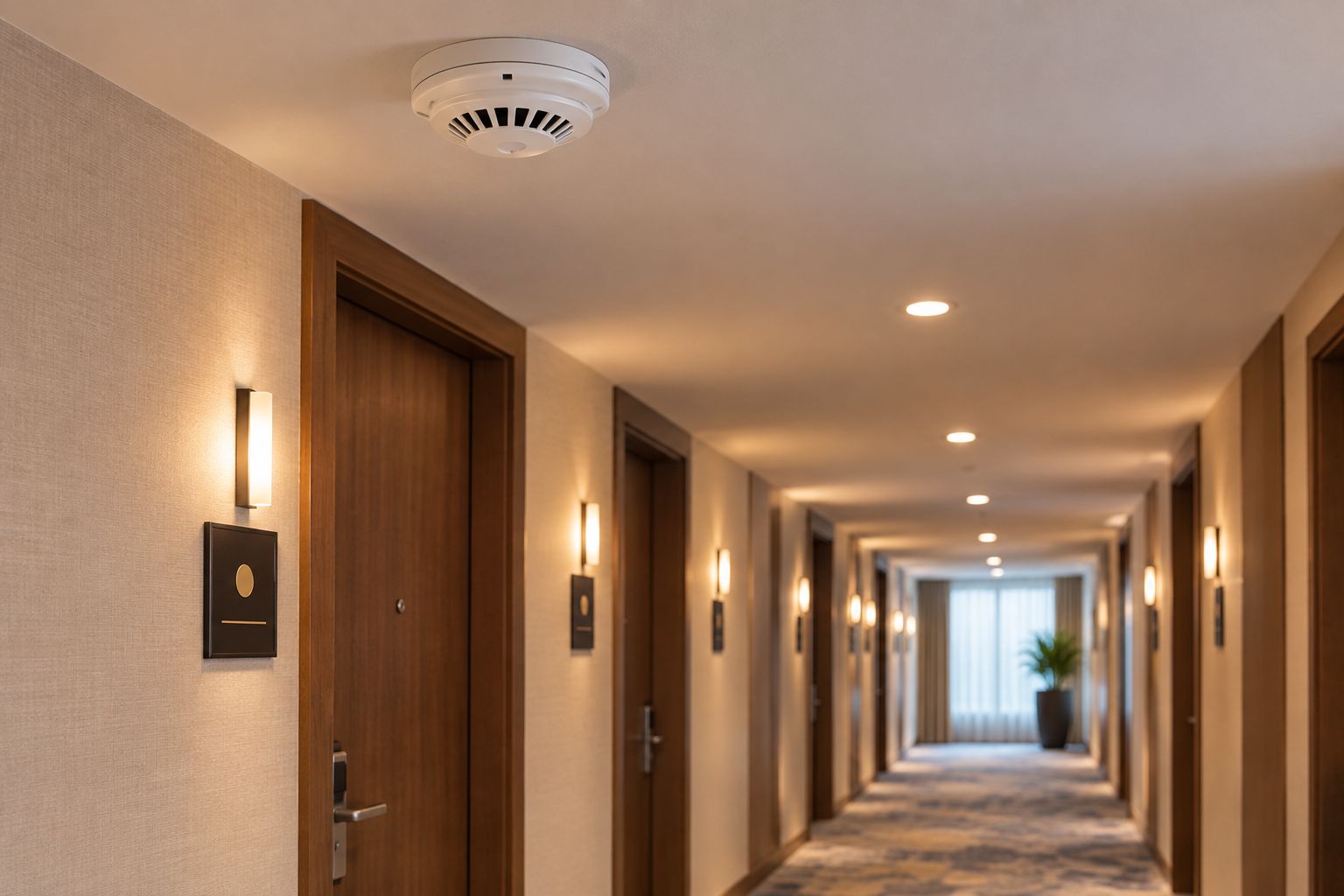
- Photoelectric smoke detectors in guest rooms, corridors and reception — they respond well to smouldering fires
- Heat detectors in kitchens, laundries and boiler rooms to avoid steam-triggered false alarms
- Ionisation detectors only in dry storage, never near bathrooms or kitchens
- Ceiling-mounted units spaced within roughly a 7.5-metre radius per BS 5839-1 coverage guidance
- Keep detectors clear of air conditioning vents that dilute smoke before it reaches the sensor
- Check smoke detectors for fire safety rated for the room type before ordering in bulk
Add manual call points and sounders per floor
Detectors catch the fire; call points and sounders get people moving. Both need to be reachable and loud enough for a sleeping guest.
- Mount call points at every exit and stair landing, no more than 30 metres apart on escape routes
- Fit sounders loud enough to wake sleeping guests through a closed door — BS 5839 sets a 75 dB(A) benchmark at the bed head
- Add visual strobes in rooms for guests with hearing impairments
- Wire sounders in zones so a fire on one floor doesn't silence alarms on others
- Test that call point glass-break mechanisms aren't blocked by furniture or décor
Integrate the alarm with CCTV and access control
A fire alarm that doesn't talk to your other systems leaves fire doors locked and cameras pointed the wrong way when it matters.
- Configure fire doors on magnetic locks to release automatically when the alarm triggers
- Route the alarm signal so CCTV records the triggering zone for later review — see current CCTV installation cost figures if you're adding cameras alongside the panel
- Connect the panel to a monitored line or SMS dialler so off-site security staff get alerted
- Keep lift override active so cars return to ground floor and lock open during an alarm
- Match access control battery backup to the fire panel's standby duration so doors don't fail-locked in a power cut
Get a fire alarm system quote
Talk through panel sizing, detector count and integration for your property.
Test and maintain the system on a schedule
An untested panel is a liability at audit time and a false comfort every other day of the year.
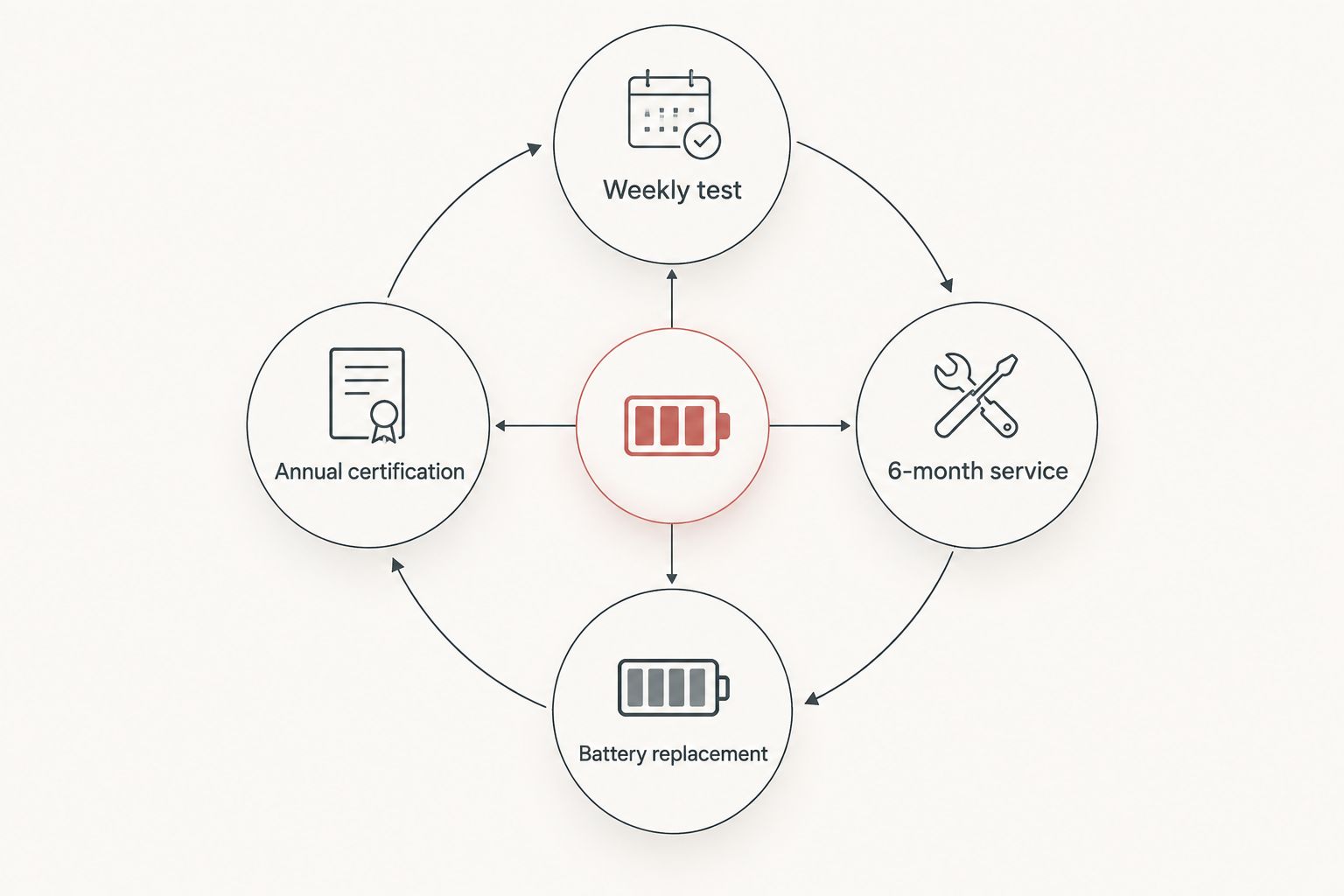
- Test call points and sounders weekly, rotating which device you check
- Service detectors and clean sensor heads every 6 months to cut dust-triggered false alarms
- Replace standby batteries every 4 years or per manufacturer guidance, whichever comes first
- Log every test, false alarm and fault in an on-site fire logbook for inspection
- Book annual certification testing ahead of your fire safety audit renewal, not the week before
Train staff on evacuation and false-alarm response
The best panel in the building doesn't evacuate anyone by itself — staff response speed decides the outcome.
- Run a fire drill at least twice a year covering both day and night shift staff
- Assign a fire warden per floor responsible for guest room sweeps
- Train reception to investigate an alarm within the panel's pre-alarm delay window, never to disable it
- Keep an up-to-date guest list at the assembly point for headcount
- Stock and check fire extinguisher coverage for each risk zone alongside the panel service
Comparing fire alarm system options for hotels
| Option | Best for | Key limitation |
|---|---|---|
| Conventional fire alarm panel | Guesthouses and small hotels under 20 rooms | Identifies the zone, not the exact device, slowing response on larger floors |
| Addressable fire alarm panel | Multi-storey hotels with 50+ rooms | More wiring complexity during installation |
| Wireless fire alarm system | Heritage buildings or guesthouses where rewiring is impractical | Needs more frequent battery checks across every device |
| Hybrid addressable-plus-wireless | Hotels adding a new wing without ripping out existing wiring | Costs more to configure than a single-technology setup |
Verdict: an addressable fire alarm panel is the right call for any hotel over 20 rooms or more than two floors; a conventional panel is fine for a guesthouse that fits on one storey. Buy addressable for growing properties, hold on conventional only if room count is fixed and small.
Common mistakes hotels and guesthouses make
- Installing standard smoke detectors in kitchens, then living with repeated false alarms from steam and cooking smoke
- Sizing a conventional panel for a hotel that keeps adding rooms, then losing zone-level fault diagnosis as it grows
- Skipping the battery backup check, leaving the panel silent during a power interruption
- Not tying fire door releases to the alarm, so doors stay locked shut during an actual fire
- Treating the annual fire certificate as a one-off cost instead of a recurring requirement tied to the occupancy licence
FAQ
What’s the best fire alarm system for hotels in Kenya?
An addressable fire alarm panel is the best fit for hotels over 20 rooms or more than one floor, because it pinpoints the exact device that triggered instead of just a zone. Guesthouses under 20 rooms on a single storey can run on a conventional panel.
Is an addressable panel better than a conventional panel for hotels?
Yes, for larger properties — addressable panels identify the specific detector or call point that triggered, which speeds up staff response on multi-floor buildings. Conventional panels only narrow the fault down to a zone, which is fine for small, single-storey guesthouses.
How many smoke detectors does a hotel need per floor?
Detector count depends on room layout and ceiling coverage, with spot-type smoke detectors typically spaced within a 7.5-metre radius under BS 5839-1 guidance. Every guest room, corridor and public area on the floor needs coverage, not just the corridors.
Do hotel kitchens need heat detectors instead of smoke detectors?
Yes — kitchens and laundries should use heat detectors, because steam and cooking smoke trigger smoke detectors constantly. Heat detectors only respond to a genuine temperature rise, cutting nuisance alarms.
How often should a hotel fire alarm system be tested?
Call points and sounders should be tested weekly, detectors serviced every 6 months, and the full system certified annually ahead of your fire safety audit. Log every test and fault on-site.
Does a hotel fire alarm need to connect to CCTV?
It’s not mandatory but it’s standard practice — routing the alarm signal to CCTV records the triggering zone for later review and supports insurance and audit documentation. It also lets security staff verify a real fire before evacuating a full building.
What happens if a hotel fails its annual fire safety audit in Kenya?
A failed fire safety audit can delay or block renewal of the occupancy certificate a hotel needs to keep operating. Fixing the gaps and re-testing before the next inspection window is the standard remedy.
How long should a fire alarm panel’s battery back-up last?
BS 5839 sets the benchmark at 24 hours of standby power plus 30 minutes of full alarm capacity after a mains failure. Confirm your panel’s battery rating meets this before installation, not after a power cut exposes the gap.
One last thing
Most hotel fire alarm tests happen during the day shift, when staff are alert and corridors are quiet. Run at least one test at 2 a.m. once a year with the night shift on duty — that's the scenario the system actually has to work in, and it's the one almost nobody rehearses before 2026 audit season arrives.
Related guides