 English
 How Long Does Electric Fence Installation Take in Kenya?
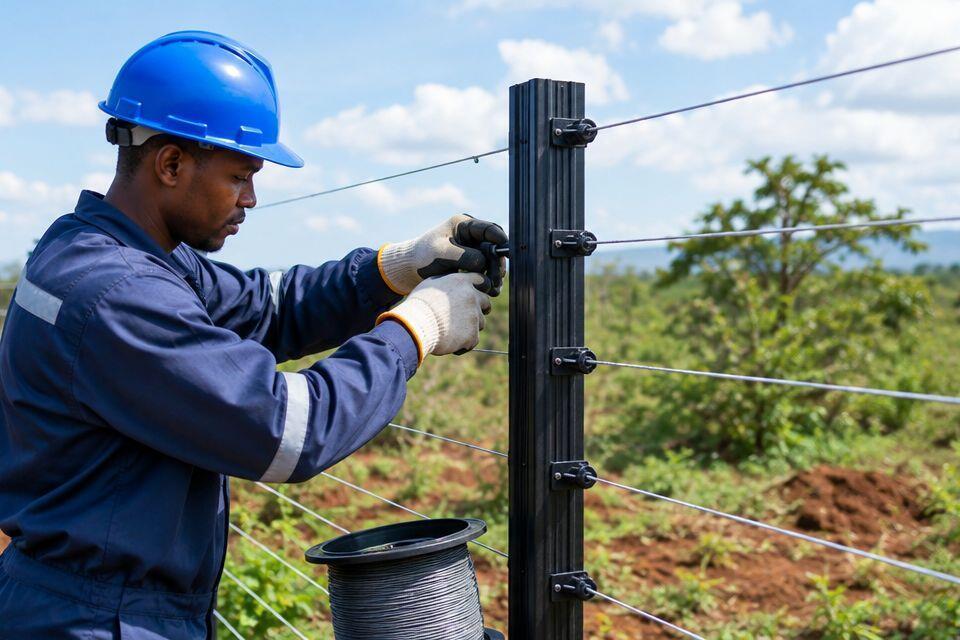
Electric fence installation in Kenya takes the time needed to prepare your boundary, fit the equipment, connect the energizer and test the finished system. Get a site-specific completion schedule after the survey, with testing and handover included. A schedule covering only poles and wire does not tell you when the fence will be ready to use.
- How long does electric fence installation take? Confirm the duration after a boundary survey, not from perimeter length alone.
- Patsecuritysolutions supplies electric fencing equipment and installation for homeowners and businesses.
- Include energizer setup, electric fence testing and user handover in the agreed completion schedule.
- Resolve wall repairs, gate crossings and the power arrangement before installation starts.
How long does electric fence installation take in Kenya?
Your installation schedule should cover the complete job, from site preparation to a tested fence. Ask the installer to separate work on the boundary from equipment setup and final checks. That distinction makes the proposed finish date useful.
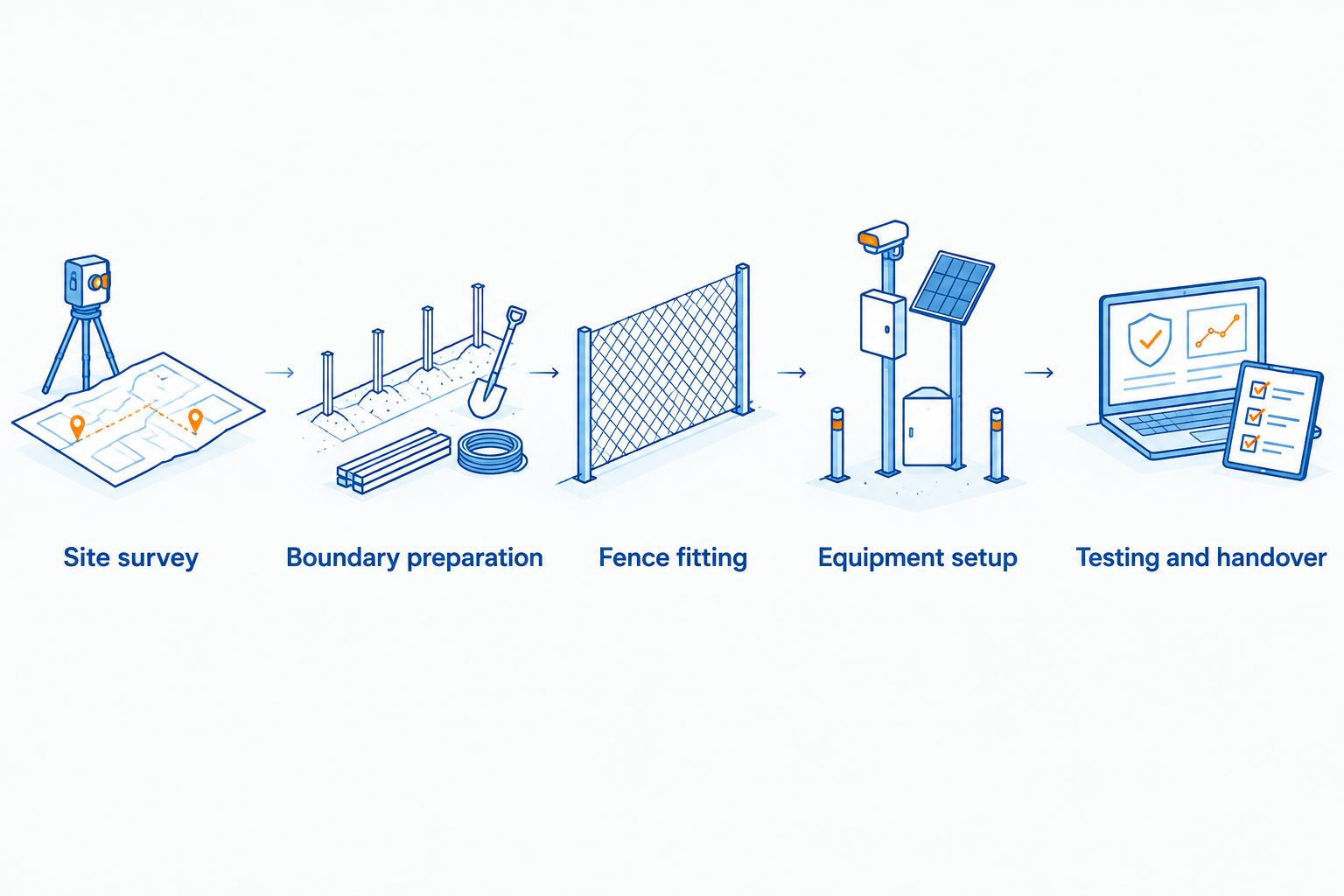
Use this sequence to assess the schedule:
- Site survey: Confirm the boundary route, mounting surfaces, gates, power arrangement and equipment location.
- Boundary preparation: Complete any agreed repairs, clear obstructions and make the work areas accessible.
- Fence fitting: Install the specified supports, insulators, wire and connections.
- Equipment setup: Fit the energizer and complete the specified power, earthing and protection arrangements.
- Testing and handover: Check the installed fence, demonstrate its controls and record any outstanding work.
Do not treat each stage as a separate visit unless the installer has scheduled it that way. The sequence describes the work you need covered, not a fixed number of days.
For a 2026 installation, request a written start date, planned completion date and list of conditions that affect those dates. You should know which preparation tasks belong to you and which belong to the installer before accepting the schedule.
Why this matters
A fence with wire in place is not the same as a commissioned security system. The energizer, connections and earthing also need checking. Your handover should explain how to operate the installed equipment and recognise a fault.
Patsecuritysolutions supplies security equipment and installation to homeowners and businesses. When discussing electric fencing, describe the whole boundary and the result you need rather than asking for a finish date based only on its length.
Compare completion schedules against the same scope. One proposal can include preparation and commissioning while another covers fitting only. Those are different jobs, even when both describe an electric fence installation.
Keep the agreed scope alongside the equipment list. If the route or equipment changes, ask whether the completion schedule changes too.
Choose the installation scope before agreeing a date
The mounting arrangement is an early decision. An existing boundary wall and a new freestanding fence require different supporting work. Neither description, on its own, establishes an installation duration.
| Installation option | Best for | Useful starting point | Limitation to resolve |
|---|---|---|---|
| Electric fencing on an existing wall | Buyers retaining a suitable boundary wall | An existing mounting surface | The installer must assess its condition and mounting suitability |
| New freestanding electric fencing | Buyers needing a separate fence line | A route designed around the site | Supports and the fence route need planning before fitting |
| Replacement of existing electric fencing | Buyers renewing an installed system | An established boundary route | Existing supports, wiring and equipment need inspection before reuse |
For wall-mounted electric fencing, show the installer damaged sections, changes in wall height and places where access is restricted. Do not assume the wall is suitable because it already carries another type of barrier.
For a freestanding installation, agree the route before equipment is fitted. Identify gates, corners and areas where landscaping or other work is planned. Moving the route after fitting creates additional work.
For a replacement, ask which components will remain and which will be removed. Reusing equipment should follow inspection and compatibility checks, not an assumption that every existing component belongs in the new system.
Choose the arrangement that suits the boundary, then assess the schedule. A shorter proposed installation is not a reason to accept an unsuitable mounting arrangement.
Why electric fence installation time varies
The useful question is not simply whether your property is small or large. It is whether the installer can complete the agreed work without unresolved preparation or design decisions.
Discuss these factors during the survey:
- Boundary condition: Repairs and unsuitable mounting surfaces need resolving before the relevant fence sections are fitted.
- Fence route: Corners, changes in level and separate boundary sections need their own fixing and connection arrangements.
- Gate crossings: The design must accommodate entrances without preventing normal gate operation.
- Power and earthing: The installer needs an agreed equipment location and an appropriate arrangement for the specified energizer.
- Equipment scope: Fence monitoring, backup power or other specified additions belong in the installation plan rather than being added informally at handover.
- Working access: The installer needs access to the boundary, equipment location and any areas included in the work.
Ask the installer to identify which factors affect your property. A generic list is not a substitute for a survey.
For your 2026 project, record unresolved items beside the proposed dates. That gives you a practical distinction between an agreed installation schedule and a schedule that still depends on preparation.
Buying steps: get a schedule you can use
A useful enquiry gives the supplier enough information to discuss the job, while leaving technical selection to the site assessment. Start with the boundary and intended use. Then confirm the equipment and handover requirements.
Describe the boundary
Provide photographs of the wall or fence line, corners, gates and proposed equipment area. Include areas that are difficult to reach, not just the clearest stretch of boundary.
If you have a measured perimeter, share it and explain how you measured it. The installer should still confirm the route and required materials during the survey. A perimeter measurement does not describe every mounting or connection task.
Confirm what the proposal includes
Ask for an equipment list and a description of the installation work. Identify preparation, fence fitting, energizer setup, testing and handover separately.
Confirm who handles wall repairs or other work outside the fencing scope. If another contractor is involved, agree the order of work before booking installation. Do not leave responsibility for preparation unclear.
Agree what completion means
Request a planned finish date for the tested system, not just the end of wire fitting. Ask how outstanding defects will be recorded and when they will be addressed.
Keep equipment documentation and the handover record together. You will need the installed model details when arranging maintenance or replacement components.
For choosing a contractor, use the guide to choosing an electric fence installer in Kenya. Keep your questions focused on scope, installation checks and responsibility for the finished system.
Patsecuritysolutions is best for homeowners and businesses seeking electric fencing equipment supply and installation. Use that combined requirement when making your enquiry, and ask for the proposed equipment and installation scope in writing.
Discuss your electric fence installation
Describe your boundary and ask for equipment selection, installation scope and a site-specific schedule.
Setup: what should happen before handover?
The installer should follow the instructions for the specified equipment. This is not a DIY wiring sequence. Your role is to confirm that the agreed installation has been completed and demonstrated.
Use the installation sequence as a handover checklist. Ask the installer to explain any change from the surveyed route, equipment list or power arrangement before you accept the work.
At handover, request a demonstration of the normal controls and any alarm functions included in the specified system. Ask how to distinguish normal operation from a fault indication. Do not infer the meaning of lights or sounds from a different energizer model.
Where backup power forms part of the agreed installation, ask for its operation to be demonstrated according to the equipment instructions. Record what is fitted rather than assuming every energizer includes the same backup arrangement.
For a 2026 handover record, include the equipment models, installation date, operating instructions and any outstanding work. Keep a copy you can find without opening the equipment enclosure.
Limitations: what a fast installation does not prove
A short installation schedule does not establish that the fence suits your boundary. Equipment selection, fitting and testing still matter. Do not trade a proper assessment for an earlier finish date.
Electric fencing also does not replace every other security measure. Access through gates and doors needs its own assessment. Decide what the fence is intended to protect before treating it as the whole security plan.
Patsecuritysolutions offers electric fencing equipment supply and installation, but you still need a site-specific proposal. The service category alone does not establish the crew size, equipment specification or completion date for your property.
Avoid accepting operating claims that are not tied to the proposed equipment. Ask for the relevant manufacturer's documentation when discussing power arrangements, monitoring functions and environmental suitability.
A finished appearance is useful, but it is not the acceptance test. Check that the agreed equipment is installed, its operation has been demonstrated and unresolved work is documented.
Maintenance: protect the work after installation
Keep vegetation and other obstructions away from the fence line according to the installer's instructions. Inspect the boundary visually for damaged supports, loose components and changes caused by building or landscaping work. Do not touch fence conductors to check whether the system is working.
Use the operating and maintenance instructions for the installed equipment. Ask the installer which checks you can perform safely and which require a technician. There is no reason to apply another model's maintenance instructions to your energizer.
After work near the boundary, arrange inspection if the fence or its connections have been disturbed. Tell other contractors that an electric fence is present before they start work. Safe isolation should follow the equipment instructions and the agreed site procedure.
Keep your 2026 installation record available for servicing. A technician needs to know what was fitted and what has changed since handover.
Can an electric fence be installed on an existing wall?
An electric fence can be mounted on a suitable existing wall, subject to assessment of the wall and the proposed fixing arrangement. Ask the installer to identify repairs before confirming the installation schedule. Existing masonry is a starting point, not proof that preparation is unnecessary.
Does installation include testing the electric fence?
Your agreed electric fence installation scope should include testing and a demonstration at handover. Confirm that explicitly in the proposal. Wire fitting alone does not establish that the energizer, fence connections and specified alarm functions work as intended.
FAQ
How long does electric fence installation take in Kenya?
Electric fence installation takes the time required for your surveyed scope, including preparation, fitting, equipment setup and testing. Ask for a written completion schedule after the installer assesses the boundary.
Can I get an installation date before a site survey?
You can discuss a proposed date before a survey, but confirm it against the assessed work. Ask which preparation tasks or design decisions still affect the schedule.
Does an existing wall make electric fence installation quicker?
An existing wall provides a mounting surface, but its suitability must be assessed before scheduling the work. Repairs, access and fixing arrangements still need consideration.
What should I prepare before the installer arrives?
Complete the preparation tasks agreed during the survey and provide access to the boundary and equipment location. Confirm the fence route and responsibility for any separate repair work.
Is the fence ready once all the wire is fitted?
The fence is not ready for handover solely because the wire has been fitted. Equipment setup, testing and an operating demonstration also belong in the completion scope.
Can backup power be added to an electric fence installation?
Backup power must be selected for compatibility with the specified equipment. Include the intended arrangement in the proposal so installation and testing cover it.
What documents should I keep after installation?
Keep the equipment list, operating instructions and handover record after installation. Include the installation date, any outstanding work and details of later changes.
One last thing
Ask for the handover checklist before agreeing the completion date. It reveals whether the schedule ends with wire fitting or with a demonstrated, tested system. For your 2026 installation, make that distinction part of the written scope rather than a discussion on the final visit.
Related guides
- Electric fence energizers for homes in Kenya
- Electric fence fault finders compared in Kenya
- Is an electric fence enough to stop intruders in Kenya?