English
Best Fire Alarm Control Panel for Kenya Buildings 2026
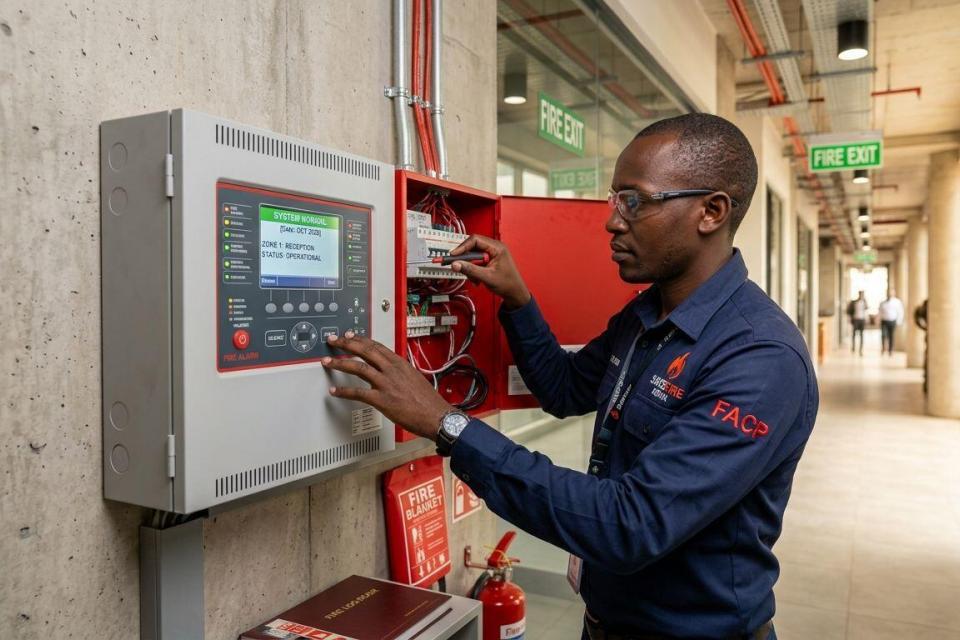
Choosing a fire alarm control panel in Kenya comes down to one question: how many zones or devices does your building actually need to cover, and can the panel grow with it? Best overall: the addressable fire alarm control panel, best for multi-storey commercial and industrial buildings. Best for small single-zone buildings: the conventional fire alarm control panel. Best for retrofit installs where rewiring isn't practical: the wireless fire alarm control panel.
- The best fire alarm control panel for most Kenyan commercial buildings in 2026 is an addressable panel because it pinpoints the exact device in alarm.
- Conventional panels remain the right call for small shops and single-storey offices with few zones.
- Wireless panels solve retrofit jobs where chasing walls for cabling isn’t an option.
- Multi-building sites such as school campuses need a hybrid or networked panel, not several standalone units.
- Voice evacuation panels are built for high-rise and high-occupancy buildings, not small premises.
Why this matters
A fire alarm control panel is only as useful as its match to the building it protects. An undersized conventional panel on a five-storey office block leaves technicians guessing which floor triggered the alarm. An oversized addressable system in a single-room shop adds cost and complexity nobody asked for.
County fire and rescue departments in Kenya inspect commercial premises for working fire detection before issuing or renewing a fire certificate, and a panel that can't be tested zone by zone slows that process down. Getting the panel type right at the design stage saves rework later, especially once detectors, sounders and call points are already wired in.
The rest of this guide ranks the five panel types available to Kenyan buyers in 2026, how each performs against real building scenarios, and which one to walk away from for your specific job.
What makes the best fire alarm control panel
- Zone or loop capacity matched to the building — too few zones and you lose fault location; too many and you overpay for capacity you'll never use.
- Wiring type — 2-wire conventional zoning versus an addressable loop that reports each device individually.
- Integration with existing security systems — CCTV, access control and intruder alarms often need to trigger or respond to a fire event.
- Battery backup and standby duration — the panel must keep monitoring through a mains outage, not just sound once.
- Ease of fault diagnosis — addressable panels show the exact device; conventional panels only show the zone.
- Room for future expansion — can the panel add a floor, a wing, or a second building without a full replacement.
Fire alarm control panels at a glance
| Panel type | Best for | Standout feature | Key limitation |
|---|---|---|---|
| Addressable panel | Multi-zone commercial buildings | Pinpoints the exact device in alarm | Needs a trained technician to program |
| Conventional panel | Small single-zone buildings | Simple, familiar to most technicians | No exact device identification |
| Hybrid/networked panel | Multi-building campuses | Single-point monitoring across sites | Coordination and cabling between panels adds cost |
| Wireless panel | Retrofit without rewiring | No chasing walls in finished interiors | Devices need regular battery checks |
| Voice evacuation panel | High-rise, high-occupancy buildings | Spoken evacuation guidance, phased or full | Amplifier and speaker circuits add commissioning steps |
1. Addressable fire alarm control panel: best for multi-storey commercial buildings
An addressable panel gives every detector, call point and sounder its own address on the loop, so the panel display names the exact device in alarm rather than a general zone. That's the difference between sending a technician to "Zone 3" and sending them straight to the smoke detector outside the third-floor server room.
Addressable panel pros:
- Pinpoints the exact device, cutting response and investigation time
- Supports a much larger number of devices per loop than conventional zoning
- Scales cleanly as a building adds floors or wings
- Integrates with building management and access control systems
Addressable panel cons:
- Requires a technician trained on the specific panel's programming software
- Higher installation complexity than a conventional system
- Retrofitting an older building often means running new loop cable
Best for: offices, malls, factories and any building with more than a handful of zones.
Verdict: Buy for new commercial builds and any site where fault location matters.
2. Conventional fire alarm control panel: best for small single-zone buildings
A conventional panel groups detectors and call points into zones, and the panel lights up the zone in alarm rather than the individual device. For a small shop or a two-room office, that's usually enough information to act on immediately.
Conventional panel pros:
- Straightforward to install and commission
- Familiar to the majority of fire technicians in Kenya
- Lower complexity for buildings that don't need granular fault data
- Easier and cheaper to maintain year to year
Conventional panel cons:
- Limited zone count restricts how large a building it can sensibly cover
- No exact device identification within a zone
- Harder to scale if the building is extended later
Best for: single shops, small offices, small warehouses with one or two floors.
Verdict: Buy for straightforward small-building coverage where budget and simplicity matter more than granular diagnostics.
3. Hybrid/networked fire alarm panel: best for multi-building campuses
A hybrid or networked setup links several panels — sometimes a mix of conventional and addressable zones — into one monitored network. Instead of checking three separate panels across a school compound, one screen shows the status of every block.
Hybrid panel pros:
- Centralised monitoring across multiple buildings or blocks
- Supports phased installation, block by block, over time
- Mixes zone types where some blocks need addressable coverage and others don't
Hybrid panel cons:
- Needs reliable cabling or networking between panels
- More coordination during commissioning
- Costs more to set up than a single standalone panel
Best for: school campuses, hospital compounds, gated estates with several separate structures.
Verdict: Buy for any site with more than one building that needs single-point monitoring.
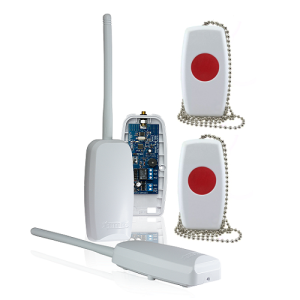
4. Wireless fire alarm control panel: best for retrofit installs without rewiring
A wireless panel connects detectors, call points and sounders by radio instead of cable. That matters most in finished buildings where chasing walls for conduit would mean redoing ceilings, floors or finishes that are already in place.
Wireless panel pros:
- Fast installation with no cable chasing
- Devices can be relocated without rewiring
- Practical for heritage buildings or rented premises where structural changes aren't allowed
Wireless panel cons:
- Wireless devices need regular battery checks to stay reliable
- Radio interference in dense commercial buildings can affect performance
- Per-device cost typically runs higher than wired equivalents
Best for: heritage buildings, rented commercial units, finished interiors where rewiring isn't practical.
Verdict: Hold — use it only when cabling is genuinely impractical, not as a default choice.
5. Fire alarm panel with voice evacuation: best for high-rise and high-occupancy buildings
A voice evacuation panel pairs standard fire detection with a speaker system that delivers spoken instructions instead of, or alongside, a sounder. In a tall building, that allows phased evacuation — moving the floor on fire first, then floors above and below — rather than sending every occupant into the stairwell at once.
Voice evacuation panel pros:
- Clearer instructions than a sounder alone, especially in a crowd
- Supports phased evacuation strategies required in taller buildings
- Reduces panic-driven bottlenecks at stairwells and exits
Voice evacuation panel cons:
- Significantly more complex to commission than a standard panel
- Amplifier and speaker circuits need to be tested separately from detection
- Requires specialist maintenance beyond what a standard fire technician handles
Best for: high-rise towers, hotels, stadiums, large assembly halls.
Verdict: Buy for buildings with complex evacuation needs; Skip for small single-storey premises where a sounder is enough.
How we ranked these panels
Each panel type was measured against the same six criteria set out above: zone or loop capacity, wiring type, integration potential, battery backup, fault diagnosis, and room to expand. The addressable panel wins overall because it scores highest on diagnosis and scalability, the two criteria that matter most once a building grows past a handful of rooms. Conventional and wireless panels rank lower on scalability by design, not by fault, since their strength is simplicity and installation speed, not growth.
Get your building’s fire panel matched to zones
Talk through your floor plan before you commit to a panel type.
Which fire alarm control panel should you choose?
For a single-storey shop or small office in 2026, the conventional fire alarm control panel covers the job without paying for capacity you won't use. For anything with more than a few zones — an office block, a factory floor, a mall unit — the addressable fire alarm control panel is the default, because pinpointing the exact device saves real time during an actual incident. If the building already has finished interiors and rewiring isn't on the table, the wireless fire alarm control panel is the only sensible fallback, not the first choice. Multi-building sites skip straight to a hybrid/networked panel, and any high-rise or high-occupancy venue plans around a voice evacuation panel from the design stage, not as an afterthought.
Whichever type fits, pair it with the rest of the building's protection: fire detection alone doesn't stop an intruder, and a panel that can't talk to your CCTV cameras or fingerprint door locks leaves gaps in an otherwise complete security setup.
FAQ
What is the best fire alarm control panel for a small shop in Kenya?
A conventional fire alarm control panel is best for a small shop in 2026 because it covers a handful of zones without the added programming complexity of an addressable system.
Is an addressable panel better than a conventional panel?
An addressable panel is better for buildings with several zones because it identifies the exact device in alarm, not just the general area. A conventional panel is the better fit for small, single-zone premises.
How many zones does a small building need?
Most single-storey shops and small offices operate comfortably on a low zone count, which is why conventional panels remain common at that scale. Larger or multi-floor buildings quickly outgrow zone-based reporting and move to addressable systems.
Can a fire alarm panel integrate with CCTV and access control?
Yes, many addressable and networked panels can trigger or receive signals from CCTV and access control systems, such as unlocking doors on alarm. Conventional panels have more limited integration options.
Do wireless fire alarm panels work well in Kenya?
Wireless panels work well for retrofits in finished buildings where cabling isn’t practical. They need regular battery checks on each device to stay reliable, which conventional and addressable wired systems don’t require.
How often should a fire alarm control panel be serviced?
Fire alarm panels need regular scheduled servicing to stay compliant with county fire inspection requirements. The exact interval depends on the building’s fire certificate conditions and the panel manufacturer’s guidance.
What is voice evacuation and when is it required?
Voice evacuation is a spoken instruction system layered onto fire detection, used for phased evacuation in tall or high-occupancy buildings. Small single-storey premises typically don’t need it since a standard sounder is sufficient.
Does a fire alarm panel need county fire department approval?
Commercial buildings in Kenya are inspected by county fire and rescue departments before a fire certificate is issued or renewed, and a working, correctly zoned panel is part of that inspection. Confirm current requirements with your county office before installation.
One last thing
Buildings that pass their first county fire inspection without a re-visit almost always have a panel matched to actual zone count, not the cheapest unit on the shelf — undersizing the panel is a far more common failure in 2026 than choosing the wrong brand. If you're unsure whether your building needs conventional or addressable coverage, count your floors and rooms first, then pick the panel type, not the other way round.
Related guides
- How much does a home security system cost in Kenya
- Best access control systems for small businesses in Kenya
- Best CCTV cameras for home security in Kenya
- Best fingerprint door locks for offices in Kenya