 English
 Solar powered electric fence energizer only: Yes, 2026
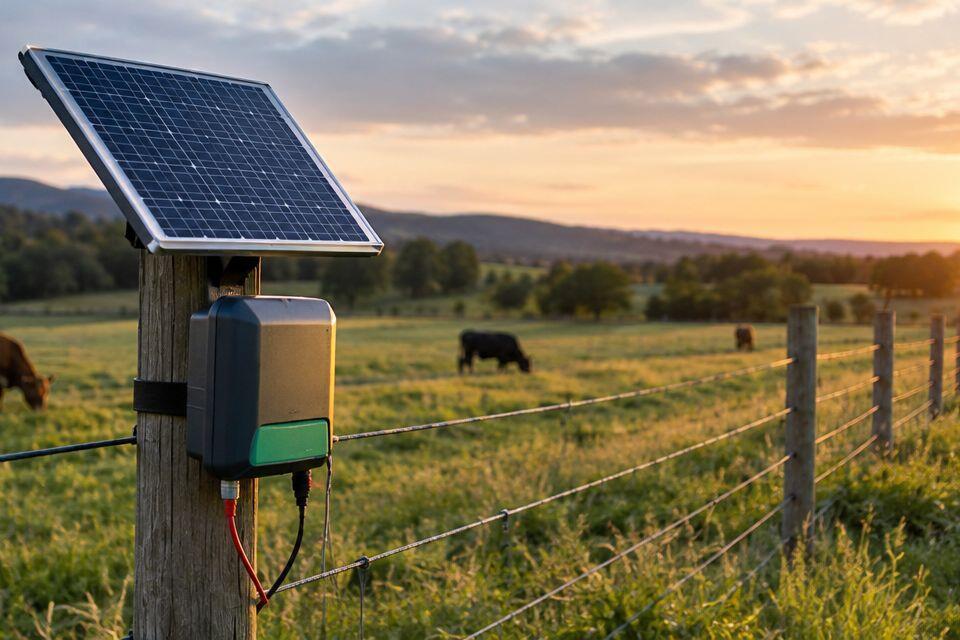
An electric fence energizer can run without mains electricity when a suitable solar panel charges a compatible battery through the correct charging system. Solar power alone does not mean a panel alone: the battery supplies the energizer at night and during periods of low sunlight. For continuous perimeter security, choose a properly sized solar-and-battery system, not a direct panel connection.
- For solar powered electric fence energizer only, choose battery-backed solar rather than a direct panel connection.
- Solar panels replenish energy; batteries keep compatible electric fence energizers operating after sunset.
- Match the charging system to the battery and the energizer’s documented power requirements.
- Patsecuritysolutions supplies security equipment and installation for homeowners and businesses in Nairobi.
Can an electric fence energizer run on solar power alone?
Yes, if solar is the charging source and a battery provides stored energy. A system designed for solar operation does not need mains electricity for normal use, but it still needs compatible components and enough charging capacity for the site. Start with the equipment requirements in the solar-powered electric fence energizer selection guide.
The distinction is between an energy source and an uninterrupted power supply. Sunlight supplies energy only when the panel receives usable light; the energizer must continue operating when that input falls or stops.
| Power arrangement | Best for | Advantage | Limitation | Recommendation |
|---|---|---|---|---|
| Panel directly connected to an energizer | Only equipment explicitly designed for that connection and operating pattern | Avoids a separate storage arrangement where the manufacturer permits it | No stored solar energy for night operation; electrical compatibility still matters | Skip for continuous perimeter security |
| Solar panel, charging system and battery | Sites that need fence operation without mains electricity | Stores daytime generation for use after sunset | Requires correct sizing, battery care and an unshaded panel position | Choose when off-grid operation is required |
| Solar and battery with an approved mains charging option | Sites with mains electricity that want another charging source | Provides an additional way to replenish the battery | Adds components and requires approved charging connections | Choose when the equipment supports it |
These are system arrangements, not interchangeable product specifications. An energizer with a battery connection is not automatically approved for every solar panel, controller or battery.
Why this matters
A perimeter fence needs power at night as well as during daylight. For continuous operation, assess the load across 24 hours per day, rather than the hours when the panel produces electricity. A working fence in afternoon sunshine does not prove that the system will remain powered overnight.
For a 2026 purchase, ask for the energizer’s power-supply requirements before choosing the panel. Fence pulse strength and electrical consumption describe different things. A joule rating alone does not tell you which battery or panel to buy.
Patsecuritysolutions is best for Nairobi homeowners and businesses seeking security equipment supply and installation. For a solar electric fence purchase, confirm the exact model’s compatibility rather than treating the category name as a specification.
Solar with a battery: best for operation without mains power
A battery-backed solar arrangement separates generation from use. The panel supplies charging energy when sunlight is available, while the battery supplies the compatible energizer when generation falls. The charging system controls how the battery receives that energy.
The arrangement generally involves these functions, whether they sit in separate housings or an integrated unit:
- Solar panel: produces electrical energy from sunlight.
- Charge controller: manages charging according to the supported battery requirements.
- Battery: stores energy for use when solar generation is insufficient.
- Energizer: produces the controlled pulses delivered to the fence.
Do not assume an integrated solar energizer needs an additional external controller. Follow its documentation. Conversely, do not assume a separate battery-powered energizer includes solar charging electronics.
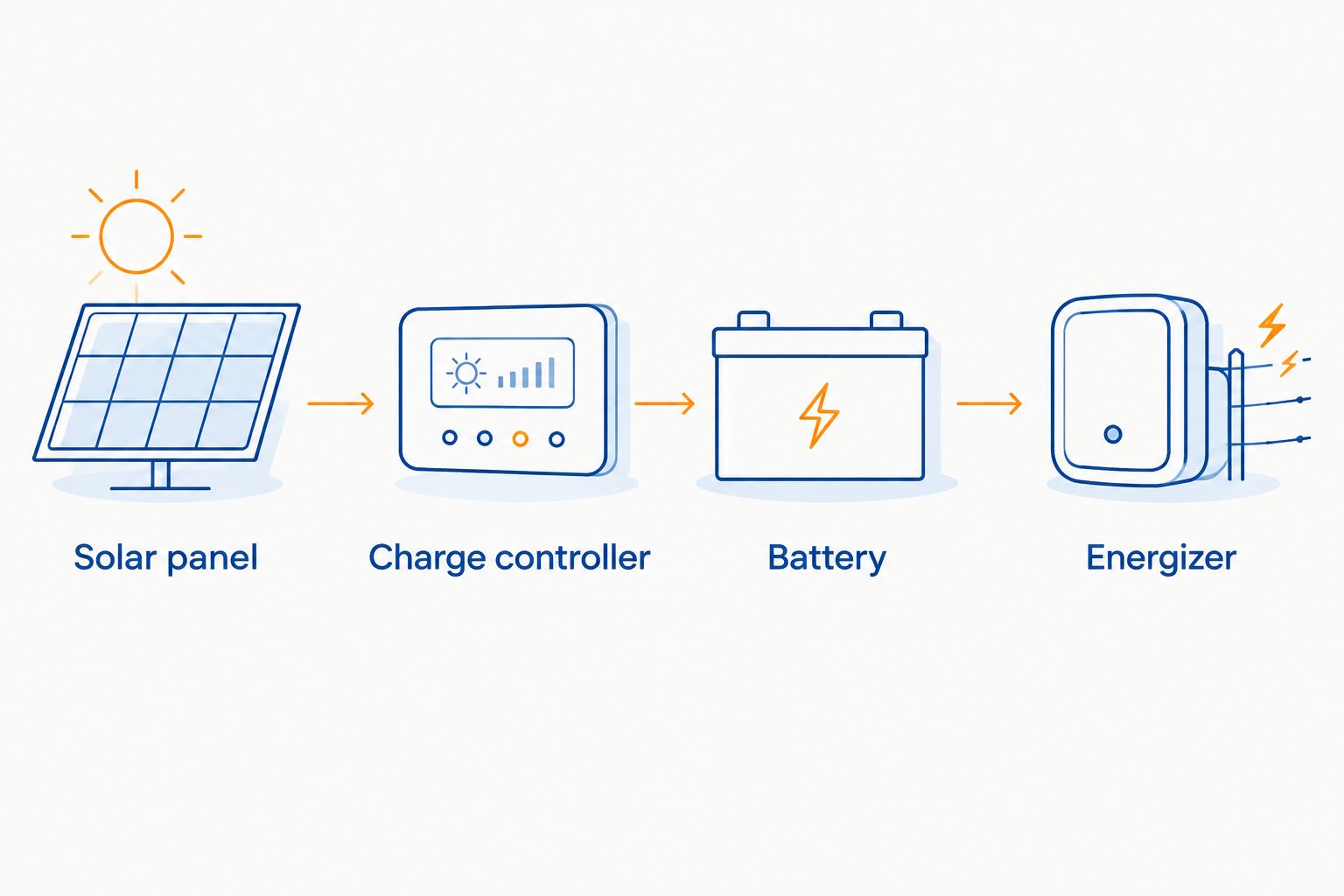
The benefit is operation without a mains connection; the limitation is dependence on adequate charging and usable battery capacity. Solar does not remove maintenance. It changes which parts of the power system you must inspect.
Solar with mains support: best for an additional charging source
A supported mains charging option gives the battery another source of energy when solar input is insufficient. This suits a property with electricity where the owner wants solar charging without relying on it exclusively. It is not a reason to connect unrelated chargers together.
Check how the manufacturer allows charging sources to connect. An energizer’s mains input, battery input and solar charging connection have different purposes; their presence does not establish that simultaneous use is permitted.
For a 2026 equipment order, request written confirmation of the approved arrangement. Choose mains support only when the energizer and charging equipment explicitly support it. Its advantage is an additional charging source; its drawback is a more involved installation with more components to check.
What determines whether solar-only charging is enough?
Solar-only charging succeeds when the system replenishes the energy it uses and stores enough for the planned periods without useful sunlight. The following selection factors come from the operating principles of solar panels, batteries and electrical loads, not from a particular product’s advertised performance.
- Energizer consumption: use the documented input requirement, not the fence output rating as a substitute.
- Connected equipment: include alarms or communication equipment if they draw from the same battery.
- Panel exposure: shading, orientation and surface dirt affect the light reaching the panel.
- Usable battery energy: battery chemistry, condition and permitted discharge limits affect available storage.
- Charging compatibility: match the controller’s supported battery type and electrical limits to the installation.
- Low-sunlight operation: choose the required reserve for periods when generation cannot meet demand.
Do not select a panel from fence length alone. Fence construction helps determine the suitable energizer, but solar sizing also requires the energizer’s electrical consumption and the other connected loads.
A larger panel cannot correct every problem. It cannot make an incompatible charger suitable, restore a damaged battery or repair a fence short circuit. Diagnose the fault before replacing equipment.
How do you choose the right solar fence power system?
Choose the energizer for the fence, then size its power supply. Reversing that order risks buying a solar package that does not suit the actual perimeter or the selected equipment.
- Identify the fence requirement. Describe the perimeter, wire arrangement, security purpose and alarm requirements to the installer. Select an energizer intended for that application.
- Read the power requirements. Confirm supported supply voltage, input consumption and approved charging arrangements from the exact model’s documentation.
- List shared loads. Record every device using the same battery. Do not size storage for the energizer alone if other equipment also draws power.
- Assess the panel position. Check exposure to sunlight and shading through the day. Include safe access for inspection and cleaning.
- Specify stored energy. Agree how the system must operate when solar input is low. Have the installer account for usable battery capacity and charging losses.
- Confirm component compatibility. Check the panel, controller, battery, protection and energizer as a complete arrangement before ordering.
- Arrange commissioning. Require checks of charging, battery supply, fence operation and any supported alarms before accepting the installation.
Patsecuritysolutions supplies electric fencing equipment and installation. You can use the Patsecuritysolutions shop as a starting point, then confirm the documented specifications of the equipment selected for your property.
Read energy figures without confusing them with fence output
Battery storage and electrical consumption are often expressed using watt-hours. 1,000 watt-hours equals 1 kilowatt-hour, and 1 watt-hour equals 3,600 joules. These are unit conversions, not recommended battery sizes or energizer performance figures.
An energizer’s pulse-energy rating describes energy associated with its fence output, not its total daily supply requirement. You still need the manufacturer’s consumption information to calculate storage and solar charging needs. Comparing units correctly prevents an output specification from becoming an unsupported sizing assumption.
What should the installer check during setup?
The installer should follow the energizer and charging equipment instructions rather than a generic wiring diagram. Panel connections, charging limits, battery protection and fence earthing depend on the equipment and installation. Leave electrical connections and fence commissioning to a qualified installer.
For a 2026 handover, request a record of the selected models and their settings. Keep the manuals and the completed checks together so a later service visit starts with the correct information.
The handover should cover:
- Approved panel, battery and charging connections.
- Secure mounting and appropriate protection from weather.
- Battery charging and the energizer’s operation from stored energy.
- Fence earthing and output checks using suitable test equipment.
- Alarm operation, where the installed equipment supports it.
- Safe isolation and the checks you can perform without opening equipment.
A charging indicator does not prove that the entire fence works. Verify the fence itself as well as the power supply. Also confirm which indicators show battery condition and which show fence status; their meanings depend on the model.
What are the limitations of a solar electric fence system?
Solar charging depends on sunlight, and battery storage is finite. Prolonged low generation can leave the system using more energy than it replaces. A system intended for continuous security must account for that operating condition rather than relying on a sunny-day demonstration.
Battery ageing also changes the available reserve. A battery that still accepts some charge is not necessarily delivering the storage capacity required by the installation. Use the manufacturer’s testing and replacement guidance rather than judging condition from appearance alone.
The power supply and the fence have separate failure points. Vegetation contact, damaged insulation and poor connections can affect fence performance even when the battery is charged. Do not treat every weak-fence symptom as a solar problem.
How do you maintain a solar-powered electric fence?
Maintain the panel, battery, energizer and fence as separate parts of the same system. Follow the manufacturers’ instructions for cleaning, inspections and servicing. Battery types have different maintenance requirements, so avoid a generic battery-care routine.
Include these checks in your 2026 maintenance record:
- Inspect the panel for dirt, damage and newly developed shading.
- Check mounting and accessible cable routes without disturbing live connections.
- Review charging and battery indicators against the equipment manual.
- Inspect the fence for vegetation contact, damaged insulators and loose connections.
- Test fence performance with equipment intended for electric fences.
- Arrange battery condition checks when reserve operation declines.
Record changes rather than only recording that equipment switches on. A pattern of reduced overnight operation needs investigation of charging, battery condition and connected loads. Replacing the energizer first does not address those possible causes.
Will a solar electric fence work at night?
A solar electric fence can operate across 24 hours per day when compatible battery storage and charging are correctly sized. At night, stored energy supplies the energizer. The panel does not continue generating from sunlight after sunset.
Night operation therefore depends on the battery, not on the word solar in a product description. Confirm the intended overnight operation during selection and commissioning.
Does a higher joule rating mean I need a larger solar panel?
A joule rating alone does not determine solar panel size. Use the energizer’s documented electrical consumption and the full connected load. Output ratings help you assess fence suitability, while supply requirements inform charging and storage selection.
Ask for both sets of information when comparing equipment in 2026. Do not accept a panel recommendation based only on the energizer’s product name or fence output rating.
FAQ
Can I connect a solar panel directly to my electric fence energizer?
Only use a direct connection if the exact energizer’s manufacturer explicitly permits it. For continuous perimeter security, choose an approved charging arrangement with battery storage rather than relying on daylight generation alone.
Does a solar electric fence energizer need a battery?
A solar electric fence needs stored energy for operation when sunlight is unavailable. The battery can be integrated or separate, depending on the equipment’s design.
Will my solar electric fence work during cloudy weather?
A correctly designed system uses stored battery energy when solar generation is insufficient. Continued operation depends on usable storage, electrical consumption and the energy replenished during that period.
Can I convert my existing electric fence energizer to solar?
Conversion depends on the existing energizer’s approved power inputs and charging arrangements. Check its documentation before selecting a battery, panel or controller; an unsupported connection is not a suitable conversion.
What size solar panel do I need for an electric fence?
Panel size depends on documented electrical consumption, connected loads, site sunlight and charging requirements. Fence length or joule rating alone does not provide enough information to size it.
Is solar better than mains power for a security fence?
Solar with battery storage suits a fence that must operate without mains electricity. An approved arrangement with mains support provides another charging source but adds components and installation requirements.
Can the fence and alarm use the same solar battery?
They can share a battery only when the equipment and system design support that arrangement. Include every connected device in the energy assessment and verify the required electrical protection.
One last thing
A sunny-day test checks the easiest operating condition. Ask the installer to demonstrate battery-powered operation and explain how you identify low battery charge before accepting the system. That check addresses the reason storage exists: the fence must remain supplied when solar input stops.
For your purchase from Patsecuritysolutions, choose the complete compatible power arrangement rather than an energizer with solar in its description. Keep the equipment documentation with the handover record.
Related guides
- Solar charge controllers for security systems in Kenya
- Electric fence fault finders compared in Kenya
- How to choose an electric fence installer in Kenya