 English
 Electric Fencing for Farms: 2026 Buying Guide
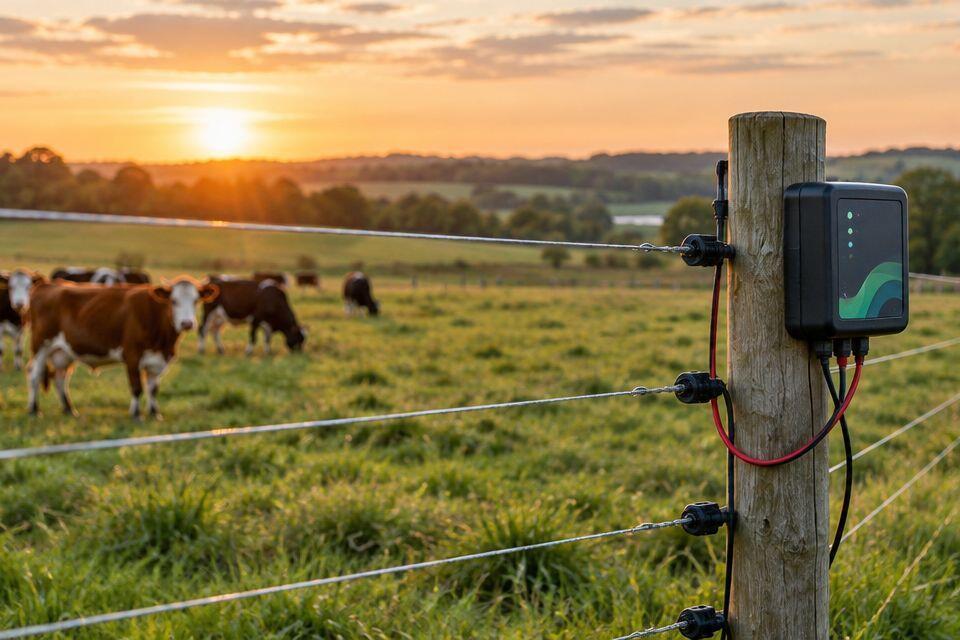
Electric fencing for farms and agricultural land protects livestock, crops, and equipment across perimeters that run for hundreds of metres or several kilometres, where timber post-and-rail or plain wire fencing cannot hold cattle or stop intruders on foot. A farm perimeter differs from a home boundary in three ways: it is longer, it often has no grid power at the far end, and it has to contain animals as well as deter people.
- Electric fencing for farms needs a higher-joule energizer than home systems because wire runs are longer and animal contact is heavier.
- Solar-powered energizers solve the off-grid power problem on farms without mains access to the far fence line.
- Lightning arrestors are not optional on open farmland — exposed perimeter wire is a direct lightning path into the energizer.
- Chain-link with an electrified top strand suits farms that need a physical barrier and a shock deterrent in one line.
Why electric fencing matters for farms and agricultural land
A farm perimeter has to do two jobs a home fence does not: keep livestock inside and keep intruders and predators out, often along the same wire. Electric fence prices in Kenya for 2026 show a wide range because farm jobs price by wire length and terrain, not by a fixed perimeter size the way a residential quote does.
Most farm perimeters run 500 metres to several kilometres. That length changes every buying decision: energizer joule rating, earth stake count, and wire gauge all scale with distance, not with plot value. A farm fence undersized for its length will shock lightly at the near end and barely register at the far end — livestock learn that fast.
Agricultural land also sits more exposed than a suburban compound. Open fields carry a higher lightning strike risk, and a fence with no surge protection can send a strike straight into the energizer and burn it out in one storm.
Assess your farm perimeter before buying anything
Walk the boundary and note what changes along the way — this decides energizer size, wire type, and post spacing before you spend on equipment.
- Total perimeter length in metres, including gates and corners
- Terrain type: flat, sloped, rocky, or waterlogged sections
- Livestock type — cattle, goats, and pigs each need different wire height and spacing
- Distance from the nearest mains power point to the far end of the fence
- Existing fencing (timber, chain-link, or barbed wire) that the electric line will run alongside
- Areas with heavy vegetation that will need regular clearing under the wire
Choose the right energizer for farm-scale coverage
A home energizer sized for a quarter-acre plot will not push enough voltage to the far corner of a two-kilometre farm perimeter. Farm energizers need a joule rating matched to total wire length and the number of strands.
- Match joule output to total fence length, not to plot size
- Choose a higher output when running multiple strands rather than a single wire
- Confirm the energizer's rated range covers the longest single run on the property, with margin for vegetation load
- Check the output type — low-impedance energizers hold voltage better through wet grass and weeds
- Plan for future perimeter extensions when sizing the energizer, not just the current fence line
Plan power for off-grid sections of the farm
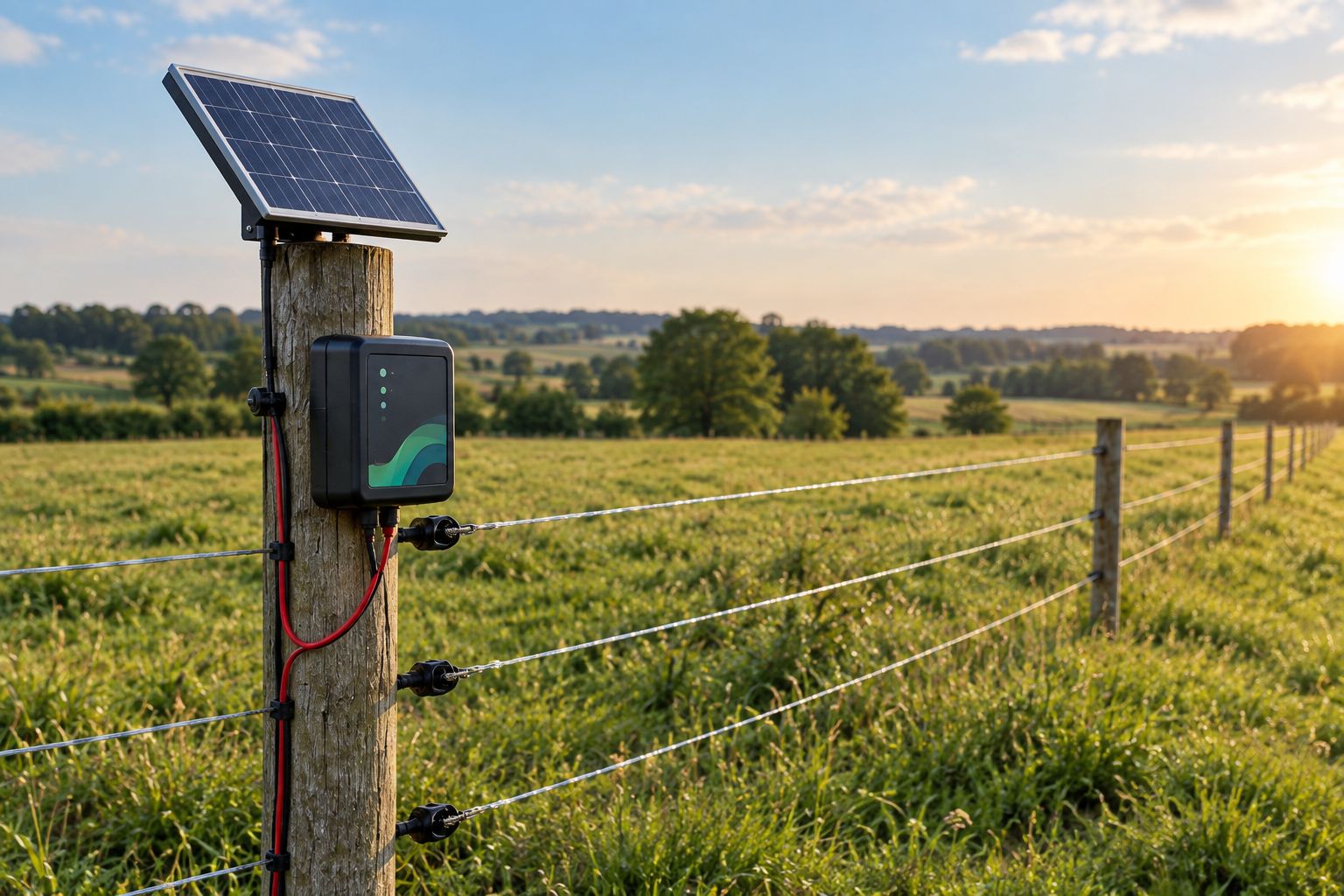
Farms rarely have mains power at every point along the boundary. Solar-powered electric fence energizers solve this by running the energizer and battery independent of the grid.
- Size the solar panel to the energizer's daily power draw, not just its peak output
- Fit a deep-cycle battery rated for daily charge-discharge cycles, not a car battery
- Position panels with unobstructed sun for most of the day, away from tree shade that moves through the seasons
- Use a charge controller sized to the panel and battery pair to avoid overcharging
- Budget for battery replacement as part of ongoing running cost, not a one-time expense
Select conductors and posts built for long runs
Wire gauge and post spacing matter more on a farm than on a short residential run because voltage drop compounds over distance.
- Use galvanised or high-tensile wire rated for outdoor exposure over years, not months
- Space posts closer on sloped or uneven ground to keep wire tension consistent
- Use insulated strainer posts at corners and gates to hold tension without shorting to the ground
- Keep the bottom strand high enough to clear tall grass, which bleeds voltage when it touches live wire
Install lightning and surge protection before switching on
Open farmland is exposed ground, and a long bare wire is an effective lightning conductor straight into your energizer. Lightning arrestors for electric fences sit between the fence line and the energizer to route a strike to earth instead of through the unit.
- Fit a lightning arrestor at the point where the fence line enters the energizer circuit
- Add extra earth stakes near the arrestor, separate from the main energizer earthing
- Disconnect the energizer from the fence line during severe electrical storms if arrestor protection is uncertain
- Inspect the arrestor after any storm season for scorch marks or corrosion
Test and maintain the fence line on a schedule
A farm fence loses voltage gradually as grass grows, joints corrode, and earth stakes dry out — most failures are found only after an animal has already broken through.
- Walk the line weekly with a fault finder to trace voltage drops to the exact fault point
- Clear grass and shrubs under the wire monthly during the growing season
- Check earth stake moisture in dry season — dry soil raises earth resistance and weakens the shock
- Re-tension wire after temperature swings that cause expansion and contraction
- Log voltage readings at the near and far ends of the fence to catch gradual decline early
Hire a professional installer for large-scale jobs
A farm perimeter of several kilometres is not a weekend DIY job — bad earthing or wrong wire tension on a long run causes recurring faults that are expensive to trace later. How to choose an electric fence installer covers what to check before signing a contract.
- Ask for a site survey before a quote, not a flat per-metre estimate over the phone
- Confirm the installer sizes the energizer to your total perimeter, not a standard package
- Check whether the quote includes earthing and lightning protection or treats them as extras
- Get a written scope covering wire gauge, post spacing, and corner bracing
Get farm fencing sized correctly
Match energizer and wire to your full perimeter length before you buy.
Electric fencing options for farms compared
| Option | Best for | Key limitation |
|---|---|---|
| Solar energizer + electric wire | Large, off-grid perimeters | Needs battery upkeep and consistent sun exposure |
| Mains-powered energizer + electric wire | Farms with grid power at the boundary | Loses containment during power cuts without battery backup |
| Chain-link with electrified top strand | Farms needing a physical barrier plus deterrent | Higher material cost and slower to install per metre |
| Razor wire perimeter, non-electrified | Boundary marking without livestock containment | Does not stop animals and gives no shock deterrent |
Verdict: a solar-powered energizer paired with a properly earthed and lightning-protected wire line is the most reliable setup for a farm perimeter with no grid power at the far end in 2026.
Common mistakes farms make with electric fencing
- Under-sizing the energizer for total wire length — a unit rated for a home compound cannot push enough voltage across a farm-scale perimeter with multiple strands.
- Skipping lightning protection on open land — exposed farmland carries higher strike risk than a fenced suburban plot, and one strike without an arrestor can destroy the energizer.
- Using too few earth stakes for dry soil — dry, sandy soil common on Kenyan farmland raises earth resistance and weakens the shock at the far end of the fence.
- Letting vegetation grow under the wire — tall grass touching a live strand bleeds voltage continuously, and farms with large perimeters often skip the monthly clearing this needs.
- Relying on a single power source with no backup — a mains-only setup loses containment during every power cut, which matters more on a farm holding livestock than on a home compound.
FAQ
What is the best electric fence energizer for a large farm?
The best energizer for a large farm is one rated for the total perimeter length and strand count, not a fixed model. Solar energizers suit sections with no mains power, while mains units with battery backup suit shorter runs near the grid.
How many joules does a farm electric fence need?
Joule requirements scale with total wire length and number of strands, so a farm running several kilometres of multi-strand wire needs a higher-output energizer than a home compound fence. Always size the energizer to the longest single run, with margin for vegetation load.
Can electric fencing contain cattle and goats on the same perimeter?
Yes, but wire height and spacing need to suit the smallest animal on the property, since goats can slip under a fence set for cattle. Multiple strands at different heights handle mixed livestock on one perimeter.
Is solar electric fencing reliable for farms without grid power?
Solar electric fencing is reliable for off-grid farm sections when the panel and battery are sized to the energizer’s daily draw. Undersized solar setups lose voltage overnight or during extended cloud cover.
How much does electric fencing for farms cost in Kenya in 2026?
Cost depends on perimeter length, terrain, and whether the site needs solar power, so pricing varies farm to farm. Check current fencing quotes and 2026 pricing guides for a realistic range before budgeting.
Do farms need lightning arrestors on electric fences?
Yes, farm fences on open land need lightning arrestors because long bare wire on exposed ground is a strike path directly into the energizer. Skipping this protection risks losing the energizer in a single storm.
How often should a farm electric fence be inspected?
A farm electric fence should be walked weekly with a fault finder and checked more often during the growing season when vegetation grows fastest under the wire. Earth stakes need a separate check in dry season when soil resistance rises.
Is chain-link fencing better than electric wire fencing for farms?
Chain-link gives a physical barrier that electric wire alone does not, but it costs more per metre and takes longer to install over a farm-scale perimeter. Many farms combine chain-link with an electrified top strand rather than choosing one over the other.
One last thing
The single most skipped item on farm electric fencing in 2026 is lightning protection — installers report more energizer failures from storm strikes on open farmland than from any wiring fault. If your perimeter has no arrestor fitted, that is the first gap to close before the next rainy season, not the last.
Related guides
- Electric fence prices in Kenya 2026
- Best solar-powered electric fence energizers in Kenya
- Best electric fence fault finders compared in Kenya
- How to choose an electric fence installer in Kenya
- Best lightning arrestors for electric fences in Kenya