 English
 Best Access Control System for an Office in Nairobi (2026)
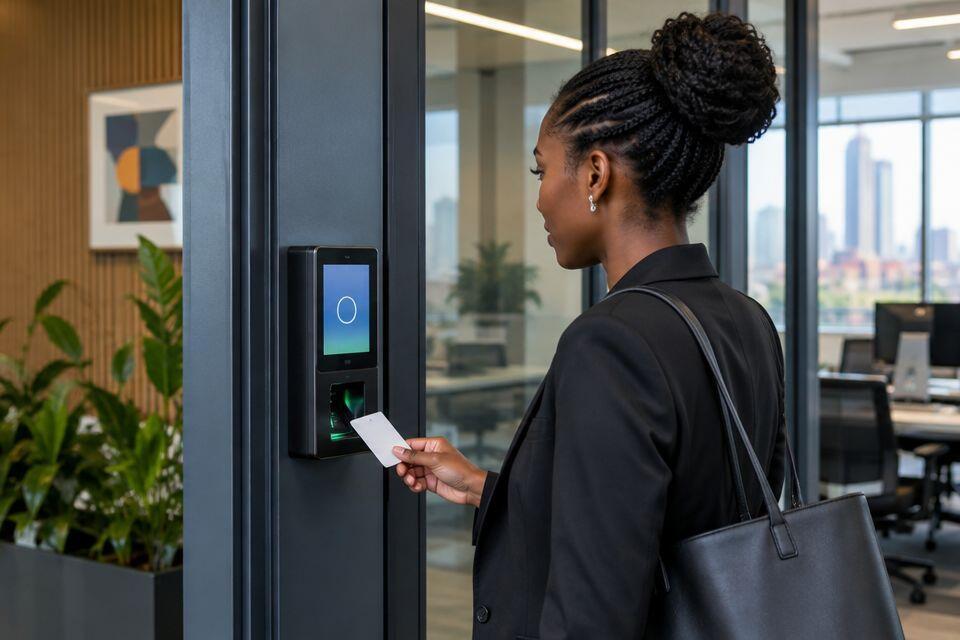
A networked biometric fingerprint reader with a proximity card as backup is the best access control system for an office in Nairobi, ahead of card-only and keypad-only setups on accountability. It ties every door event to a named employee, which shared PIN codes and lone keypads cannot do, and it doubles as a time and attendance log. The trade-off: fingerprint readers need clean enrolment for every new hire and a stable power supply, so a single admin has to own that process. A single-door store room and a 40-person open-plan floor rarely need the same system.
- Biometric fingerprint access control with card backup is the best access control system for an office in Nairobi.
- RFID/proximity card systems suit multi-tenant buildings and offices with 20 or more staff needing fast card reissue.
- PIN-only keypads are the weakest option once more than two people share a door code.
- ZKteco, Hikvision and Dahua controllers are common in Kenya and pair with standard electric strikes and maglocks.
- Networked systems log every entry to a named user; a standalone unit only shows a shared code was used.
Why this matters
Office break-ins and internal theft in Nairobi are rarely a stranger forcing a door — most cases trace to an employee, cleaner or visitor who was let in and never logged. A shared PIN code gives no way to prove who opened a door at 2am. See how access control compares for access control systems for small businesses in Kenya before sizing a system for your floor plan.
Biometric and card-based systems fix the logging gap by pinning every entry to one person, and by 2026 most CCTV installers in Nairobi sell access control as an add-on to a camera package rather than a standalone purchase. Get the system type wrong and you either overspend on fingerprint readers for a two-person store room or underspend on a keypad for a 40-person office where the code gets shared within a week.
What is the best access control system for an office in Nairobi?
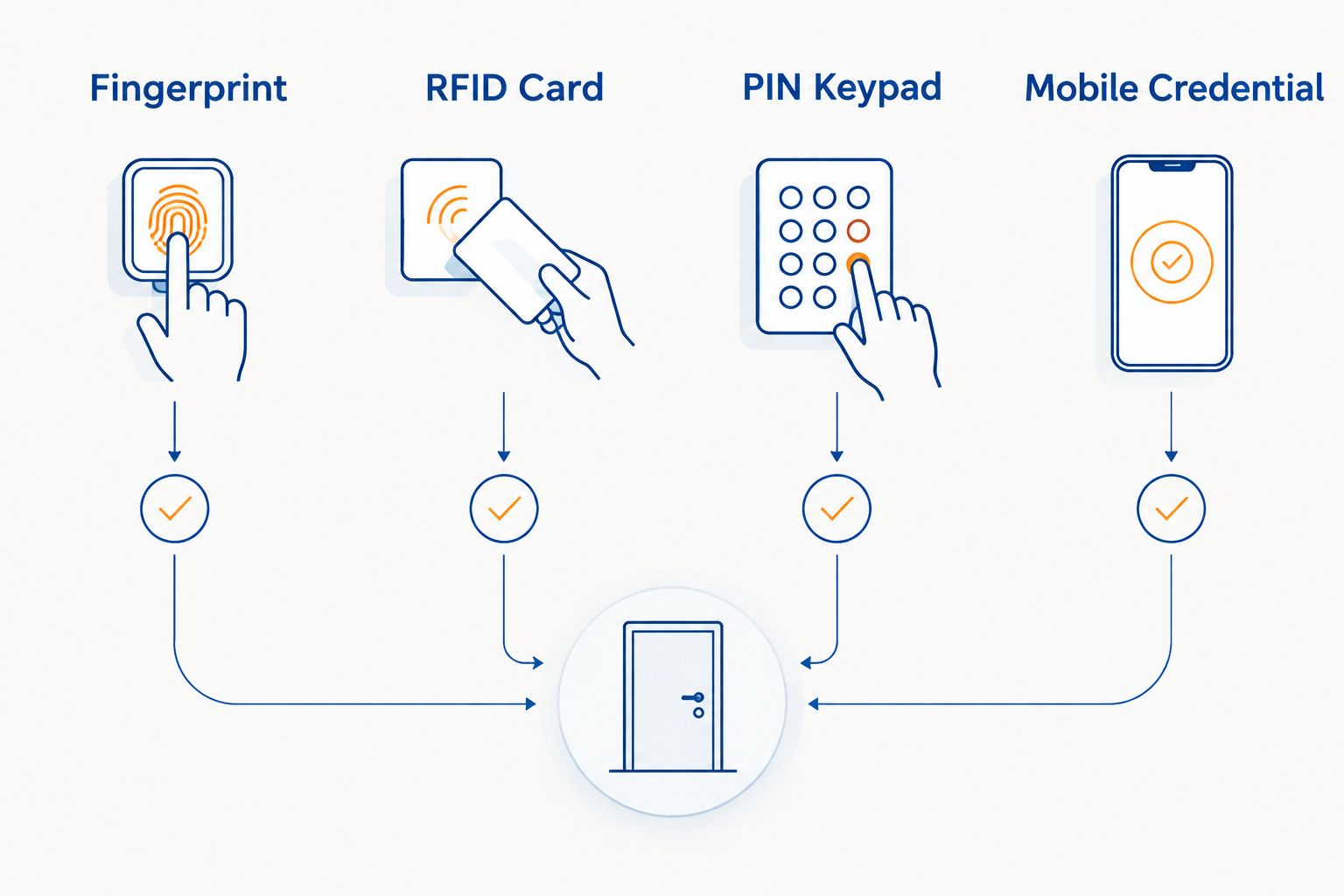
Four system types cover almost every office in Nairobi in 2026: biometric fingerprint readers, RFID or proximity cards, PIN keypads, and mobile or QR credentials. The table below ranks each by the office type it suits and the accountability trade-off it carries.
| System type | Best for | Strength | Weakness | Verdict |
|---|---|---|---|---|
| Biometric fingerprint (networked) | Offices with 10-50 staff needing an audit trail | Ties every entry to one person; doubles as attendance log | Needs clean enrolment and steady power | Buy |
| RFID / proximity card | Multi-tenant buildings and offices with frequent turnover | Fast to issue and revoke; no biometric data stored | Cards get lent out or lost | Buy for larger sites |
| PIN keypad (standalone) | A single storeroom or server room door | Cheapest, no cards or fingerprints needed | Shared code, no per-user log | Hold |
| Mobile credential / QR | Hybrid offices with rotating desk staff | No physical card to lose; managed from a phone | Depends on staff carrying a compatible phone | Wait |
Patsec Security Store stocks biometric fingerprint terminals, RFID reader kits and standalone keypads for offices across Nairobi, alongside the door strikes and maglocks each system needs.
Biometric fingerprint access control: best for staff accountability
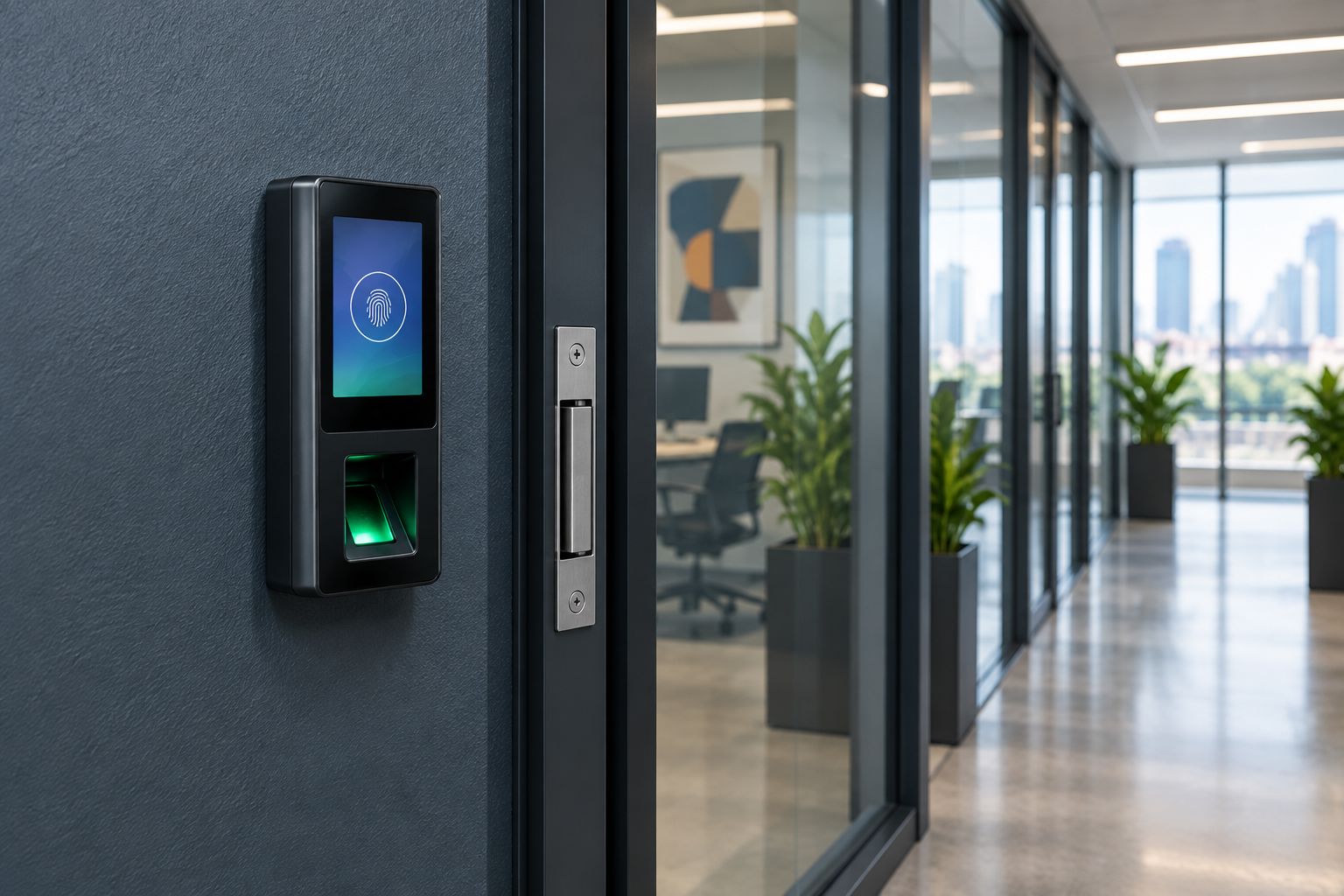
A biometric fingerprint reader wired to a networked controller is the strongest choice for an office with 10 to 50 staff and one or two entry doors. Every scan logs a name, a door and a timestamp, so a missing item or a late shift gets a paper trail instead of a shrug. Brands commonly installed in Kenya include ZKteco and Hikvision controllers, both compatible with standard electric strikes and maglocks.
The trade-off is enrolment. Every new hire needs their fingerprint captured and tested on-site, and a damp or dusty finger can fail a scan — most offices keep a card or PIN as backup for exactly that reason. See the full breakdown in best fingerprint door locks for offices in Kenya. Verdict: buy for any office that already tracks attendance or handles cash or stock.
RFID and proximity card access control: best for multi-tenant buildings
RFID and proximity card readers suit office buildings with frequent visitor turnover or several tenant companies sharing one lobby, because a lost or stolen card gets deactivated in seconds without touching anyone else's access. Cards issue faster than biometric enrolment for a 20-desk floor that turns over staff every few months.
The weakness is the same as any card: it can be lent to a colleague or left on a desk, which breaks the one-person-one-credential logic that makes access control worth installing. Compare card options in RFID access cards for office buildings in Kenya. Verdict: buy for shared buildings and high-visitor-traffic offices; pair with a front-desk sign-in log.
“An access control log only proves who opened a door if every person on it has their own credential.”
PIN keypad access control: best for a single low-traffic door
A standalone PIN keypad is the cheapest way to lock a server room, a store room or a single back door that only two or three people use. There's no card to lose and no fingerprint to enrol.
Past two or three regular users, a shared code turns into a security gap fast — someone writes it on a sticky note, or a former employee still remembers it months after leaving. Verdict: hold this option for single, low-traffic doors only; skip it for a main office entrance.
Mobile and QR credential access control: best for hybrid offices
Mobile credential systems replace the card with a phone-based QR code or Bluetooth key, useful for hybrid offices where staff rotate desks and don't need a physical badge. Access can be issued or revoked remotely the moment someone joins or leaves.
Reliability depends on staff carrying a charged, compatible phone with the app installed, which is a weaker guarantee than a card in a pocket. Verdict: wait on mobile credentials unless the office already runs a hybrid schedule with IT support to manage the app.
Why the best system varies by office
The right access control system for a Nairobi office depends on a handful of building-specific factors, not brand preference:
- Number of doors and floors needing separate control — more doors mean a networked system pays for itself faster than several standalone units.
- Staff headcount and turnover — high-turnover offices need fast card reissue more than deep biometric enrolment.
- Need for a time and attendance log alongside door access, which favours biometric over cards or PINs.
- Power backup during outages, since a fail-secure lock without backup power can lock staff in or out.
- Building management rules in multi-tenant blocks, which sometimes mandate one card standard for the whole property.
Setting up access control in a Nairobi office
Installing access control is a short project once the system type is chosen. The sequence rarely changes, whether it's a single door or a full floor:
- Count doors and daily users. A one-door store room needs a different reader than a 40-person main entrance.
- Match the reader to door traffic. High-traffic doors suit RFID cards or biometric readers; low-traffic doors suit a keypad.
- Check existing wiring and networking. Buildings already cabled for CCTV can often share the same network switch and cut install time.
- Enrol every user before the system goes live, not after — fingerprints, cards or PINs get registered against a name.
- Test the lock with power cut. Confirm whether the door is fail-safe (unlocks on power loss) or fail-secure (stays locked), since this affects fire escape routes.
- Add backup power. A small UPS keeps the reader and controller running through a load-shedding outage in Nairobi in 2026.
Maintenance and limitations
Access control needs upkeep, not just an install date. A fingerprint sensor collecting dust or hand cream residue starts rejecting valid scans within months, so wipe the reader weekly on a busy door. Staff who change roles need re-enrolling, and departed employees need removing from the system the same day they leave — a stale user list is the most common gap in a Nairobi office access review.
RFID cards fail less often but get lost more; keep a small stock of blank cards so a replacement doesn't wait on a supplier order. Every system, biometric or card, should keep one backup method — a manager's override code or a physical key — for the day the controller itself needs resetting.
Get an access control quote for your office
Compare fingerprint, card and keypad kits before you order.
Is RFID or biometric access control better for a Nairobi office?
Biometric access control is better for a Nairobi office that needs to prove who opened a door, while RFID cards work better for a building with heavy visitor turnover or multiple tenants sharing one entrance. Offices with 10 or more staff and low visitor traffic usually get the strongest audit trail from biometric readers.
How many doors can one access control system manage?
A single networked controller typically manages one to four doors before another controller board is needed, depending on the brand and cabling run. Larger offices with 50-plus staff across multiple floors usually run several controllers on one network rather than one oversized unit.
Does access control need internet to work in Kenya?
Access control does not need internet to open a locked door — the reader and controller run on local wiring or a network even during a power or internet outage, provided the lock has backup power. Internet only matters for remote monitoring, cloud reporting or syncing attendance logs to a phone or laptop.
FAQ
What is the best access control system for a small office in Nairobi?
A biometric fingerprint reader with a card backup is the best access control system for a small Nairobi office, since it logs each entry to a named employee without a large IT setup. A basic keypad only fits a single low-traffic door with two or three regular users.
Is biometric access control safe to use in a shared office?
Biometric access control is safe for a shared office because fingerprint data stays on the local controller rather than being shared between companies, and each employee keeps their own credential. It also removes the risk of a shared PIN code circulating around the floor.
Which access control brands are sold in Kenya?
ZKteco, Hikvision and Dahua are common access control brands sold in Kenya, covering fingerprint readers, RFID card readers and networked controllers. Most pair with standard electric strikes and magnetic locks already used on office doors.
Can I upgrade from a PIN keypad to biometric access control later?
Yes, most keypad installations can be upgraded to biometric access control later by replacing the reader while keeping the same electric strike, maglock and door wiring. The added cost is the biometric reader itself and re-enrolling every staff member’s fingerprint.
Do access control systems work during power outages in Nairobi?
Access control systems keep working during a power outage in Nairobi in 2026 as long as the lock and controller sit on backup power, such as a small UPS or the battery backup already used for CCTV. Without backup power, a fail-secure lock stays locked and can trap staff inside or lock them out.
Is an RFID card system secure enough for an office?
An RFID card system is secure enough for most offices as long as lost or stolen cards get deactivated immediately and cards aren’t shared between staff. It’s weaker than biometric access control for proving exactly who opened a door, since a card can be handed to someone else.
What is the difference between standalone and networked access control?
A standalone access control unit controls one door on its own with no connection to other doors or a central log, while a networked system links multiple doors and readers to one controller and one report. Offices with more than one entry point get more value from a networked setup.
One last thing
An access control log is only useful if someone checks it. Pair the reader with a door-forced alarm or a CCTV clip trigger — in 2026 most camera kits sold in Nairobi support this — so a forced door after hours gets flagged immediately instead of sitting in a report nobody opens until Monday.
Related guides
- Best magnetic door locks for access control in Kenya
- Best biometric time attendance systems in Kenya