 English
 Best Solar Charge Controller for Security Systems 2026
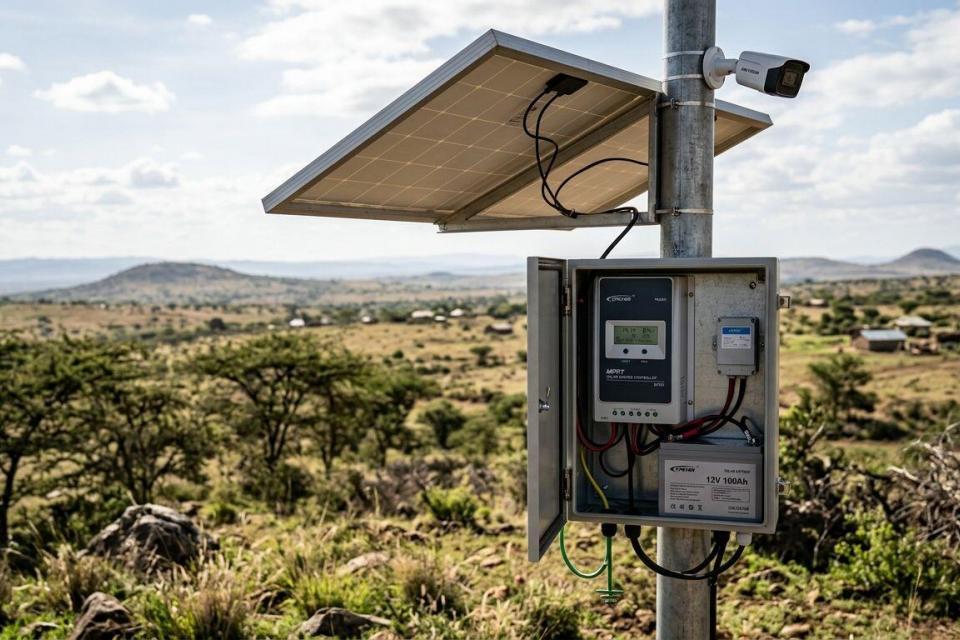
Choosing the wrong charge controller means a flat battery on day three of an outage — right when your CCTV cameras and electric fence energizer need power most. This guide ranks the five solar charge controller types worth using on a security system in Kenya in 2026, matched to the load each one handles best.
- The MPPT solar charge controller is the best overall pick for mixed security loads running CCTV, alarms and fence energizers together.
- A PWM solar charge controller is the best budget option for a single small electric fence energizer.
- A hybrid MPPT controller with LCD and load output suits CCTV and NVR solar backup best.
- High-amperage 40A-60A MPPT controllers handle compounds running gate motors alongside fencing and cameras.
- Match controller amperage to panel wattage and battery voltage before buying — undersizing is the most common fault.
Why this matters
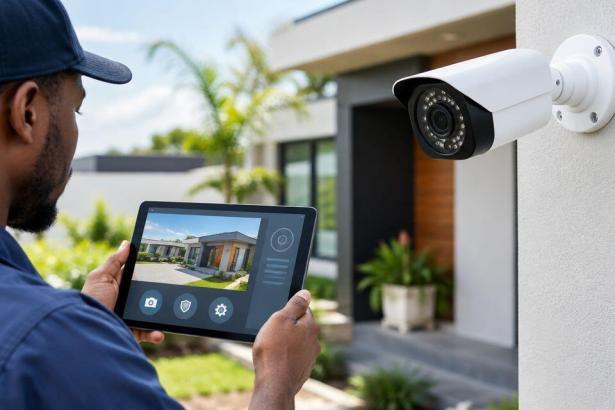
Most security systems in Kenya run partly or fully off solar because grid power is unreliable. A solar-powered electric fence energizer, a CCTV NVR on backup, or an automatic gate motor with a battery bank all depend on the charge controller sitting between the panel and the battery.
Get the controller type or amperage wrong and you get one of two failures: a battery that never fully charges, or a battery cooked by overcharging. Both shorten the life of equipment that is expensive to replace and inconvenient to leave offline. 2026 installations lean toward MPPT for anything running more than one security device off a single battery bank.
What makes the best solar charge controller for a security system
- Charge technology — PWM (Pulse Width Modulation) is simpler and cheaper; MPPT (Maximum Power Point Tracking) pulls more usable power from the same panel, which matters under variable cloud cover.
- Amperage rating matched to total panel wattage and the battery bank feeding the security load.
- Voltage compatibility — 12V, 24V, or auto-sensing for mixed-voltage installs.
- Load output terminal so DC loads like cameras or sirens run directly off the controller.
- Low-voltage disconnect that cuts the load before the battery is drained past a safe depth of discharge.
- Display and monitoring — an LCD or readout showing charge state without opening the enclosure.
Solar charge controllers at a glance
| Controller | Best for | Standout feature | Key limitation |
|---|---|---|---|
| MPPT solar charge controller | Mixed security loads (CCTV + fence + alarm) | Highest conversion efficiency, 93-97% | Costs more per amp than PWM |
| PWM solar charge controller | Single electric fence energizer | Simple wiring, fewer failure points | Loses efficiency in low light or partial cloud |
| Hybrid MPPT + LCD controller | CCTV and NVR solar backup | Built-in load output and charge display | LCD is another component that can fail |
| High-amperage 40A-60A MPPT | Compounds with gate motors and multiple loads | Handles large panel arrays without derating | Overkill for a single small energizer |
| 12V/24V auto-sensing controller | Mixed-voltage systems | Detects battery voltage automatically | Can misread a deeply discharged battery |
1. MPPT solar charge controller: best solar charge controller for security system overall
An MPPT solar charge controller tracks the panel's optimal voltage point continuously, pulling more usable current from the same panel than a PWM unit — roughly 93-97% conversion efficiency against 75-80% for PWM. That gap matters when one battery bank feeds a CCTV NVR, an alarm panel and a fence energizer at the same time.
MPPT solar charge controller pros:
- Recovers more charge on overcast mornings when panel output is inconsistent
- Handles higher panel voltages, so fewer panels in series are needed
- Regulates charge precisely across bulk, absorption and float stages, extending battery life
- Works across mixed security loads without derating badly
MPPT solar charge controller cons:
- Higher unit cost than an equivalent-amperage PWM controller
- More electronics inside means more to fail in dusty, high-heat enclosures
Best for: homes and businesses running CCTV, alarms and fencing off one solar bank. Verdict: Buy.
2. PWM solar charge controller: best solar charge controller for a single fence energizer
A PWM solar charge controller switches the connection between panel and battery on and off rapidly to regulate charge. It is the simplest, cheapest technology on this list, and it still does the job when the load is a single electric fence energizer with no other device sharing the battery.
PWM solar charge controller pros:
- Lowest cost per amp of any controller type here
- Fewer components, so fewer failure points in a basic install
- Straightforward wiring for a single-panel, single-battery setup
PWM solar charge controller cons:
- Drops to roughly 75-80% efficiency, losing charge on hazy or cloudy days
- Wastes excess panel voltage instead of converting it into usable current
- Poor fit for a system that will grow later
Best for: a small perimeter with one fence energizer and nothing else on solar. Verdict: Buy for budget single-load installs, Skip once a second device shares the battery.
3. Hybrid MPPT controller with LCD and load output: best for CCTV backup
This variant combines MPPT tracking with a dedicated load output terminal and an onboard LCD. The load terminal lets a camera set or NVR draw power directly from the controller, and the display shows charge state and load draw without a multimeter.
Hybrid MPPT + LCD controller pros:
- Load terminal simplifies wiring for CCTV cameras running on solar backup
- On-screen charge and load data speeds up fault diagnosis on site
- Keeps MPPT's efficiency advantage over PWM
Hybrid MPPT + LCD controller cons:
- The LCD is an added failure point in dusty outdoor enclosures
- Costs more than a basic MPPT unit without a display
Best for: CCTV and NVR installations needing solar backup with visible charge monitoring. Verdict: Buy.
4. High-amperage 40A-60A MPPT controller: best for large compounds
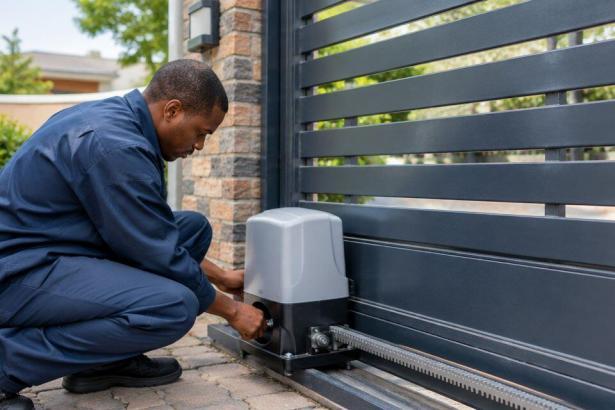
Large compounds running an automatic gate motor alongside fencing, cameras and alarm panels need a controller sized for a bigger panel array. A 40A-60A MPPT unit carries the combined draw without derating output the way a smaller controller does under sustained load.
High-amperage MPPT controller pros:
- Supports multiple large panels without a second controller
- Headroom to add devices later without re-sizing the whole solar setup
- Holds efficiency under sustained peak load
High-amperage MPPT controller cons:
- Unnecessary expense for a compound with one or two security devices
- Needs thicker cabling and a larger enclosure, adding to installation cost
Best for: compounds combining automatic gates, fencing and multiple cameras on one bank. Verdict: Buy for large multi-device compounds, Skip for a single small load.
5. 12V/24V auto-sensing controller: best for mixed-voltage systems
Some compounds run a fence energizer on a 12V battery and a gate motor on a 24V bank. An auto-sensing controller detects the connected battery voltage at startup and adjusts its charge profile, removing the need for two separate controller models on one site.
Auto-sensing controller pros:
- One model works across 12V and 24V battery banks
- Simplifies spares for installers managing several sites
- Reduces wiring mistakes during installation
Auto-sensing controller cons:
- Detection can misjudge a badly sulfated or deeply discharged battery on first connection
- Slightly less precise than a controller pre-set for one fixed voltage
Best for: sites with two battery banks at different voltages. Verdict: Buy for mixed-voltage sites, Hold if everything runs on one voltage.
Get the right controller for your setup
Match panel wattage, battery voltage and load before you buy. Prices exclude VAT.
How this list is ranked
Each controller is scored against the same six criteria: charge technology, amperage rating, voltage compatibility, load output, low-voltage disconnect and display. The MPPT unit takes the overall spot because it clears all six with no real weak point. The rest earn their place by being the strongest option for one specific load type rather than covering every scenario.
Which solar charge controller should you choose?
Running CCTV, an alarm panel and a fence energizer off one battery bank in 2026: buy the MPPT solar charge controller. It is the only option here that handles mixed loads without a meaningful trade-off.
If the site has one fence energizer and nothing else on solar, the PWM solar charge controller does the job for less money. Compounds with automatic gates and multiple devices need the 40A-60A MPPT unit. Any site running two battery voltages should default to an auto-sensing controller. Buying the wrong amperage or technology for the load is the most common reason a security installation's battery dies inside its first year.
FAQ
What is the best solar charge controller for a security system in Kenya?
An MPPT solar charge controller is the best overall pick for 2026 installations running CCTV, alarm panels and fence energizers off one battery bank. It converts panel output at roughly 93-97% efficiency against 75-80% for PWM units.
Is MPPT better than PWM for electric fence energizers?
For a single small fence energizer, PWM is adequate and cheaper. Once a second device shares the same battery bank, MPPT’s higher efficiency and load output terminal make it the better choice.
What amperage charge controller do I need for a CCTV system?
Amperage is sized from total panel wattage, not just the camera draw. A hybrid MPPT controller with LCD and load output covers most home and small-office CCTV backup setups without oversizing.
Can one controller run both a 12V fence energizer and a 24V gate motor?
Only an auto-sensing 12V/24V controller can, because it detects battery voltage automatically. A fixed-voltage controller cannot safely serve both banks.
How many peak sun hours does Kenya get for solar security systems?
Kenya typically sees 4 to 6 peak sun hours a day depending on region and season. Use that figure when sizing a panel and controller for a security load.
Do I need a load output terminal on my charge controller?
A load output terminal helps when running DC devices such as cameras or sirens straight off the controller instead of wiring them to the battery. It simplifies installation but is not mandatory.
How does a low-voltage disconnect protect my security battery?
It cuts power to the load once the battery drops below a safe voltage, preventing the deep discharge that shortens battery life. Most MPPT and hybrid controllers include it.
One last thing
The efficiency gap between PWM and MPPT — 75-80% against 93-97% — is widest exactly when the weather is worst for solar: overcast mornings during the long rains. That is the season most fence and CCTV batteries fail, and it is the strongest single argument for paying more upfront for MPPT on any multi-device installation in 2026.
Related guides
- Best solar-powered electric fence energizers in Kenya
- Best electric fence wire for perimeter security in Kenya
- How much does a home security system cost in Kenya