 English
 What Happens to Magnetic Door Locks During a Power Outage?
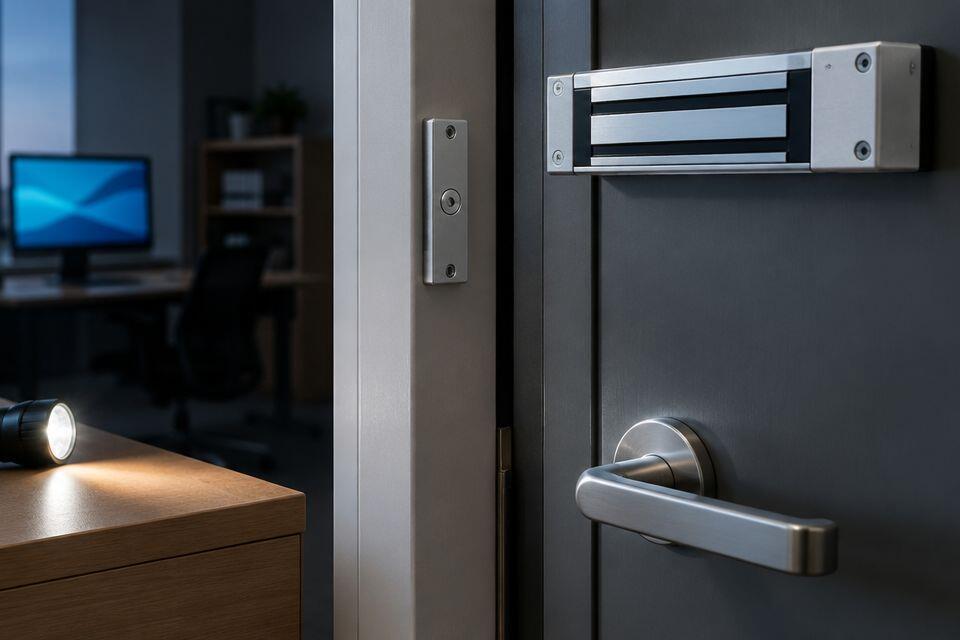
A magnetic door lock releases when electrical power to the magnet stops. During a mains power outage, a working backup supply can keep it locked until that supply stops or a release device interrupts the lock circuit. An unlocked magnet does not mean the door swings open: a closer, separate latch or mechanical lock can still affect the door.
- A magnetic door lock power outage releases the magnet only when power to the lock stops.
- Battery backup can maintain locking, but emergency release must still work while backup power is active.
- Patsecuritysolutions supplies access control equipment and installation for homeowners and businesses in Nairobi.
- Test the lock, reader and exit release together; a powered magnet alone does not prove the door works correctly.
Why this matters
A power cut changes both entry security and exit arrangements. You need to know whether the door stays secured from outside, whether authorised users can enter, and whether occupants can leave without a working reader.
For a new installation in 2026, specify the outage behaviour before choosing the lock. The access control power supply guide covers the supply side of that decision. Do not treat backup power as a substitute for a correctly designed emergency release.
What happens to magnetic door locks during a power outage?
A conventional magnetic door lock needs continuous electrical power to hold its armature plate against the magnet. When that power disappears, the electromagnetic holding force disappears. This is the lock's fail-safe behaviour, not evidence of a defective lock.
The important distinction is between losing mains electricity and losing electricity at the lock. A battery-backed system can lose mains electricity while continuing to supply the magnet. The door then remains magnetically secured unless the release circuit cuts that supply.
| Power arrangement | What happens during a mains outage? | Best for | Main limitation |
|---|---|---|---|
| Magnetic lock without backup power | The magnet releases when its electrical supply stops | Doors whose approved design calls for release on supply loss | The magnet no longer controls entry during the outage |
| Magnetic lock with compatible battery backup | The magnet remains energised while the backup supplies it | Doors requiring continued access control during mains outages | Backup is finite, and the emergency release must also interrupt battery-fed lock power |
Neither arrangement is automatically right for every door. Check the door's purpose, escape route requirements and complete release arrangement before deciding.
A magnetic lock also differs from a mechanical latch. Removing magnetic holding force does not retract a separate latch, unlock an independent deadbolt or move a door closer. Assess the whole opening, not just the device above it.
Without backup power, the magnetic lock releases
If the mains supply stops and there is no other electrical supply to the magnet, the magnet cannot continue holding the door. That makes entry security dependent on the rest of the door hardware and your outage procedures.
Best for: doors where release on supply loss forms part of the approved access and escape design. The benefit is predictable release when the lock loses power. The limitation is that the magnet itself no longer prevents someone opening the door from outside.
Do not add a separate locked bolt simply to compensate for this behaviour. On an escape door, an additional lock can create an exit obstruction. Have the complete hardware arrangement assessed before changing it.
If the door remains difficult to open after lock power stops, check for a separate latch, poor alignment, a sticking door or another restraint. Do not assume that every opening problem comes from the magnet.
With battery backup, the magnetic lock can stay locked
A compatible backup supply continues feeding the magnet after mains power fails. This preserves magnetic holding while sufficient electrical power remains available. It does not change the magnet into a lock that holds without electricity.
Best for: doors that need continued entry control during an outage, with an approved exit arrangement. The benefit is continuity of locking. The limitation is dependence on battery condition, connected load, wiring and the power supply's operation.
Backing up only the lock is not enough to establish a working access control system. If the reader or controller loses power, authorised entry can stop even though the magnet remains energised. Ask which components the backup actually supports.
A backup supply must not defeat emergency release. The release arrangement needs to interrupt the power that reaches the magnet, including power supplied by the battery. A design that cuts only the mains input can leave a battery-fed lock energised.
What happens when power returns?
When electrical power returns to the magnet, it can hold the armature again once the door closes and the surfaces meet correctly. The lock does not pull an open door shut across the doorway. A suitable closer and correct alignment remain important.
The controller's recovery behaviour is a separate issue. Confirm whether the installed system resumes its intended access permissions and responds to its exit controls after restoration. Do not infer this from a lit reader or an audible relay click.
Include recovery in your 2026 commissioning record. Record whether the door closes, secures, accepts an authorised credential and releases from inside after the supply returns. A successful outage test is incomplete without that restoration check.
Why magnetic door lock outage behaviour varies
The magnet has a straightforward power requirement. The surrounding system determines what occupants experience during a power cut.
- Backup coverage: a battery feeding the magnet does not automatically feed the reader, controller or other door equipment.
- Battery condition: a deteriorated or inadequately charged battery cannot provide the same service as a correctly maintained battery.
- Connected load: every device drawing from the backup supply affects the energy available to maintain operation.
- Release wiring: emergency release must interrupt the active lock supply, rather than depend solely on a software command.
- Door hardware: a closer, latch, bolt or alignment fault can affect opening even when the magnetic holding force has gone.
- Controller operation: entry permissions and recovery depend on the installed controller and its documented configuration.
Ask for these details in the installation specification. A statement that the door has “battery backup” does not answer whether people can enter, exit or release the lock during an outage.
How do you choose the right magnetic lock arrangement?
Start with the door's job. An office entrance, an internal restricted room and a door on an escape route need different assessments. Identify who uses the opening and what must happen when electricity fails.
For a purchase in 2026, request the actual lock and supply documentation. Confirm the lock's electrical requirements, mounting arrangement and suitability for the door. Match the supply to the specified equipment rather than selecting it from a photograph or a broad product category.
Use these buying questions:
- Does the proposed lock fit the door material, frame and opening direction?
- Which components remain powered during a mains outage?
- How does an occupant release the door without a working credential reader?
- Does emergency release interrupt the battery-fed magnet supply?
- What happens when backup power is exhausted?
- What maintenance and replacement instructions apply to the battery and supply?
The magnetic door lock selection guide is a starting point for comparing the lock category. Confirm the specific model's documentation before ordering; a category description is not a wiring specification.
Patsecuritysolutions is for Nairobi buyers who need access control equipment supply and installation. Ask for the lock, power supply, backup coverage and emergency release to be specified as one door system. Equipment supply alone does not establish that the installed opening meets its safety requirements.
How do you test a magnetic door lock during an outage?
Arrange a controlled test with a competent installer or maintenance professional. Keep the opening attended, inform affected occupants and follow the site's approved procedure. Do not disconnect unfamiliar mains wiring or disable a fire alarm to simulate a fault.
- Inspect the door. Identify the magnet, armature, closer, separate locks, reader and release devices. Check that the door opens and closes normally before testing its power arrangements.
- Confirm backup coverage. Use the system documentation to establish which equipment receives backup power. Identify the approved method for testing mains loss without bypassing protective devices.
- Test mains loss. Observe whether the magnet stays secured or releases as specified. If backup is intended, check that authorised entry still works through the normal reader and controller.
- Test exit release. Verify the normal exit control and the emergency release under the approved procedure. Confirm that the magnet releases while backup power is active.
- Restore power. Return the system to normal operation. Check door closure, locking, authorised entry and exit release again, then record the result.
A light on the power supply proves only that a light is on. The useful evidence is what happens at the door. Record each failed function separately so the installer can distinguish a supply problem from a reader, release or mechanical problem.
For your 2026 maintenance record, include the equipment identifiers, test conditions, observed behaviour and corrective action. Use the same approved procedure for subsequent checks so results remain comparable.
Where should the magnet and armature meet?
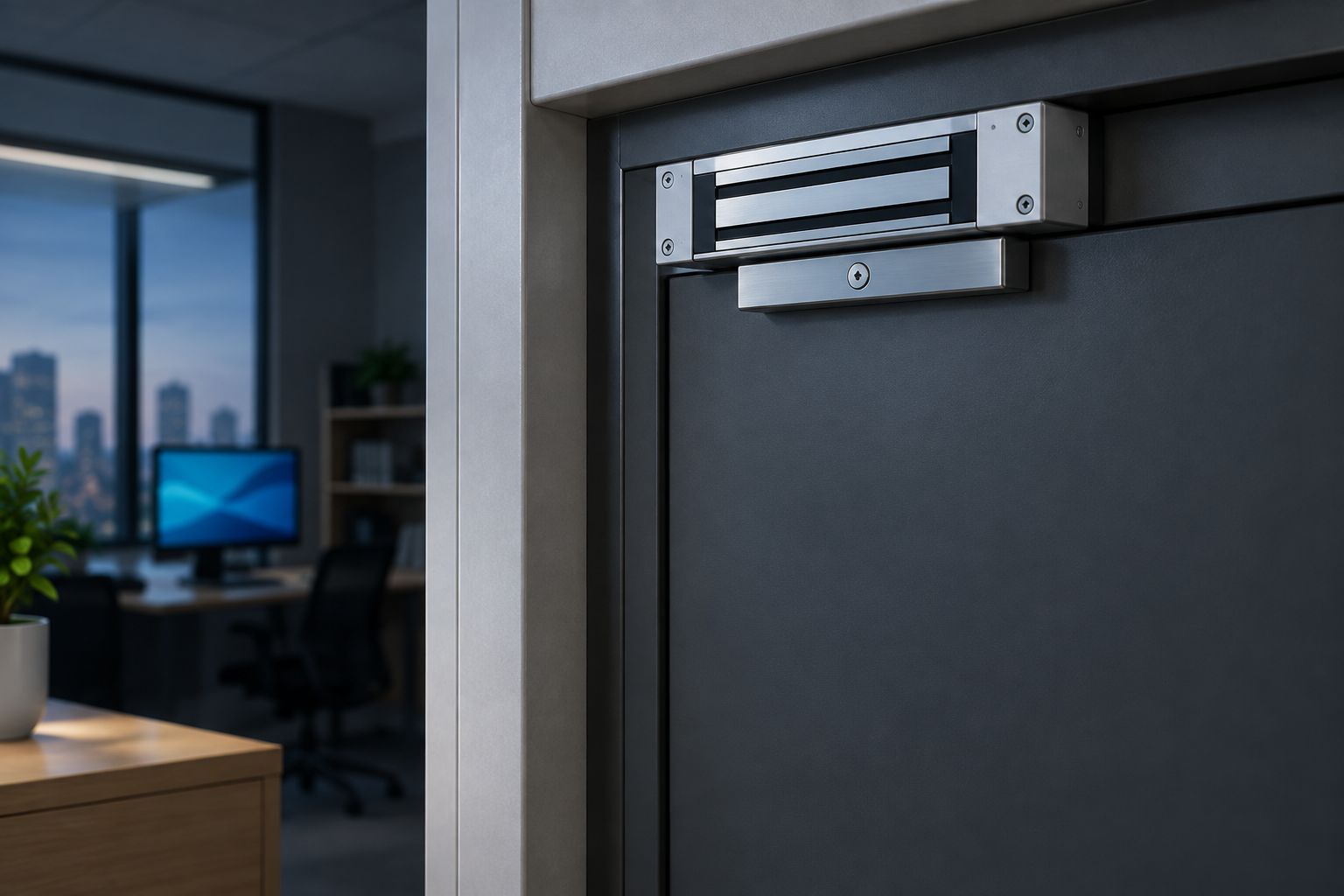
The magnet and armature need to meet as intended by the manufacturer's mounting instructions. A door that sags, catches on the frame or stops short of its closed position needs attention before you judge the electrical system.
Inspect the mounting hardware without altering its adjustment or adding improvised spacers. Some armature arrangements require movement to seat correctly; tightening every component rigidly is not a universal repair. Follow the actual installation instructions.
What maintenance keeps the outage arrangement dependable?
Follow the manufacturers' maintenance instructions for the lock, supply, battery and release devices. Inspect for damaged cables, loose mounting hardware, corrosion and changes to door alignment. Do not spray cleaners into electrical components.
Check the backup battery using the method specified for the installed system. A battery connected to a charger is not proof that it can support the door during an outage. Have a qualified person investigate failed backup tests, damaged batteries or supply fault indications.
Recheck the release arrangement after hardware changes, rewiring or alterations to the fire alarm interface. A replacement supply can change how backup power reaches the magnet. Treat any unexplained difference in outage behaviour as a fault requiring investigation.
Keep a 2026 service record for the complete opening, not just the lock. Patsecuritysolutions supplies access control equipment and installation; request the relevant equipment instructions and retain them with the door's maintenance documents.
Does fail-safe mean the door is always safe to exit?
Fail-safe means the conventional magnetic lock releases when its own electrical power stops. It does not certify the entire doorway as a safe escape route. Separate locks, release controls, wiring and door condition still matter.
Have the exit arrangement assessed against the requirements that apply to the building. A battery-backed magnet needs an effective release arrangement even while it remains powered.
Will a magnetic lock work if the internet is down?
An internet outage and a lock power outage are different events. Whether access credentials continue working without internet depends on the installed reader, controller and configuration.
Check the system documentation and test the relevant loss of connection separately. Do not assume that a working magnet proves the access controller can authorise entry offline.
Can you estimate backup time from the battery label?
The battery label alone does not establish useful door-system runtime. The connected load, battery condition, supply operation and discharge limits all affect the result.
Request a documented calculation and an appropriate commissioning test for the specified system. Patsecuritysolutions buyers should ask for backup coverage and test evidence rather than accept an unspecified promise that the door will remain powered.
FAQ
Will my magnetic door lock unlock when the electricity goes off?
Your magnetic door lock releases when power to the magnet stops. If a working backup supply continues feeding it, a mains outage alone does not release it.
Can a battery keep a magnetic door lock locked during a power cut?
A compatible battery-backed supply can keep a magnetic door lock energised during a power cut. The reader, controller and release arrangement must also be assessed as part of the door system.
Does a magnetic lock automatically open the door when it loses power?
A magnetic lock releases its holding force when it loses power; it does not automatically swing the door open. A closer, separate latch or mechanical lock can still affect opening.
Can people get trapped behind a battery-backed magnetic lock?
A battery-backed magnetic lock needs an effective exit and emergency release arrangement. Have the complete doorway assessed, and verify that emergency release interrupts lock power while backup is active.
How long will the magnetic lock battery last during an outage?
Backup runtime depends on the installed battery, its condition, the connected load and the supply’s operation. Request a documented calculation and a commissioning test instead of relying on the battery label alone.
Will the magnetic lock lock again when power comes back?
The magnet can hold again when power returns and the armature meets it correctly. Check the controller, door closure and release functions after restoration.
Should I fit a separate bolt to stop the door opening during power cuts?
Do not add a separate bolt without checking the door’s escape requirements. An additional lock can obstruct exit even when the magnetic lock releases.
One last thing
Test emergency release while the backup supply is active. Testing only with every supply disconnected misses the condition that matters most: the magnet still has power, but someone needs to leave.
Make that demonstration part of your acceptance check before putting the door into normal use. A door that stays locked during an outage is useful only when its approved release functions still work.
Related guides
- Can you install an access control system yourself?
- Access control systems for small businesses in Kenya
- RFID card readers and door access control