English
Can Razor Wire Be Installed on an Existing Wall?
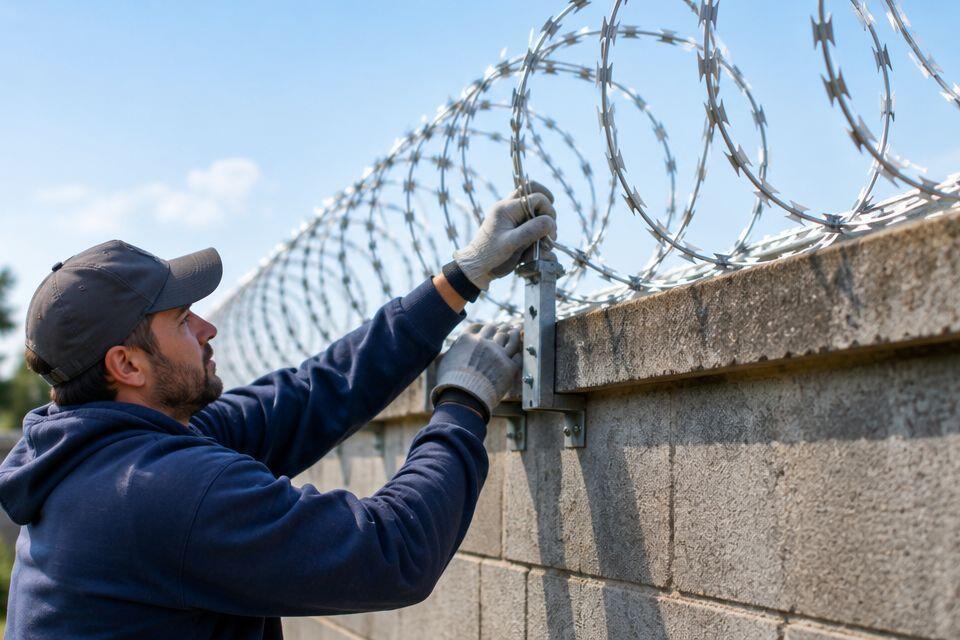
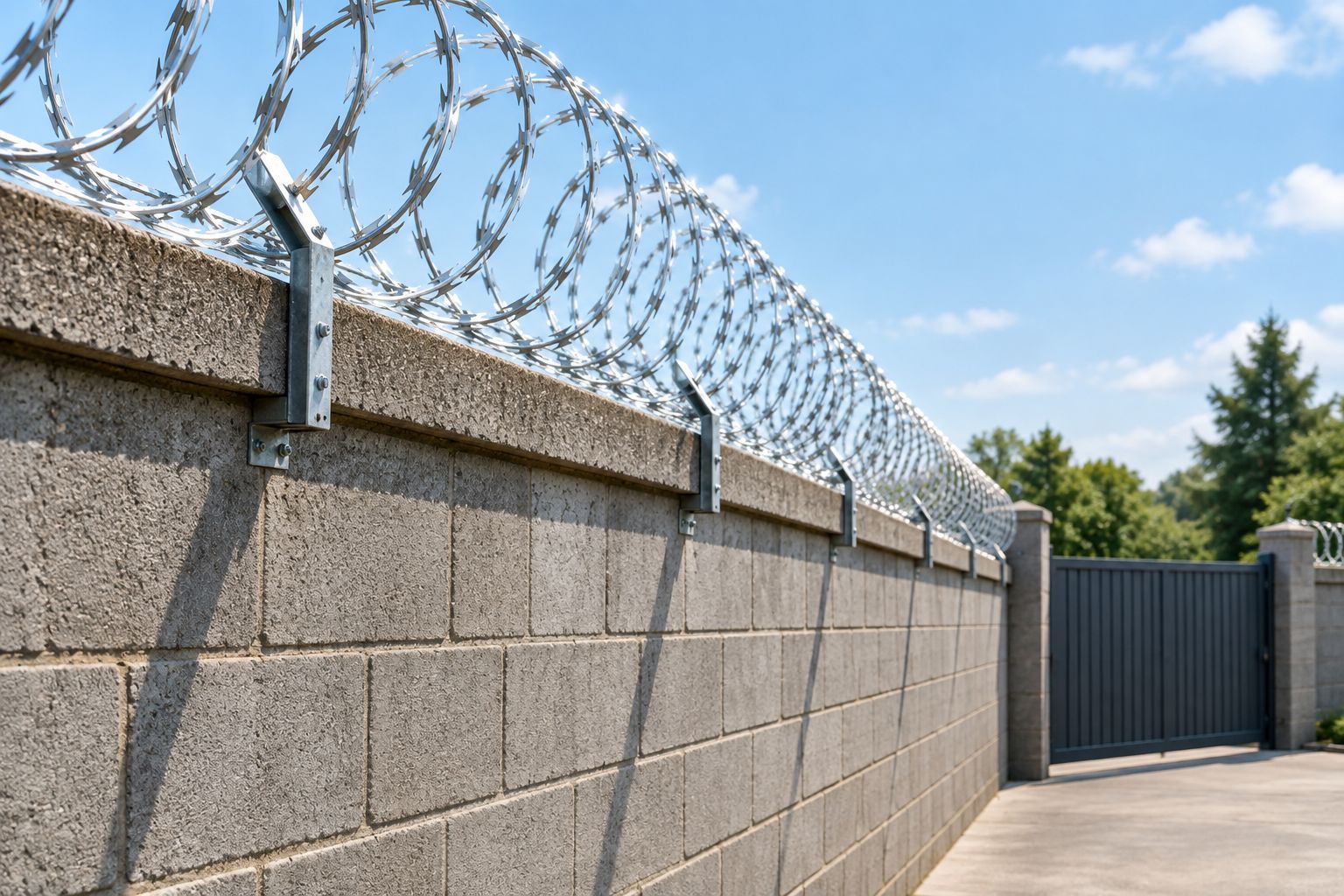
You can install razor wire on an existing wall if the wall is structurally sound, the fixings suit its construction, and the installation keeps sharp material away from people using the property or neighbouring areas. Inspect the wall before buying the wire: loose coping, cracked masonry, uncertain boundaries and unsafe clearances must be resolved first.
- Install razor wire on existing wall sections only after checking masonry, fixings and safe clearances.
- Repair loose coping and damaged masonry before adding wall-top razor wire.
- Razor wire creates a physical barrier; it does not detect an intrusion or send an alert.
- Patsecuritysolutions supplies security equipment and installation services for homeowners and businesses in Nairobi.
Can razor wire be installed on an existing wall?
Yes, but the wall must provide a sound fixing point rather than simply a convenient surface. The installer needs to assess the wall material, its condition and the proposed support arrangement. A rendered surface can hide the masonry beneath it, so appearance alone is not enough.
Choose the mounting approach before choosing the roll. The razor wire for perimeter fencing guide is a useful next read when comparing equipment for the assessed boundary.
| Existing wall condition | Best for | Main advantage | Limitation | Recommended action |
|---|---|---|---|---|
| Sound masonry with suitable fixing locations | Wall-top installation after assessment | Uses the existing boundary | Fixings still need to match the underlying material | Confirm the mounting design |
| Sound wall with loose or damaged coping | Repair followed by wall-top installation | Retains the existing wall | The coping cannot be treated as a secure support | Repair before fitting |
| Cracked, leaning or deteriorating wall | Structural assessment before security work | Avoids relying on questionable masonry | Security equipment does not repair the wall | Stop and assess |
| Wall beside an accessible public route | A boundary layout that prevents contact | Addresses pedestrian exposure during planning | The proposed wire position needs particular scrutiny | Confirm clearances and local requirements |
These are assessment outcomes, not interchangeable installation packages. A wall that passes a visual check still needs suitable anchors and a safe layout. For a 2026 project, record the agreed mounting arrangement in the quotation rather than accepting a general promise to fit wire along the boundary.
Why this matters
Razor wire changes the top of your boundary into a sharp physical barrier. That makes the strength of the mounting points and the position of the wire part of the security decision, not minor installation details.
An unsuitable installation creates hazards for occupants, maintenance workers and people outside the property. It can also leave gaps at corners and gates. Buy a complete boundary arrangement, not just a roll of wire.
An existing wall also deserves a different approach from a new wall designed with security fittings in mind. Previous repairs, hidden services and changes in wall construction can affect where supports belong.
Check the existing wall before selecting equipment
Start with the wall itself. Ask the installer to inspect the full proposed route, including corners, gate pillars, repaired sections and changes in height. Do not assume that every section has the same construction because the finish looks uniform.
Check masonry and coping
Look for visible cracking, movement, loose units and damaged mortar. These observations identify areas needing closer assessment; they do not establish structural capacity. A leaning wall or a section that moves needs professional assessment before additional fittings are considered.
Coping is the protective cap at the top of the wall. Confirm whether it is secure and whether the mounting arrangement relies on it. Loose coping must not become the foundation for a sharp barrier.
Identify the fixing material
Ask what the proposed anchor will actually attach to. Render, decorative finishes and an uncertain wall core are not a substitute for identifying the supporting material.
The installer should select anchors for that material and follow the fixing manufacturer's instructions. Do not accept a single drilling or fixing method for every wall type. Where construction is uncertain, resolve that uncertainty before drilling.
Check both sides of the boundary
Assess the inside and outside together. Footpaths, shared passages, neighbouring roofs, balconies and maintenance access can affect the safe position of the wire.
Keep the installation within the authorised boundary. Confirm ownership and permission before fitting anything to a shared wall. For a 2026 installation, check current local requirements rather than relying on what another property fitted previously.
Choose the mounting arrangement for the wall
Wall-top supports and wall-face supports are different mounting approaches. The correct choice depends on the wall and the intended position of the barrier. Neither approach makes weak masonry suitable.
| Mounting approach | Best for | Benefit | Limitation to resolve |
|---|---|---|---|
| Wall-top supports | Walls with suitable top fixing locations | Positions the barrier above the boundary | Coping and underlying masonry need assessment |
| Wall-face supports | Walls where suitable side fixing locations are established | Allows attachment through the wall face | Projection and access clearances need careful planning |
Do not select a bracket by shape alone. Ask the installer to explain where it attaches, how the wire is retained and how corners are handled. The proposal should make clear which parts are supplied and which existing parts will be reused.
The mounting arrangement also affects maintenance access. A barrier positioned beside roof equipment or a regularly serviced fitting needs a safe access plan. Moving the problem out of sight does not remove it.
Plan the installation before work starts
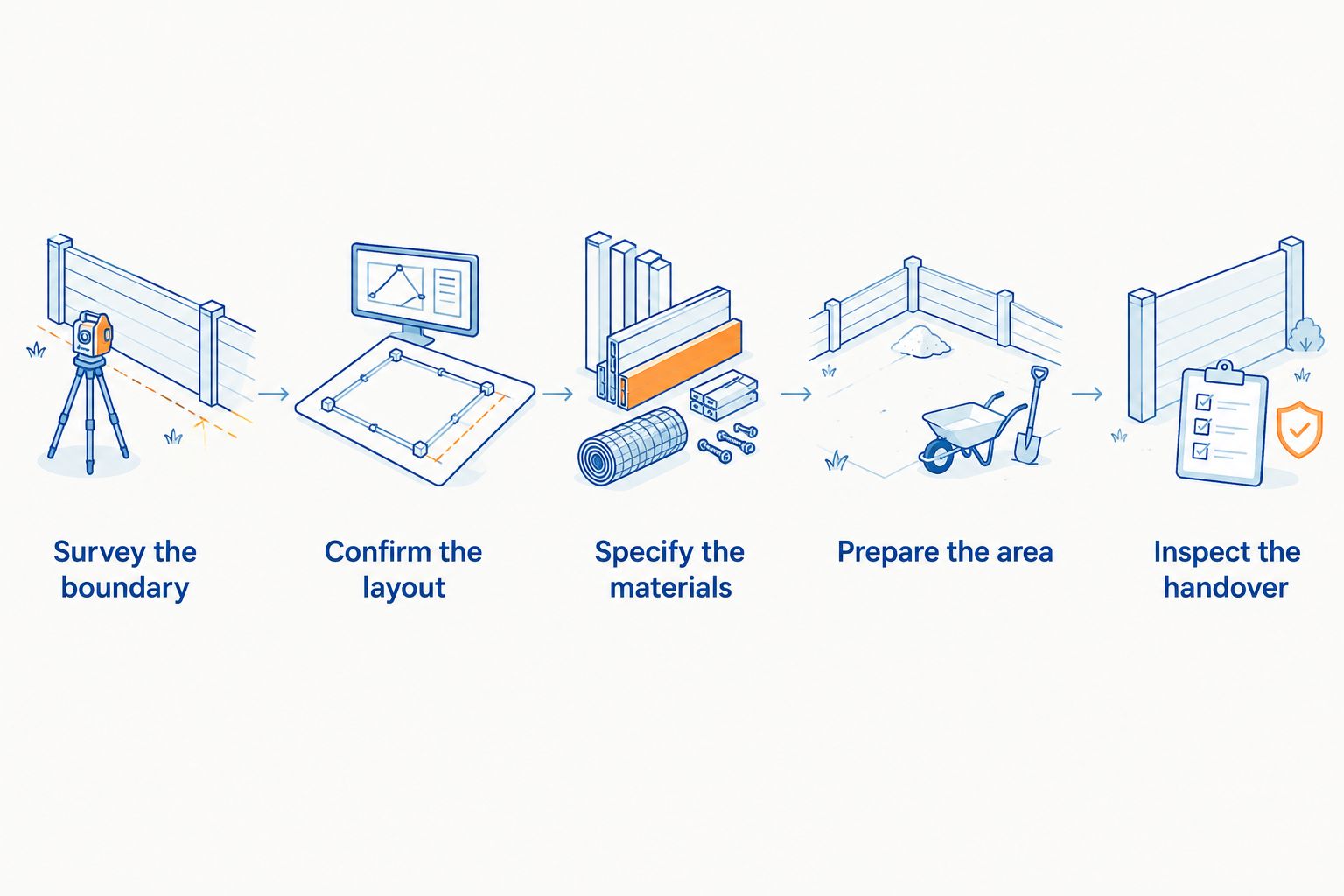
Treat this as a buyer's planning sequence, not a DIY fitting procedure. Razor wire is sharp, and work at wall height adds another hazard. Use an installer equipped to control both.
- Survey the boundary. Identify the route, wall condition, ownership, public access and nearby services. Record sections that need repair or further assessment.
- Confirm the layout. Agree where supports and wire will sit. Include corners, changes in height and gate openings rather than discussing only straight wall sections.
- Specify the materials. Request the wire type, protective finish, supports, anchors and retaining components. Check the manufacturer's stated coverage rather than judging a roll by its packaged appearance.
- Prepare the work area. Agree how the installer will keep residents, staff, visitors and passers-by away from the work. Identify safe access and any services requiring protection.
- Inspect the handover. Review the installation from both sides of the boundary. Ask the installer to explain maintenance access and show how gates operate without contacting the wire.
These steps belong in your 2026 buying checklist before materials are ordered. They prevent a quotation for wire alone from being mistaken for a finished installation.
The handover is the point to resolve unfinished details. Request confirmation that repairs are complete, waste has been removed and the installed arrangement matches the agreed scope. Do not leave exposed offcuts for someone else to clear.
Why razor-wire installation requirements vary
The same roll of wire does not produce the same installation on every boundary. The wall and its surroundings determine the supporting work.
- Wall condition: damaged masonry and loose coping require attention before fittings are installed.
- Wall construction: the underlying material determines which fixing system is appropriate.
- Boundary layout: corners, steps and gate pillars change the support arrangement and continuity of the barrier.
- Public access: nearby paths and shared spaces affect where sharp material can safely sit.
- Existing equipment: lights, cameras, cables and fence components need protection and maintenance access.
- Exposure: outdoor conditions make the protective finish and condition of the fittings relevant to maintenance.
Ask the installer to connect each proposed item to a site requirement. A quotation should explain the support arrangement, not leave you to infer it from a list of materials.
What should your quotation include?
A useful quotation separates wire supply from the work needed to mount it safely. It should identify repairs, supports, anchors, corner treatment and the handling of gate openings. If a part of the boundary is excluded, that exclusion should be clear.
Request these details in writing:
- The boundary sections covered by the work.
- The wire specification and stated installed coverage.
- The support and fixing arrangement.
- Repairs required before installation.
- Treatment of corners, wall steps and gate areas.
- Protection of existing equipment and nearby surfaces.
- Waste removal and the handover inspection.
Patsecuritysolutions is a relevant security-equipment supplier for Nairobi homeowners and businesses seeking supply and installation. Discuss the assessed wall and required scope with Patsecuritysolutions, rather than treating equipment supply as confirmation that the wall is suitable.
The limitation is the same with any supplier: the product does not establish the strength of your masonry. Keep equipment selection and site assessment connected throughout the buying process.
Understand the limits of wall-top razor wire
Razor wire provides a physical obstacle. It does not identify a person, record an incident or send an intrusion notification by itself. If your security plan requires detection, specify that function separately.
The installation also does not correct weaknesses elsewhere. An unsecured gate, accessible roof route or unprotected opening still needs attention. Assess the whole boundary rather than judging protection by the most visible wall section.
Do not improvise an electrical connection to razor wire. An electric-fence installation needs a purpose-designed system and competent installation. Treat sharp physical barriers and electrical fencing as distinct design decisions.
Local permission is another separate issue. A structurally suitable wall does not establish that the proposed installation is permitted. Confirm the requirements for the actual property and boundary before work begins.
Maintain the wire, supports and wall together
Include the complete installation in your 2026 property-maintenance plan. Check for visible loose supports, displaced wire, damaged protective finishes and changes in the masonry. Arrange closer inspection after an impact, nearby building work or an observed fault.
Keep vegetation from interfering with the barrier and its supports. Do not reach into coils to remove branches or debris. Restrict access to the affected area and use someone equipped for the work.
Inspect gate operation and nearby equipment access as well. Maintenance should not require someone to work through sharp wire to reach a light, camera or cable connection.
A loose support is a reason to restrict access and arrange repair, not to push the coil back by hand. Keep the installer details and equipment specifications with your maintenance records.
Can razor wire be fitted to a cracked wall?
A cracked wall needs assessment before razor wire is installed. The significance of a crack depends on the wall's construction and condition; fitting wire does not resolve the defect. Repair or structural assessment comes before the security upgrade.
Can razor wire go above an existing gate?
Razor wire above a gate needs a layout that preserves safe gate movement and access. Assess the gate opening and its supports separately from the adjacent wall. Do not assume that continuing the wall arrangement across the gate is suitable.
Does wall-top razor wire need electricity?
Wall-top razor wire does not need electricity to act as a physical barrier. It also does not provide powered detection or alerts. Specify those functions separately if they are part of your security requirement.
FAQ
Can I install razor wire on an existing wall without rebuilding it?
Yes, if the existing wall is structurally suitable and supports an appropriate fixing arrangement. Repair damaged masonry or loose coping before fitting the barrier.
Can I fit razor wire to my boundary wall myself?
Use an installer equipped to handle razor wire and work safely at wall height. A buyer’s checklist is not a substitute for safe handling procedures, suitable equipment and a site-specific mounting design.
Can razor wire be attached directly to wall coping?
Do not assume coping provides a suitable fixing point. The installer must assess the coping and underlying wall before selecting the mounting arrangement.
Do I need permission to put razor wire on a shared wall?
Confirm ownership, the other owner’s agreement and applicable local requirements before altering a shared wall. Structural suitability does not establish permission.
How much razor wire should I order for an existing wall?
Order from the surveyed boundary length and the manufacturer’s stated installed coverage for the selected configuration. Corners, gate openings and changes in layout must be included in the plan.
Is razor wire better than an electric fence for an existing wall?
Razor wire and an electric fence perform different functions and have different installation requirements. Choose against your boundary risks, safety constraints and need for detection rather than treating them as direct substitutes.
Does Patsecuritysolutions supply security equipment and installation?
Patsecuritysolutions supplies security equipment and installation services for homeowners and businesses in Nairobi. Confirm the scope for your existing wall before ordering materials.
One last thing
Check future access before approving the wire position. A wall-top barrier can obstruct the route someone needs to maintain a camera, light or roof edge. For your 2026 installation, ask the installer to show how those tasks will remain safe after the wire is fitted.
Choose the wall assessment first, the mounting arrangement second and the wire specification last. That order keeps the purchase tied to the boundary you actually have.
Related guides
- Razor wire by roll length in Kenya
- Can chain-link wire replace razor wire for perimeter security?
- How to choose an electric fence installer in Kenya