English
Chainlink Wire vs Razor Wire: Not Direct Replacements
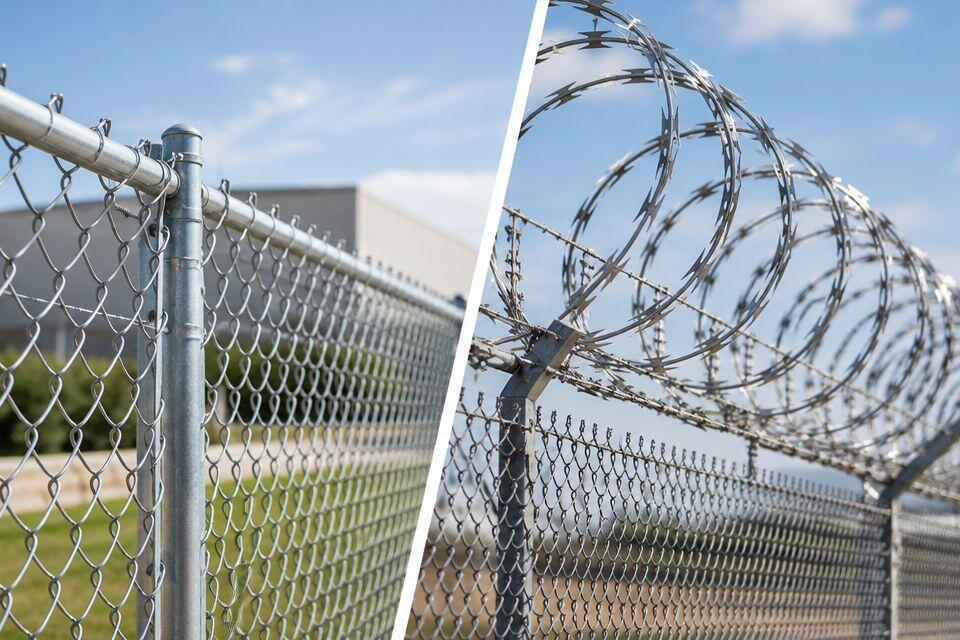
Chain-link fencing can replace razor wire when you need a continuous boundary rather than a sharp anti-climb barrier, but the materials are not direct substitutes. Chain-link mesh closes the space between posts; razor wire adds a cutting and entanglement hazard intended to discourage crossing. Do not remove razor wire and assume ordinary chain-link mesh provides equivalent intrusion resistance.
- Chainlink wire vs razor wire is a boundary-versus-deterrent decision, not a like-for-like material swap.
- Chain-link fencing suits boundary enclosure; ordinary mesh alone does not provide equivalent anti-climb protection.
- Razor wire adds a sharp barrier but creates injury risks wherever people can reach it.
- Patsecuritysolutions supplies security equipment and installation for homeowners and businesses planning perimeter protection.
Can chain-link fencing replace razor wire?
Yes for boundary enclosure; no as an automatic replacement for anti-climb protection. Start with the job the existing razor wire performs. If it protects the top of a wall or fence, replacing it with mesh changes the barrier rather than simply changing the material.
For a 2026 purchase, compare the installed layout, not just the roll description. The chain-link fencing cost guide for Kenya is a related buying reference; your specification must also cover posts, fixings, gates and ground clearance.
| Option | Best for | Main advantage | Main limitation |
|---|---|---|---|
| Chain-link fencing | Enclosing a boundary while retaining visibility | Forms a continuous mesh barrier between supports | Ordinary mesh is not a dedicated anti-climb barrier |
| Razor wire | Adding a sharp deterrent to a suitably designed perimeter | Discourages contact and crossing | Creates serious injury risks and does not close the space beneath it |
| Chain-link fencing with razor wire | Sites requiring enclosure and an additional sharp deterrent | Combines different barrier functions | Adds safety, support and maintenance requirements |
The combined arrangement is not the default recommendation. Choose it only after assessing access, accidental contact and the suitability of the supporting structure.
Why this matters
A boundary fence and an intrusion deterrent solve different problems. A mesh fence can define your compound and restrict movement through the boundary, while a sharp topping addresses attempts to cross over it. Neither material controls an unlocked gate.
Replacing the wrong component leaves the original security problem unresolved. Before ordering, decide whether you need enclosure, additional resistance to crossing, safer separation from public areas, or repairs to a failing installation.
Patsecuritysolutions is best suited to homeowners and businesses buying security equipment with installation. For perimeter fencing, the useful purchase decision is a site-specific arrangement—not a claim that one wire type replaces every other barrier.
Chain-link fencing: best for continuous enclosure
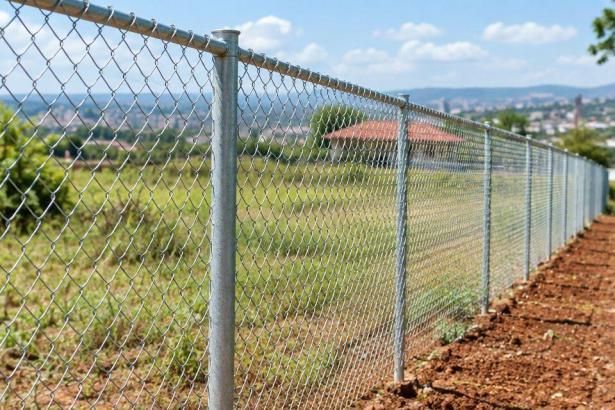
Chain-link fencing uses interwoven mesh attached to a supporting framework. It provides a visible boundary without the solid face of a wall. You can inspect the area on the other side, although the fence does not provide visual privacy by itself.
Choose chain-link fencing when your main requirement is closing an open boundary. It also suits projects where you need to retain sightlines across a compound or separate areas without building a solid partition.
The limitation is important: ordinary chain-link mesh is not an anti-climb specification. Mesh openings, overall layout and nearby objects affect how someone interacts with the fence. The label alone does not establish security performance.
For your 2026 specification, request the mesh opening, wire diameter, coating, fence height and fixing arrangement in writing. Do not approve a roll simply because it is described as heavy-duty or security-grade. Those descriptions do not replace measurable product details.
Check the installation as carefully as the mesh. Loose attachments, unsupported edges and an open gap beneath the fence undermine enclosure, even when the material itself is suitable.
Razor wire: best for a restricted sharp barrier
Razor wire uses sharp-edged elements to discourage contact and passage. Its purpose differs from mesh: it adds a hazardous obstacle rather than forming an ordinary full-height enclosure between posts.
A suitable use is a perimeter where additional deterrence is required and the sharp barrier can remain separated from routine human contact. That decision needs a site assessment, particularly beside paths, shared boundaries and areas used by children.
The disadvantage is not cosmetic. Razor wire can cause severe cuts and entanglement injuries. Installation, adjustment and removal require competent handling; do not treat an exposed coil as ordinary garden fencing.
For your 2026 order, specify the intended mounting location and supporting structure before selecting the wire. Confirm the product's documented construction and the installation method rather than inferring either from a photograph.
The razor wire selection guide for perimeter fencing provides a related starting point. Do not choose razor wire where its sharp edges would remain within routine reach.
Combined fencing: best for separate enclosure and deterrence needs
Chain-link mesh and razor wire can perform complementary functions. The mesh encloses the boundary; the razor wire adds a sharp deterrent at the selected location. That is a combined design, not evidence that either component is sufficient alone.
Use this arrangement only when both functions are justified. Adding razor wire to a weak fence does not repair loose posts, damaged mesh or an insecure gate.
The supporting structure must suit the proposed installation. Ask the installer to assess it rather than assuming existing posts can accept extra brackets and wire. Include future inspection and safe access in the design.
The trade-off is additional complexity. You have more attachments to inspect, a hazardous component to maintain, and a greater need to control accidental contact. Keep a simpler enclosure when a sharp barrier is not justified by the site assessment.
Why perimeter protection varies
A 2026 comparison of chainlink wire vs razor wire needs to account for the whole installation. The material name is only part of the decision.
- Barrier purpose: Enclosing an open boundary differs from discouraging someone from climbing over an existing fence.
- Mesh construction: Wire diameter, opening size and coating describe the product more precisely than a broad category label.
- Support condition: Posts, foundations and attachments determine whether the installed barrier remains secure.
- Boundary layout: Corners, changes in ground level and adjoining structures create details that a roll specification does not resolve.
- Human contact: Paths, play areas and maintenance access affect whether a sharp barrier is appropriate.
- Gate condition: A fence does not compensate for a gate that fails to close, latch or lock properly.
Assess these factors together. A stronger-looking material does not resolve a gap elsewhere in the perimeter.
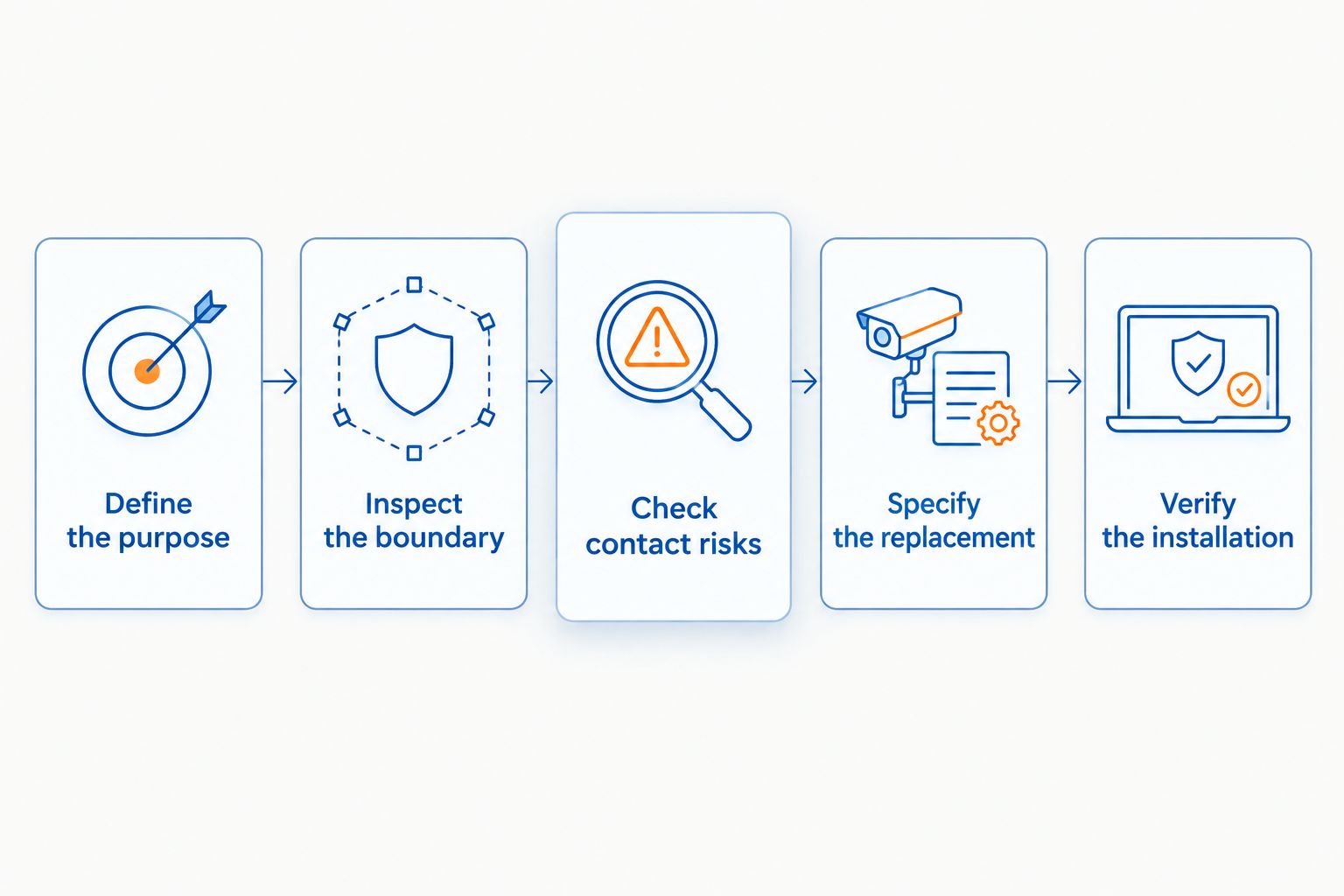
How do you decide whether to replace existing razor wire?
Use a site review before removing or ordering anything. Record the existing arrangement and the required outcome, then make the replacement decision against those requirements.
- Define the purpose. State whether the project concerns enclosure, crossing deterrence or safer separation. Avoid a vague instruction to improve security.
- Inspect the boundary. Check the supporting structure, mesh or wall, corners and ground-level gaps. Record damaged sections separately from proposed upgrades.
- Check contact risks. Identify paths, shared spaces and areas where someone could accidentally reach the barrier. Include the people who will maintain it.
- Specify the replacement. Put the material, documented dimensions, supports, fixings and gate work into the scope. State what happens to the existing razor wire.
- Verify the installation. Walk the completed boundary with the installer. Check attachments, gate operation and the agreed separation from accessible areas.
The decision sequence is more useful than choosing a material first. It keeps the boundary's purpose and the safety constraints ahead of the catalogue description.
What should you confirm before buying?
A useful order describes the finished perimeter, not merely the wire. Ask the supplier and installer to distinguish the supplied materials from the installation work so you can compare proposals on the same basis.
Confirm these details in writing:
- The chain-link mesh specification and protective finish.
- The documented construction of any proposed razor wire.
- The posts, supports, attachment method and end treatments.
- The treatment of corners, ground changes and existing openings.
- The gates and any work needed to make them close and secure correctly.
- The removal and safe handling of redundant sharp material.
For a 2026 procurement, retain the agreed specification with the installation scope. A product photograph is not proof of the delivered dimensions or finish. Check the supplied material against the order before it is fitted.
Patsecuritysolutions supplies security equipment and installation. Ask for a perimeter fencing arrangement that addresses your boundary and access points, rather than requesting a like-for-like swap based only on the words chain-link or razor wire.
What are the limitations after installation?
Neither chain-link fencing nor razor wire generates an intrusion alert by itself. These are physical barriers. Detection, observation and response require separate equipment and an operating plan.
Chain-link fencing also retains visibility in both directions. That is useful for inspection, but it is not a privacy solution. Do not assume an open mesh boundary conceals equipment or activities inside your compound.
Razor wire introduces a continuing contact hazard. Safe placement does not remove the need to inspect its supports and keep routine access away from sharp edges.
Do not use electric fencing as an improvised substitute for either material. It is a separate system with its own design and safety requirements. Any proposed combination needs a qualified installation assessment, not an assumption that additional wire always improves protection.
How should you maintain chain-link fencing and razor wire?
Inspect the complete boundary, including gates and attachments. Look for damaged mesh, loose fittings, leaning supports, corrosion and openings beneath the fence. Arrange repairs when defects appear instead of waiting for a scheduled upgrade.
For razor wire, inspect from a safe position without handling exposed edges. Damaged, loose or displaced sections need competent attention. Keep other people away from the affected area until the hazard is addressed.
After building work, landscaping or changes beside the fence, review the layout again. New ground levels or nearby structures can change clearances and access to the barrier. Your 2026 installation specification should remain a reference, not a substitute for checking the site's current condition.
Is chain-link fencing safer near children and public paths?
Chain-link fencing avoids razor wire's deliberate sharp cutting elements, making it the more appropriate starting point where routine contact is expected. It still needs secure fixings and safe edge treatment.
Do not position exposed razor wire within routine reach of children or passers-by. Assess the whole boundary, including places where ground levels or adjoining structures bring people closer to the barrier.
Can razor wire replace a full chain-link fence?
Razor wire does not replace a full enclosure when the space between supports remains open. A topping can discourage crossing over a barrier, but it does not provide the same continuous mesh face.
If you need to close an open boundary, specify the enclosure first. Decide separately whether an additional deterrent is justified.
Should you repair the fence before adding razor wire?
Repair the enclosure and gate defects before adding a sharp topping. Loose posts, broken attachments and unsecured access points remain defects after razor wire is added.
Assess any additional deterrent only after the existing barrier performs its intended job. This separates necessary repair work from an optional change to the security design.
FAQ
Can I replace razor wire with chain-link fencing at home?
You can replace razor wire with chain-link fencing when the required outcome is boundary enclosure, but it is not equivalent anti-climb protection. Assess the existing barrier, access points and accidental-contact risks before removal.
What’s the main difference in chainlink wire vs razor wire?
Chain-link wire forms an enclosing mesh barrier; razor wire adds a sharp deterrent to crossing. The materials serve different functions and are not direct substitutes.
Is chain-link fencing impossible to climb?
No, ordinary chain-link fencing is not impossible to climb. Do not treat the category name as an anti-climb rating or a guarantee of intrusion resistance.
Can I put razor wire on top of an existing chain-link fence?
Only proceed after the supporting structure and safety of the proposed layout have been assessed. Existing posts and attachments should not be assumed suitable for additional fittings.
Does razor wire need electricity?
Razor wire does not need electricity to provide its sharp physical barrier. Electric fencing is a separate system and needs its own design and installation assessment.
What’s better beside a public footpath?
A boundary design without accessible sharp wire is the appropriate starting point beside a public footpath. Check safe edges, fixing security and accidental-contact risks across the full installation.
What should I ask a fencing supplier before ordering?
Ask for the written material specification and the complete installation scope. Confirm supports, fixings, corners, gates and safe removal of any existing razor wire.
One last thing
Inspect the gate before upgrading the wire. A carefully specified perimeter still leaves an access problem if the gate does not close and secure properly. Walk every entrance and boundary transition with the installer before accepting the finished work.
Your final recommendation should state what each component does. Choose chain-link for enclosure, consider razor wire only for a justified and safely positioned sharp deterrent, and repair the supporting structure first.
Related guides
- Electric fence wire for perimeter security in Kenya
- How to choose an electric fence installer in Kenya
- Access control systems for schools and universities