 English
 Automatic Gate Motor for Real Estate Developers (2026)
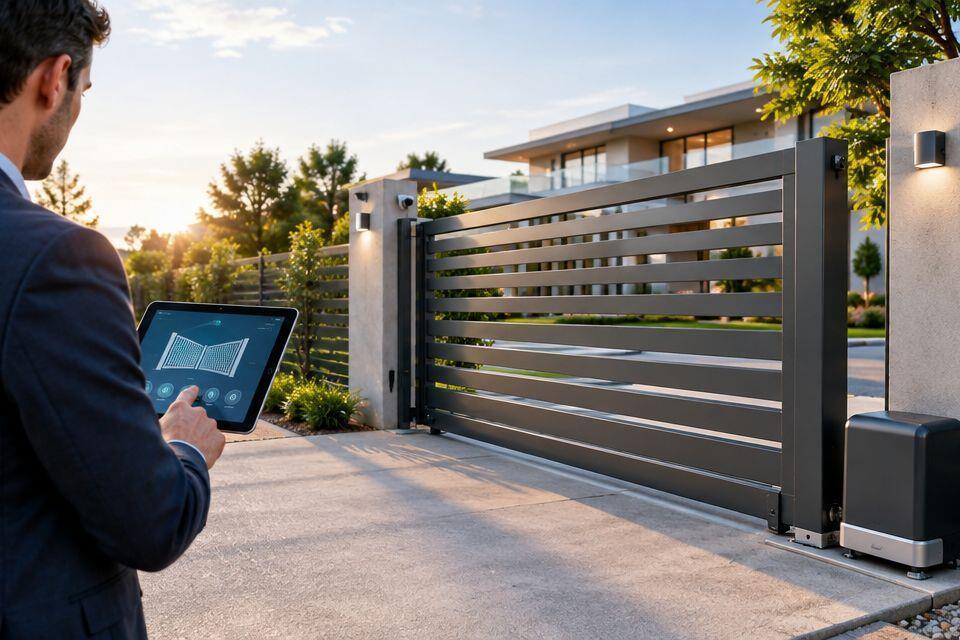
Real estate developers need an automatic gate motor for real estate developers rated for commercial duty, not the light-duty domestic units sold for single-family homes. A compound with dozens of units, visitor traffic, and staff shifts puts far more cycles on a gate motor than one household ever will, and the wrong motor class burns out inside a year.
- An automatic gate motor for real estate developers must be commercial-duty, sized for high daily cycle counts, not domestic-duty.
- Sliding gate motors suit wide compound entrances better than swing motors, which need clearance space swing gates rarely have on tight plots.
- Centurion D5 Evo and D3 Smart+ are built for sliding gates on multi-unit sites with frequent daily traffic.
- Access control integration matters more than motor speed once a development has multiple households, tenants or shift staff.
- Solar backup keeps gates operating through grid outages without a standby generator.
Why automatic gate systems matter for real estate developers
A gate motor on a single-family home might cycle a handful of times a day. On a gated development with multiple blocks, visitor parking and staff turnover, the same gate can cycle continuously through the working day. That difference in load is the single biggest reason developers should not buy automatic gate motors built for residential use and expect them to hold up.
Developers also answer to a different set of stakeholders than a homeowner does. Property managers need uptime, buyers ask about security systems before signing, and shared compounds carry liability if a gate injures someone. That pushes the buying decision toward motors with safety sensors, access control integration and a maintenance plan that covers every unit on a site, not just one household.
Assess site traffic before choosing a gate type
Gate type decision comes before motor selection. A sliding gate needs less clearance than a swing gate and suits compounds with limited apron space in front of the entrance, which describes most infill developments in Nairobi and other urban plots.
- Count daily vehicle entries and exits across peak hours, not just a daily average
- Check available clearance in front of and beside the entrance for swing arcs
- Note gradient and drainage at the gate line, since sliding tracks need a level run
- Confirm whether pedestrian access needs a separate wicket gate or turnstile
- Flag any shared access points used by multiple blocks or tenants
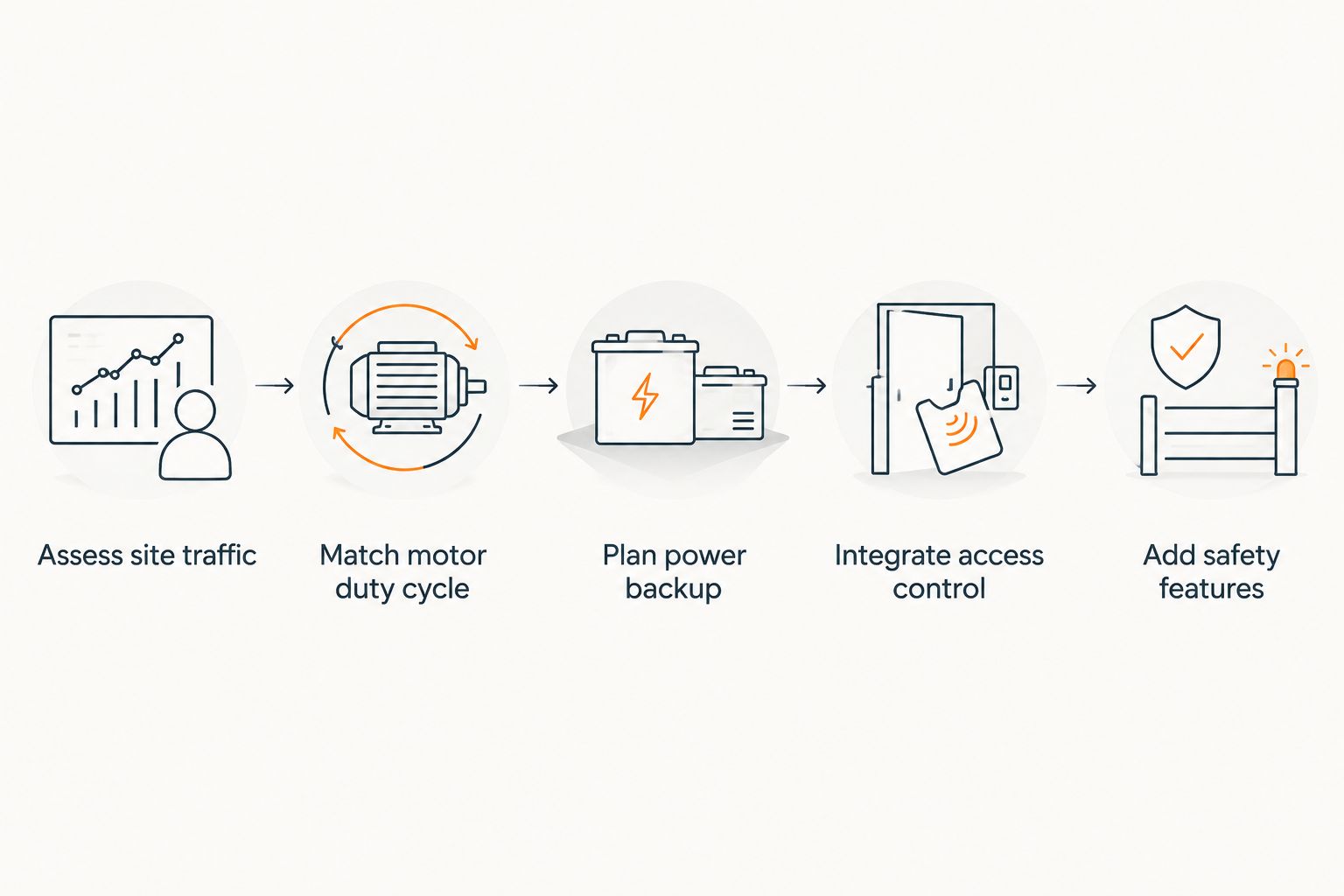
Match motor duty cycle to usage volume
Motors are rated by duty cycle: how much continuous running they tolerate before overheating and cutting out. A domestic-duty motor on a compound gate that runs all day fails faster than a commercial-duty motor built for continuous cycling.
- Specify commercial or industrial duty cycle for any gate serving more than one household
- Check the motor's rated gate weight against the actual leaf weight, including any cladding
- Confirm the motor has thermal cutout protection rather than running to failure
- Ask for the encoder or limit-switch type, since worn limit switches are a common failure point
- Choose sliding gate motors for compounds rated for the leaf weight and width of the actual gate, not a generic figure
Plan power backup for grid instability
Grid outages stop a mains-only gate motor cold, which is a security gap for any development that relies on the gate for access control. Backup power keeps the entrance operating without staff having to open it manually.
- Battery backup built into the motor unit for short outages
- Solar charge controller sized to the motor's draw for longer or frequent outages
- Manual release mechanism as a fallback when both power sources fail
- UPS integration where the gate motor shares power with an access control panel
Integrate access control for residents, visitors and staff
A gate motor without access control is just a barrier that opens and closes. Developers running multi-unit sites need a way to separate resident access, visitor access and staff access without a guard manually operating every entry.
- RFID cards or fobs for residents and permanent staff
- Intercom with remote release for visitors and deliveries
- Biometric or PIN access for shared facilities like gyms or parking basements
- Integration between the gate controller and access control kits for apartment buildings so one system logs both entry types
- Time-based access schedules for contractors and shift staff
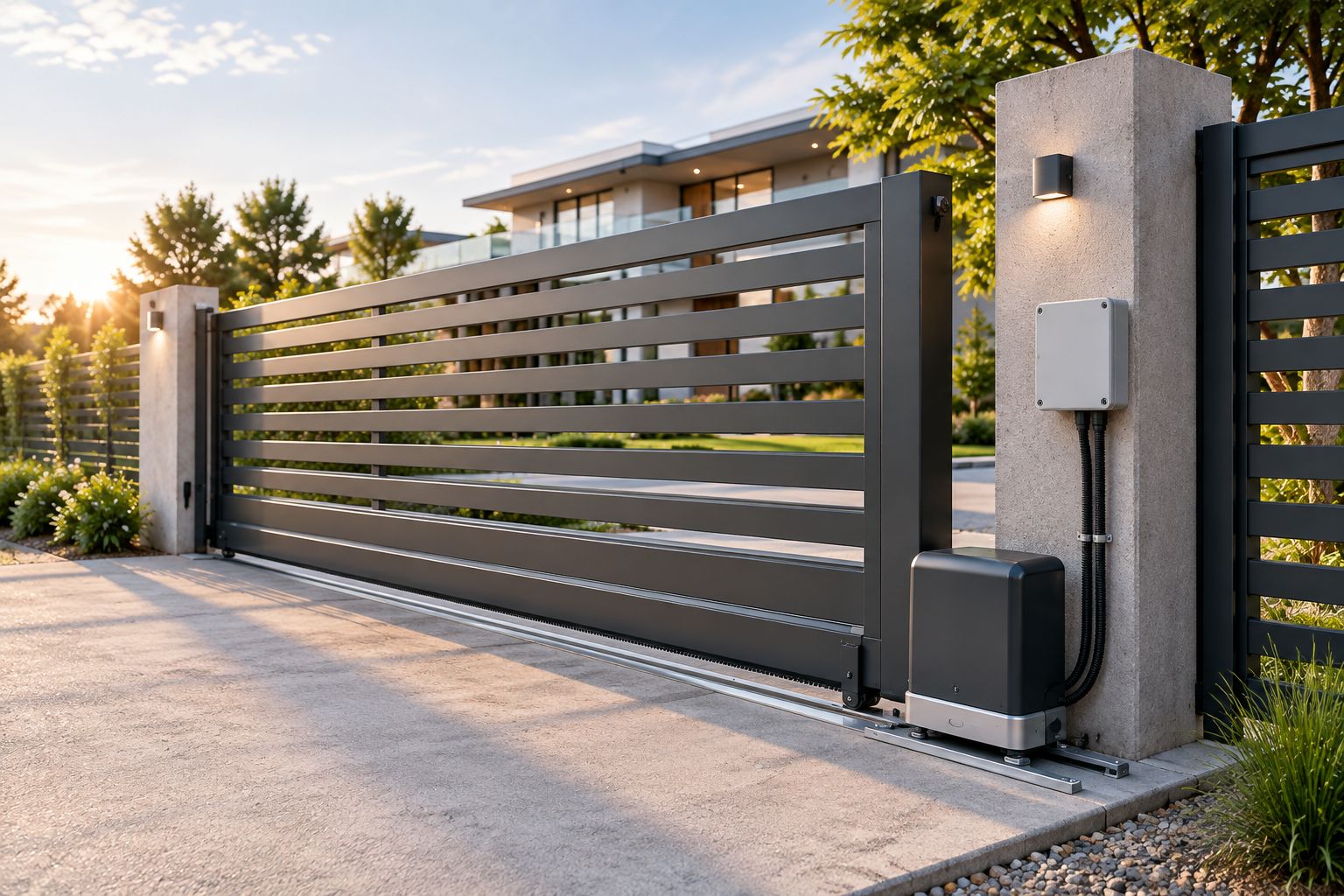
Add safety features for shared compounds
A gate that closes on a vehicle or pedestrian is a liability problem, and shared compounds see far more foot traffic near the gate line than a single home does.
- Photocell safety beams on both sides of the gate opening
- Safety edge sensors on the leading edge of the gate leaf
- Audible and visual warning before the gate starts moving
- Obstruction detection that reverses the gate instead of continuing to close
Plan maintenance across multiple properties
One gate motor is easy to maintain. Ten gates across a portfolio need a schedule, or failures get discovered when a resident is locked out.
- Log installation date, model and duty rating for every gate on the portfolio
- Set a fixed inspection interval for tracks, hinges and limit switches
- Keep a shared spares stock for the motor models used across sites
- Assign one contact responsible for reporting faults per property
Budget for installation and after-sales support
Motor cost is only part of the spend. Civil work, wiring, access control hardware and after-sales support all affect the total project cost and the timeline to handover.
- Confirm whether the supplier handles civil work or only the motor and controller
- Ask what after-sales support looks like once the development is handed to a property manager
- Check warranty terms cover commercial-duty use, not just domestic installations
- Factor in CCTV installation companies in Kenya if the gate needs camera coverage as part of the same handover
“A domestic-duty motor on a compound gate that runs all day fails faster than a commercial-duty motor built for continuous cycling.”
Gate motor options compared for developers
| Option | Best for | Key limitation |
|---|---|---|
| Sliding gate motor | Wide entrances with limited swing clearance | Needs a level track run; poor on sloped ground |
| Swing gate motor | Sites with wide entrance aprons and no track space | Needs clearance space many infill plots lack |
| Centurion D5 Evo | Multi-unit compounds with high daily traffic | Requires professional setup for encoder tuning |
| Centurion D3 Smart+ | Mid-size developments needing app or remote control | Smart features add setup steps over a basic motor |
| Solar-integrated motor kit | Sites with frequent grid outages | Solar controller must be sized correctly or backup runs short |
Verdict: for multi-unit developments with daily vehicle and visitor traffic, a commercial-duty sliding gate motor paired with access control integration is the setup that holds up; domestic-duty swing motors are the wrong fit for shared compounds.
Get the right gate motor for your site
Match motor duty class and access control to your development’s traffic before you order.
Common mistakes real estate developers make
- Specifying a domestic motor to cut cost. Domestic-duty motors are cheaper up front and fail within months on compound-level traffic.
- Skipping access control at design stage. Retrofitting card readers or intercoms after the gate is installed means rewiring work that could have been planned in.
- Ignoring gradient and clearance at the gate line. A sliding gate on a sloped or uneven apron jams the track regardless of motor quality.
- Treating maintenance as a one-off. A portfolio of gates without a shared inspection schedule means faults surface as resident complaints, not as planned repairs.
- Buying motors from multiple brands across one site. Mixed motor models across a portfolio complicate spares stock and staff training for property managers.
FAQ
What is the best automatic gate motor for real estate developers?
A commercial-duty sliding gate motor, such as the Centurion D5 Evo or D3 Smart+, suits multi-unit developments with daily vehicle and visitor traffic better than a domestic-duty unit. The right choice still depends on gate weight, width and available clearance at the site.
How do sliding gate motors differ from swing gate motors for compounds?
Sliding gate motors run the gate leaf along a track and need less apron clearance, which suits tight urban plots. Swing gate motors need open space in front of and beside the entrance for the gate to arc, which many infill developments do not have.
Can automatic gate motors run on solar power during outages?
Yes, when the motor is paired with a solar charge controller sized to its power draw. Battery backup alone covers short outages; solar keeps the gate operating through longer or frequent power cuts.
Do commercial gate motors handle more daily cycles than domestic ones?
Yes, commercial-duty motors are built for continuous cycling and include thermal cutout protection, while domestic-duty motors are designed for occasional use and overheat under compound-level traffic.
Do automatic gates need a separate access control system?
For multi-unit developments, yes. A gate motor alone opens and closes; access control adds resident cards, visitor intercoms and staff schedules so entry is logged and managed by user type.
How much maintenance do automatic gate motors need across multiple sites?
Portfolios need a fixed inspection schedule covering tracks, hinges and limit switches, plus a shared spares stock for the motor models in use. Without a schedule, faults tend to surface as resident lockouts instead of planned repairs.
Is Centurion a good brand for developer-scale gate installations?
Centurion models such as the D5 Evo and D3 Smart+ are built for sliding gates on higher-traffic sites, which fits multi-unit developments better than entry-level domestic motors.
What safety features are required for gates in shared compounds?
Photocell safety beams, a safety edge sensor on the leading edge of the gate, and obstruction detection that reverses the gate instead of continuing to close are standard for compounds with regular foot traffic near the gate line.
One last thing
The motor is rarely the point of failure on developer-scale gates in 2026 installations; the track, the limit switches and a missing maintenance schedule are. A commercial-duty motor bought right in year one still needs a fixed inspection interval across the portfolio, or the same faults that hit a single domestic gate will just show up on ten gates instead of one.
Related guides
- Best RFID access cards for office buildings in Kenya
- Best networking equipment for CCTV installations in Kenya